

 Apple Podcasts
 Spotify
 YouTube
 iHeartRadio
 Amazon Music
 #075: “I Spent Years Making Myself Small”: Grant Miller’s Journey Back to His Creative Self
What happens when a boy who lip‑syncs Diana Ross, gets shoved into the bushes for being “too much,” grows up believing he’s not creative at all? In this conversation, Grant Miller sits with Dwight and Maddox and slowly unravels the years he spent making himself small—first as a gay kid with no role models, later as a teacher, and even as an author who still couldn’t claim “I am a creative.
Grant shares the moment his students re‑enacted his childhood in a grad‑school video and he sat in a university classroom sobbing, finally seeing his own brilliance and pain on screen. He talks about running away at 17 because his parents couldn’t accept he was gay, finding community that let him blossom, and then being pulled back into darkness by a partner’s crystal meth addiction and the PTSD that followed.
We explore how perfectionism can choke the page silent, what it’s like to hand your “perfect” second novel to an editor and be told to cut tens of thousands of words, and why collaboration can feel like a wound before it becomes a gift. And we land in the tender present: Grant, at 63, in another “north” season of his spiral staircase, choosing to stay, to ask for help, to take tomato soup and grilled cheese seriously as medicine, and to keep becoming the man who no longer stifles his own creative bloom.
Grant's Profile
Grant's Website
This is Maddox & Dwight! More than anything, we want to connect and communicate with you. We don't want to think of you as listeners. We want to think of you as community. So, scroll to the bottom of the show notes and click the SUBSCRIBE link. Thank you!
Thank you for listening to the For the Love of Creatives Podcast. If you are enjoying the podcast, please scroll to the bottom of the show notes and Rate & Review us. We would SO appreciate it.
Book a Discovery Call With Dwight
Become a SUBSCRIBER to Get Notified of New Episodes
Want to be a Featured Guest?
00:57 - Catching Self Stifling In Real Time
01:24 - Meet Grant Miller
03:23 - Retiring To Make More Art
08:52 - Learning Feedback As A Novelist
14:43 - Claiming The Identity Of Creative
16:14 - Childhood Creativity And Early Shame
23:43 - Leaving Home And Finding Belonging
28:23 - Community Support And Collaboration
36:03 - Who Grant Must Become Next
37:26 - Trauma Recovery And Letting Petals Open
41:48 - The Spiral Staircase Of Healing
46:26 - Retirement Goals And Creative Adventures
51:33 - Closing Reflections And Where To Find Grant
And so I think to answer your question, in order for me to get to that point where uh I'm not going to stifle myself, I myself, I'm gonna have to go there. I'm gonna have to be the voice that's gonna go to that person saying, Grant, you're stifling yourself.
SPEAKER_03Hello and welcome to another episode of For the Love of Creatives. You got your co-hosts, Dwight and Maddox here. And today our guest is Grant Miller. Welcome, Grant. Well, it's great to be here. It's great to be here. It's been a while. So just so the audience knows, uh, Grant and I have known each other for a number of years now. I I'm not sure what year we met. 20, I mean 2018, maybe.
SPEAKER_00I think it was just in the midst of COVID, actually. 2020.
SPEAKER_03Yeah, so it was early 20s, I think. Yeah, 2020. Um, we we met in uh uh a gay group that was um online, so it was all over the world, and we probably talked for the first two or three years on Zoom. And uh and then at some point Grant came to visit and spent a few days with me, and we played all over Dallas. What was it? How many days was it, Grant? Do you remember? It was three. It was three. We had a blast. We absolutely had a blast. Yeah. And so uh we we try to keep up. Sometimes it slips and we go longer than than we would prefer, probably this time we have, but it's it's really great to see you and um hear more about your story and the sides of your of you that I don't really know that well.
SPEAKER_02Well, and it's the first time that we get to actually interact in real time. It's all been parasocial, the the three podcast appearances and one I I see that you post on your socials.
SPEAKER_00Yeah, he's one of your followers. I I yeah, actually, and I follow you as well.
SPEAKER_01So anyway.
SPEAKER_03So tell tell our us us. I want to hear it too, because I haven't I've never heard heard you actually state it this way. So tell us a little bit about who you are and what you're about, please.
SPEAKER_00Well, thank you for asking the question. Um, I'm a retired teacher, and I say, yay, I'm retired. After 30 years of teaching, uh, I felt about a year and a half ago it was time to take a break. And uh while I was in the process of retiring, I was also publishing my first book. So I was very juggling between the two to get uh my creative juices flowing to finish that novel and still teach full time. So uh as you know, uh Maddox, I was teaching French immersion, which is um students that are English, but they're speaking everything in French, and it allows uh Canadian students to become bilingual. So I've been working with students that have been speaking French for anywhere from six to seven years in total. So uh it was an interesting uh way of uh teaching for me because I most of my career I was teaching in English, but then when I moved to Nova Scotia here, uh we're a bilingual province, uh, I got my job as a French immersion teacher, which was very lucky at the time. So but yeah, but after 10 years, I said, I think it's time to move on and start doing some of the things that I want to. And one of them was being more creative. I mean, this is more, this couldn't be any more time timely to uh actually talk about all these things because my whole goal in in retiring was to find more creative outlets. So this is what has been my focus.
SPEAKER_02So and it's been quite creative. I I remember you you published a novel.
SPEAKER_00That's right. I did uh my first novel. That is a quite a story about the creativity of and how that came to be. So we can certainly talk about that later. Uh, yeah, I published uh Lifeline Origins in 2023. Uh I managed to get through it during COVID. I mean, actually, COVID was a good reason for me to be at my keyboard and editing my novel. So um that came out in 2023, and this year I'm working on the second novel of the series, and it'll be out this year, and it's going to be called Lifeline Diversions. And the process of going from novel one to novel two has been a major voyage for me.
SPEAKER_03So I bet it's a major undertaking to write a novel. You know, you you talk about leaving the the teaching to um express and explore your creativity. I I know from our past conversations that whether you realize it or not, you you put an insane amount of creativity into your teaching and into the way you taught your students because we've had long conversations and you had a unique way of working with the students, like things that I'd never heard of before. You'd share stories with me, yeah, and they were highly creative, and you you got students to do things and engage in a manner that probably very few teachers actually ever get.
SPEAKER_00That's very true. I mean, one of the passions I had about teaching, although I the teaching aspect with my students was a major component, the creative background of actually creating the units and the and the lessons uh was something that I absolutely adored doing. I loved it. I was passionate about it. And as a matter of fact, even though I am retired, I've taken on a temporary sub. So I'm just doing a little, you know, taking my feet and dipping it back into the water. And right now I'm teaching grade seven for this current time, and uh I've had to develop some really new things, and it's been absolutely amazing. It felt like a new beginning for me.
SPEAKER_03So yeah, well, in this time, so because you're subbing, it gets to be on your terms. Exactly. Exactly. So Grant, how do you feel all of the creativity that you did with your students? How do you feel that parlayed into authoring a book and now a second book? Was there a connection or is it just completely totally separate?
Learning Feedback As A Novelist
SPEAKER_00I think they're totally separate. Uh it it's more in the sense of where my creativity came from as a child and into adulthood and how I guess it it kind of diverged, kind of like Robert Frost said in in his poem about going two differ different directions. The educational aspect took on its own creative journey, and so did my personal one. And that journey to get to that whole conclusion that I am actually a creative person was a rather long, long journey for me. And it wasn't until I said, okay, I think I can actually publish a book that I realized an author is also creative. I always figured that if you had to be creative to be an artist who drew or painted, or you were a dancer that could do a pirouette. And I always thought that, well, geez, you know, I used to write stories all the time, but I never considered myself creative. And it wasn't until I did that journey that I discovered, wait a second, I am a creative person. I've written a novel. So it was a big step for me, a big step for me. Um you know, it also brings up the point of taking feedback. You know, when I'm talking about my students or past students, they they always got feedback from me. I would give them instructions to say, okay, here's how you do your project, but then I would look at it and say, Well, okay, let's have some feedback. And I give them two or three really good points of saying what I really liked about the project. And then I'd say, Well, maybe if you did this and this, it would be a better presentation. And so I was very adept at giving solid feedback to my students. But if I take that into my personal life, um having feedback on my novels was a learning experience itself. It's kind of funny. I mean, my editor was basically telling me all the things that I always told my students in class, you know, don't have run-on sentences and don't put a preposition at the end of your sentence, all those rules. And here's my editor telling me, hmm, grant, you've got all of the above. And I'm saying, wow, this is uh kind of a learning experience for me. And so it was twofold, basically, realizing that, you know, I can't fall in love with my first draft, which is what I said to my students as well. So I realized, hmm, you know, if I guess if I have to give them that advice, I should probably take it myself. And it humbled me a bit to actually say, Oh, okay, um, this is a process that is continuous and it's going to continue all your life. So I tried to convey that. Yeah. Um, even in the second novel, um, I've had the editor go through it in a developmental process, and her responses back, I just like I put my hand over my mouth and said, Oh, uh, wow. Because I I thought it was absolutely amazing. And then she gave me all this feedback, and I kind of sat there and think, hmm, what do I do with this? Because I always told my students, you take the feedback that you find useful and take what you you need and want. And so I sat there and thinking, well, what do I want? And how do I want to proceed with this? Because this is my creative piece. And to have someone say, Well, you need to do this, this, this, this, uh it took me back. And it took me almost a good month before I picked up the editing of the manuscript again and realized, you know what, she is right. There are certain aspects that I need to change in this to make it even better. And one of them was cutting a lot of the creative stuff. I had all these beautiful chapters where um two characters were interacting and it was just, but it wasn't, you know, it wasn't really anything to do with the story. I thought it was character building. And she said, no, cut that, cut that, cut that, cut that. And I'm going, you're cutting all the good stuff out. So I followed it, but I kept all the original copies. I never got rid of them. I kept them to the side just in case I wanted to put them back in again. And then after having done and followed most of her instructions, I looked at the final project and I realized, wow, she's right. It does.
SPEAKER_02It's uh a reminder that we cannot see, you cannot see your own face without a mirror.
SPEAKER_00So true. So true. And and that applies to the writing too. I, you know, I looked at it and said, wow, this is amazing. And but I actually took a bit of offense to her feedback. And like I said earlier, I had to step back for about a month and think, you know, what is it that's causing me to really get upset about this? And I think it's just it was my I'm a perfectionist, and to me, it almost looked perfect. And so to have someone else say, well, maybe you can make it better by doing this, this, and this, it kind of, I guess it kind of was a bit of a blow to my ego.
SPEAKER_03Well, I I have to ask, is there a lesson in there somewhere about perfectionism?
SPEAKER_00You know, when you when I sit down and write, if I try to go in with the vein of being a perfectionist, I'll sit there and nothing comes out. Exactly. Trying to be a perfectionist while you're writing doesn't work. In order for uh the creativity to flow, are are you familiar familiar with the artist's way? It's a book on so I used that book in writing the first novel. So I had to look back at that and realize, you know, there was times when I was creating in the first novel, I would be typing on my computer and it was just flowing. And I would look up three hours later and say, Oh my gosh, I've got like 15 pages, and I and I'm trying to remember where it all came from. And so in the artist's way, it always talked about how it flows from where the creativity comes and flows into you, and it goes through my body into onto my hands and my fingers, onto the keyboard. And I had to remind myself of that when I was doing the second novel. Um, I felt that I had done all the creativity and sort of felt, well, it's finished, but having feedback made me realize I can still be creative and make the changes and be happy with it.
Claiming The Identity Of Creative
SPEAKER_03So that's a girl, that's a brilliant awareness. Yeah, she did you uh a very big service. Even though it was brutal at the time, you know, she's helped you that that was a breakthrough. That's what I would see as a pretty powerful breakthrough. Grant, you said something earlier that I want to reflect back to when you talked about, you know, all my life I've been creative, but I couldn't see myself as a creative. And this is, I mean, after over 70 episodes now, this is a running theme. It's amazing. And even when we are hosting events or mingling in rooms of creatives, we find that there are there's a significant percentage of people that struggle to be able to own that as an identity. And it is an identity. This is the part of becoming that we talk about in every episode. You know, we step back and we look sometimes at, well, okay, to do all you did and to get where you are now, who did you have to become? Way back there, who did you have to become to get where you are today? You know, and then sometimes we talk about and and what will you need to become to to do the next stage? Because what got you here won't get you there. That's very true. But when you talk about uh that identity is a real thing, and we don't look at it like it's an identity, but the ability to say, I am a creative, instead of I do creative stuff, there's a big difference in something shifts, I believe, when you can own the identity rather than just use it as a verb, I create shit.
Childhood Creativity And Early Shame
SPEAKER_00I agree a hundred percent. I mean, if I look at my past, uh, when I was really young, I was doing all these creative things. I was almost when I could barely walk. I mean, I was doing lip syncing to some of my dad's favorite albums. I think I did some Diana Ross and that, you know, as a four or five-year-old, and I would put on this whole performance, and my mom and dad they'd politely clap, and my brothers and sisters just sort of sit there and what's he doing, you know. But so I had this creativity uh in school. As soon as I learned how to write, I wrote story after story after story, and I was always proud to read them. But something prevented me from being creative, and I think it was how do I well I don't think I received a lot of feedback when we were talking about feedback from my parents, and they tended to just sort of okay, you know, he's the good student, he gets all this stuff done. So they focused more on my other brothers who had other issues, and I think it turned me into the idea that I wasn't a creative.
SPEAKER_03You know, I suspect you were lip-syncing Diana Ross. I suspect they didn't quite know what to do with that. I know my mom and dad I did some similar stuff, and I remember they didn't really know what to do with it. You know, they you know, they they kind of but um yeah, you know, that's part that's part of our our journey as a gay man, don't you think? I agree. There was a lot of stuff we did that the rest of the world was like, huh? What what is you know, they just didn't didn't understand what was coming out of us.
SPEAKER_00No, I agree. I even had a clothesline up on the wall and I had the curtains that you'd pulled back and everything. I did the bow at the end and everything.
SPEAKER_03My god, you and you and I were separated at birth. I did exactly the same shit. Oh my god.
SPEAKER_00But I think it was probably because I felt my creativity was stifled by um my parents to some extent. Um, I mean, they did the best that they could, but they didn't really understand where my creativity was coming from. Um way back then I aspired to be a dancer. I had really thinking, oh wow, I could become a dancer. Now we're talking late 60s, early 70s when I was a very young child. And are we talking about yeah, and of course, uh where I lived, no, there's no way that you would become a dancer.
SPEAKER_03You know, that's that's that's part of it. That's why mom, mom and dad didn't know how to rally behind that. No, because it went against the grain of what they had been taught, most likely. Well, that's that's quite a departure.
SPEAKER_02I mean, to go from being from wanting to be a dancer to being a bodybuilder.
SPEAKER_00This is true. This is true, but you know what, they're kind of parallel to some extent.
SPEAKER_03Um they both build intense bodies for sure.
SPEAKER_00Yes. Um, so you know, I I when I did my masters in my teaching, I did a roadmap. I didn't have to do a thesis, I did a roadmap of my career. And it came to me as I was doing my master's that um just like my creativity as a child, as a as an adult, I never really believed that I was actually a teacher. And it wasn't until I did my video and my graphic novel about my life and my voyage and how I got to where I was that I realized, wait a second, I am a teacher and I'm a damn good one, and I'm extremely creative, and I want my students to do the same thing and be creative. So it was a big, big step because I had one little section, and this is the story that came back from I think about grade four or five. I wrote this amazing story about uh I don't quite remember, I think it was about dinosaurs invading somewhere, and I was so excited about it, and I was reading it to the class, and everybody's going, you know, that you know, they did kind of did the same polite clap. But after I'd read it and I went out to recess, I had a gang of boys come out and basically take me and dump me in the bushes because they thought I was just too femme. Because the way I was, you know, I was doing the dramatics as I'm reading and everything. They thought I was being a little puffer. So the bush threw me in the bushes. Wow. Wow. You know, I can laugh now, but back then I it was something that again stifled my creativity. And you know, I developed that habit as a gay man that if you make yourself small as possible, you know, that maybe you will miss the abuse and the violence that you receive.
SPEAKER_03I lived that. Oh I lived that.
unknownYeah.
SPEAKER_03So when you grant when you had that shift, that day when you realized, you know, I'm I am a teacher and a damn good one, and I am a creative, when you really own that identity, what shifted for you?
SPEAKER_00Well, you know, when I watched my actual video, because I did a a movie, and I'm in the movie, and I'm explaining all my situations and how I'd gone through this. I had one of my boys in my classroom actually played me as the young kid in the video, and some of my students from my class actually uh acted it out for me. And when I put that video up at the university, and so I'm gonna get emotional. I started bawling because I was seeing my roadmap and realized, oh my God, there is a big shift here. And I've spent a lot of my years thinking that I was not creative, I wasn't a teacher, I wasn't capable of producing anything that was of worth because all around me I had artists that painted, and I had people that were dancers and and hockey players and all sorts of things that were creative and and athletic. And I always thought, that's not me. I said, sure, I can pull out a camera. I have one, and I love to take pictures. As a kid, I did too. But I didn't see that as being creative. I just saw it as maybe half creativity, because you know, if you can paint, that's 100% creativity. If you can dance and do a Mm-hmm. Very much so. And they followed me through my life for most of my life. And even now I battle them. Where I think to myself, do you have what it takes, Graham? Are you being creative? And it it can be a roadblock.
Leaving Home And Finding Belonging
SPEAKER_02Yeah. I I talk a lot about battling self-doubt and uh imposter syndrome. And it's there's definitely a a coin that has two sides to it. And one of the things that uh it it sounds like you had a real shift with was just being able to appreciate your own gifts. And yeah, I can't imagine.
SPEAKER_00Well, you know, Maddox knows this story, Dwayne, but um, I mean, I when I left home, I actually ran away because my parents wouldn't allow me to be gay. And so I ran away from home at 17. And um, so I've been away from home since the age of 17. And my ability to find my way as an adult was really there was no role model. I had no idea how I could be a gay man, for example, and how can I do the things that I really want to do when there was no role model for me. And so I had to discover all this, all this myself. And I always felt like I was sitting on the outside watching everyone else be creative and succeeding in life and doing the things that they wanted to do. And here I was just basically surviving.
SPEAKER_03You know, I think both Dwight and I can relate to what you're saying, Grant. You know, I mean, I had parents that loved me, um, but I was not out at that time. I hadn't even realized, you know, I knew I was different, but I didn't come out until I was 24. They supported me wherever they could, but my goodness, something just fell. Um scared me. Um I look back and I mean, I had an older brother and a dad, but they were not role models for a young gay man. And I would say Dwight, Dwight has he was the oldest. His his siblings are sisters and they're much younger. And uh he also, weren't you about 17 when you left Dwight? You were junior in high school. Yes. It wasn't over the gay issue, but it was, you know, it was he he he he had to leave in order for to be, you know, uh have well-being and and life. So we can both really relate to what you're saying.
SPEAKER_00Yeah. So so Dwayne, I mean, the the gay aspect is maybe one thing, but being a person of color, how how did that affect your coming out and and was there um stigma uh around that?
SPEAKER_02Well, uh I'll add another layer. I I uh grew up squarely in the south. Oh, yeah. So that's that is a an interesting intersection, especially when you look at what it was like in the the 90s. There there were a whole lot of a whole lot of things that I had to uh process. And uh in in some ways, I had greater freedom in my my new surroundings, uh one one city away, basically, uh where I could just uh be myself. And there wasn't the past baggage that came along with it. Uh my circumstances were such that I I fell in with the baddest of girls because she was the the principal's daughter. Um she was she was a troublemaker, but she took me under her wing. And it was uh it made for a really fun senior year where I felt uh a bit of um I felt like I I belonged right away. And it made a lot of the other things I was dealing with uh not as large as they could have been.
SPEAKER_00Hey, again, I can relate in the sense of, you know, once you found your community, um things changed a lot for me. So even as a 17, 18-year-old, I was actually not old enough to even go to the bars at that time. Um it was when I found my my gay community and uh other men like myself and realizing, hey, wait a second, it's okay to be the way you are. Um, so it it's parallel to the create being creative. I mean, you you like I said earlier, you make yourself as small as possible so people don't notice you. But when you come out, all of a sudden you want to be like a flower and open up and start showing everything that you are. And it it it can be scary.
SPEAKER_03Yeah, it's scary. It's like going from being invisible to suddenly being a show girl. Uh-huh.
Community Support And Collaboration
SPEAKER_02Well, you know, and it's one one thing that I I just have to draw on, put a pen in really quick. Our stories are exactly what comes to mind whenever I'm giving our weekly dose of inspiration. You know, I always introduce it by saying we're a heart-centered home for creatives who want to go from thrive from surviving to thriving. And it's exactly this kind of sense of being shut out, being on an island.
SPEAKER_03To to be to be clear, you say from surviving in isolation to thriving in community in community. Yeah. You know, community is a big piece for us. Um, and it's not easy, even though we we are we call ourselves the connection and community guys, and yet sometimes life still gets so full and so busy that we don't have time or make time to to be in that community that we love so much. Um and and this is something we we preach, teach, and struggle with ourselves from time to time.
SPEAKER_00We're always learning. I mean, that's key. I mean, it was like teaching. Um, my original training teacher, he said the day that you stop learning as a teacher is the day you should retire. And I learned right up until I retired. So I knew that that was the time because I had done everything that I needed to do. So I totally get that. Totally get it.
unknownYeah.
SPEAKER_00Wow. It's amazing as I start looking back, um, just looking at the stages in my life where I felt stifled uh and didn't feel like I was able to express myself. Um, Maddox, I I you remembered me when I first started online with in that group that we belonged to. Oh my god. Shy. I was introverted. I I couldn't speak up in the groups, I was petrified.
SPEAKER_03I literally watched you with my own eyes blossom. I watched you go from invisible to showgirl.
SPEAKER_01Thank you.
SPEAKER_03I I did. It was just amazing to watch and be a part of, but you know, I'm I'm I'm nagging, my intuition is nagging at me right now because you talked about stifled so much of your life. And I I wouldn't be a good friend or a good podcast podcast host or a good coach if I didn't point out, ask you, can you see how on some level you are still stifling yourself? Very much so.
SPEAKER_00Um you know, like we said earlier. Yeah, it it it's kind of like wearing a glove. You get so used to saying, oh, you know, that's no good. You're a piece of shit, or that that's a piece of shit, that work that you just did, or oh, you know, toss it in the garbage can. Yeah, it's still there.
SPEAKER_03Um we can be our own worst enemy sometimes. Mm-hmm.
SPEAKER_00I mean, case in point with the editor, I if I had been solid and say, no, I I can't take your advice, I don't think I would have gone anywhere. And I don't think it would be nearly as good as it currently is, uh, if I hadn't allowed myself to stop stifling.
SPEAKER_03So well, and this person that you worked with that gave you this feedback, uh that is a collaboration. That is a form of collaboration, and we almost always benefit from collaboration. Every once in a while you get hooked up with somebody where it doesn't work. Been there, done that. But you a collaboration can create something that the people in the col that that that make up the collaboration would never have been able to create alone. Right. Yeah, it's one thing I've definitely learned.
SPEAKER_02I I love saying that uh you know a good collaboration when one plus one equals eleven.
SPEAKER_00Uh-huh. Yep. Yep. My case in point is uh the way back when, when my novel, my first novel, was just a short story, um, life circumstances had uh kind of pushed me in the direction of, you know, maybe you should start writing again. Um I went to a uh a book group and we would read passages from our novels and we get feedback and go around the table. And all of a sudden there was a community of people saying, Yeah, Grant, I don't know too much about science fiction, especially uh as a gay man and all this stuff, but they would always give me feedback. Some of it I would take and some of it I would just let go, just like I said to my students in my classroom. And I came out of there realizing, you know, collaboration, like you said, is I think it's central.
SPEAKER_03Well, and and this woman who edited for you that gave you the feedback, for that brief moment, she was your community.
SPEAKER_00Mm-hmm. And you know, I almost shut her out. Like I almost stifled that whole process because she was the editor in my first novel. And I felt so proud of what I ended up doing, along with her instructions and her feedback. But when I received the feedback on my second novel, I thought, geez, Grant, haven't you learned like you should have known not to do all this stuff? And the shoulds start popping in. And I almost pushed her away and said, you know, I'm not gonna go with her, I'm gonna go find somebody else. And like I said earlier, I had to step back for about a month and lick my wound and say, look, what is it that's you're so pissed off about? And I think it was me being a perfectionist. I thought I was already written something that had was perfect. And then realizing, hmm, you know, she was right. Um, I went from a novel that was 156,000 words down to, I think I had it whittled down to 120 uh after following all her advice. So the the finalized version of the second novel will be between 100,000 and 110,000 because of that interaction with her. But it also had to be me saying, Grant, put your pride down, put your ego down just for one minute and listen to what she's offering. And there are aspects of what she's saying that are really valid, but you gotta set aside the ego before you can let it come in.
SPEAKER_03She she was offering up that tightening it up was sometimes tightening it is more valuable than long. Mm-hmm. Bigger is bigger, bigger is not always better.
SPEAKER_02Right. Well, and I I know that there are plenty of examples of of authors who uh talk about how uh and I I can't remember if it's Mark Twain or Abraham Lincoln, but there's some variation of how um when asked why something was uh why they sent a long letter, it was because they didn't have enough time to shorten it.
Who Grant Must Become Next
SPEAKER_03I know that's true for me, man. I write some long ass emails. I've gotten to where I put it in in in uh AI and say, okay, don't don't change what I've written, but help me tighten a little bit. Yeah. So so gran, I want to circle around because part of what we, as I said, talk about so much on this podcast is the part about becoming. We've we we know that we've we've covered the creative part and we've covered the the community part, at least to some degree. There's always room for more of community. But on the becoming part, we've just kind of like come to the point where we've established that that stifling thing that you felt as a young person, you're now you've taken that on as your role and you're maintaining by doing some self-stifling. My question is, and you can take a moment and pause for this. Who would Grant need to become in order to let go of that stifling stuff and move into a place where you can let it let that raw creativity really flow? Be in flow. Who would you need to become? Some and becoming is in here, it's not out here. It's not like I've gotta I've gotta learn better syntax. No, no, that's that's it's in here.
Trauma Recovery And Letting Petals Open
SPEAKER_00Okay, in order to explain who I would have to be, I have to tell you a story. Bring it on. Yeah. Just before I started writing the first novel, uh, my partner of the time uh ended up getting addicted to crystal meth. And he later on went on to meth uh to um other drugs, but in the process of trying to separate between the two of us, he went into my basement and blocked himself in there. And I found out for the year that he was down there, he was cooking up crystal meth. And for me, uh, I couldn't sleep. Uh I was just totally out of there. I actually went to school and went to the counselor and said, I'm not coming back tomorrow. I am so upset. I thought I was gonna lose my house, I thought it was gonna get blown up, all this stuff. And just to make that part of the story shorter, um, I got a lawyer, got him out of there, and I started moving on with my life. The problem was there was some residue sitting in my system, and I I spoke to my counselor about that, and he said, Grant, do you understand what post-traumatic stress is? And I said, No, he said, You're living it. And because of that, um I've had to go through the processes. I mean, you watched me, Maddox, in in that time on online, how I had to grow as a person. And in order for me to become that person you just asked about, I have to accept the fact that right now, at this time, I've had a relapse in my post-traumatic stress. Uh, there have been things outside of my life that have just said, wow. And all of a sudden, all of that's come flashing back. And what I've done, again, I I have a fantastic uh counselor. She puts me through processes of me right now going back. And I close my eyes and I go back to that time where I'm telling my younger self, Grant, you don't need to take your own life. That these are the things that are going to happen in your life, but I will be there with you. And during that time, I will tell you this is going to happen, this is going to happen, but you're going to get through it. And so for me right now, I think that's what I have to do in order to become that person you were saying that doesn't stifle himself for his creativity, is that I have to be in there and I have to be raw, and I have to accept the fact that I'm dealing with some very serious issues that I have to let go and allow myself to be more open and not allow myself to say, Grant, push yourself down, become that small person you were as a kid, even now. And I'm 63, so I'm going to be 64. And I've realized in order to be truly the person I want to become, I have to go through all that work and I have to do it again. And rather than saying, Oh God, Grant, here you go again. You got you thought you learned it the last time, but to realize that no, it's something that can come back and you're going to be working with it all your life. And so right now I'm talking at this time and through the periods that I'm working with my counselor, I'm constantly going back with her. And I do it on my own. And so I think to answer your question, in order for me to get to that point where uh I'm not going to stifle myself, I myself, I'm going to have to go there. I'm going to have to be the voice that's going to go to that person, saying, Grant, you're stifling yourself. You need to let go of that. You need to blossom again. You blossomed when you came out as a man, a gay man. You blossomed when you dealt with the drug addict in your basement. Then you blossomed again when you moved to Nova Scotia and to a place where you wanted to be. And you moved to the coast. You were blossoming. But now the petals have closed again. And you've got to work through and let the petals open again.
The Spiral Staircase Of Healing
SPEAKER_03It's a season. It's like, you know, ever in nature, we see the blossoms bloom and then we see them wither and die back. And then they come up and blossom again. You know, I had a, I don't remember where I got this, whether it was a therapist I worked with or a book I read, but it was the most brilliant thing I've ever heard. We always say, I thought I went through that lesson. I thought I got it, and here I am again. And the truth is, what what the author, the counselor, whatever it was, told me was you got to think of life like a spiral staircase. And the spiral staircase, think of it, it's a circle, right? And and it has a north, an east, a west, and a south. And let's say all of the trauma happened in the north, and you thought you got past that, and you go up on that staircase and you make a full circle and you're a floor higher, but you're on the north again. And now you're having to go through that lesson again. But you're one level, one staircase higher. So you're not going through floor one's lesson over again. You're now going through a different version, a higher evolved part of the lesson at the second floor. And then later there's going to be the third floor. And they don't happen in a time frame that's measurable. But that that changed my life, you know, to realize that it's not exactly the same. Stop thinking it's exactly the same. It's not. This is a new version, a higher level of this thing that's inside of you, and and to celebrate the fact that you're on the second floor instead of the first floor.
SPEAKER_00And at the time of this recording, I'm in the north, like you said, right now, and I'm dealing with that north, and I'm feeling the effects of the lower floor. But this time, as I go through it, um, I even told my counselor, okay, I'm not going to go there where I almost went then. Um, because I'm a floor higher, like you said, and I see all my goals and aspirations, what I want to do to be creative, that they're all still in front of me, and that I can't let that go. So I see again, I'll spiral up and I'll go to level three. And I think it will be level three person who will come back to me right now at level two and say, Grant, you don't have to stifle yourself any longer. So I think it's that voyage of me going up those stairs that's gonna get to the point where I'm gonna have to say to myself, no more stifling.
SPEAKER_03You know, I I just want to point out, Grant, that in the middle of being in the north right now, you showed up to have a real conversation today. Yeah. Um you showed up and and you have brought the vulnerability today multiple times. Yeah. I I I'm having cold chills right now and fighting back the tears myself.
SPEAKER_00Yeah. And I don't want to be that old me that you know beats himself down for feeling the way he feels right now. That I feel a certain way right now. I feel very vulnerable. Um I have to be very aware at my school where I'm teaching temporarily to be um be there for my students, but not bring my current status into that room. And so it applies to me and my personal life as well. With my friends, I've reached out to friends and I've told them I'm suffering right now with this, and it's a syndrome or uh that I have to deal with, and I just want you to know that I'm dealing with it. And they all came to me and said, Grant, any night time or day, you can call, you can come over, bring the dog with you, and stay overnight with us, and and we'll be there for you. And so my community has tightened.
SPEAKER_03That's something you didn't have when we first met.
SPEAKER_02No, no, I didn't. And what you're dealing with is a wound. It's uh it hurts just as much as anything that's bleeding out.
unknownYeah.
SPEAKER_02But no one can help you if you if you don't let them know.
SPEAKER_00Mm-hmm. Very much so. So I made a deal with my counselor, and I'm not gonna go where I went the last time.
SPEAKER_03I I just want you to hear how proud I am of you. Thank you. Thank you. I mean, you you just continue to move through the different levels of things, and you're you demonstrate a definite commitment to your own life.
SPEAKER_00And you know, um retirement, you know, as as as I've become retired, I I realized that I had a long list of goals because one of the things I was told was to never don't go into it blind. You know, map it out what you're gonna do when you're retired. So it was relatively easy for me because I've got my novels, I've I've got a trilogy to finish, um, I have another story of my counselor just convinced me to write my life story because she says, Oh my god, you went from that trauma to this trauma to this one to this one. And she says, I don't know how the hell you survived all that stuff. And you should pat yourself on the back because right now you got through all those traumas and you're reliving something. But like you said, Maddox, I'm I'm a couple stars up from where I was before. And I think that is an amazing realization because now that I'm retired, I know what I want to do. I'm I want to jump on a plane and go to Iceland to see the volcanoes. I want to see the northern lights with the dog sled race. I want to go to Japan and taste the food and experience all of that creativity and then bring it home with me as a memory and as an as something that I can be creative with. So you can't do that if you're sitting closed down, being that little boy from way back when that tried to make himself as small as possible. You have to open up like that flower we were talking about later.
SPEAKER_03You know, as weird as this may sound at this time, because you are going through the north, the darkness of the north. Yeah, I think that in all that we've talked about today, and and I I think that you need to celebrate. I think there are things right now, even though you're in the dark place that are worthy of celebration. Maybe it's time to get on that plane and and and go.
SPEAKER_00Do one of those things. Well, just as an aside, my my latest one was uh tomato soup and a grilled cheese sandwich. Because it was a comfort for me. I I did that the other night. It was because I hadn't done it in such a while, and I remembered, gee, that's a comfort for me. So I did that, and I'm looking for other ways that that I feel comfortable with to help me move along that path. So yeah. Oh yeah, I'm off to Iceland sometime. I I'm not gonna say in the future, I'm gonna say soon, because if I don't say soon, um, I'll never go. Uh just so you know, I'll be going to Dominican Republic for the first time later this year. And I can't wait. I've never been there. So it's it's another adventure and it's a place to be creative. My laptop's coming with me. I think it'll probably go on the beach with me, and I'll do some writing then and I'll explore.
SPEAKER_03We were in the Dominican Republic in uh 23 and we swam with the sharks and the stingrays. I held a stingray in my hands, in my arms, right at the water surface that was this big around. Wow. Yeah, amazing. Definitely want to snorkel when you go out on one of the boats and snorkel. Yeah, I mean, it's not the prettiest place to snorkle, but it's still it's still pretty enough and interesting enough.
SPEAKER_02Yeah. Yeah.
unknownYeah.
SPEAKER_02I had my first experience with snorkeling, and I uh had a a great instructor, Maddox. And uh unfortunately I I still wound up taking some water in my nose, but uh I got through it I with much clearer sinuses.
SPEAKER_03There's there's no effective way to snorkel and not get water up your nose. There's just no way.
SPEAKER_00Have you snorkeled before, Grant? Yes, I have. I have. Um, I did it in Hawaii. Um, I had to put on a uh a flotation vest because I weighed 250 pounds when I was really muscled up. And I was sinking like a rock. So I had to have a flotation device, but I managed to get under enough to go and see all the fish that I had seen on videos and I'd had in my aquarium at home and so forth. So yeah, I've snorkeled there. I snorkeled in Barbados as well.
SPEAKER_03Well, you've probably seen more gorgeous stuff than you're gonna find Dominican to be, but still it was it's it's pretty clear water and pretty amazing.
SPEAKER_00Well, you know, my treat is going to an all-inclusive place.
SPEAKER_03I've never done that before. So I'm I'm gonna be babied. Oh, it's wonderful. I've done Incluse All Inclusive many times. We we did all inclusive in Puerto Vallarta a year and a half ago, two years ago. What was it, Dwight? Yeah, something like that. It was funny. And um, oh my god, it was just amazing. We stayed in an all-adult uh resort and they they just catered to us. It was just wow, wow, wow.
unknownYeah.
SPEAKER_03Well, I you you have brought the goods today. I just want to tell you that your story today has I mean, I I learned things about you that I didn't know, even though you and I have had lots of really, really long conversations. I learned some things that I I didn't know, and I I just can't say enough how proud I am of you and how I just keep going because you're you're headed in the right direction.
SPEAKER_00Oh, thank you. Well, this is a the final part there, Maddox. I there's still that old me that wants to say, oh, you can't accept that. You can't accept that. It's it's not true. You know, if someone's giving you a compliment, you need to accept it. Because the old me would say, Oh, that's not possible. That's not true. So I'm just gonna say simply thank you so much for saying that, Maddox. I really appreciate that. Thank you.
SPEAKER_02Well, you don't want to let down any fans that might discover you here. You've you've already set the stage to release some really cool stuff, two more novels in the series, and uh your your life story.
SPEAKER_01Mm-hmm. Yeah, yeah.
SPEAKER_00And and then that's that gives me a lot of excitement because I can be the creative I was truly meant to be by doing those things. And I'm not going to say any longer you're not creative, Grant. You are creative.
SPEAKER_03You're highly creative.
unknownYeah.
SPEAKER_03Highly creative. So, Grant, if uh one of our listeners wants to visit your website, will they find a link that will take them to your first novel?
SPEAKER_00Yes, it will. It's a very easy one to remember. And I think you'll put it in the the notes. It's just uh Grant Mill Grant Edwardmiller.ca. And if you type that into the thing, you'll go straight to my website. So, which is also a creative aspect for me, has been, you know, working on that website is very creative. I love doing that, too.
SPEAKER_03So I do a fair amount of that myself. And yes, there is definitely creativity. Creative shows up in everything. When you really finally understand creativity, it shows up in making dinner, it shows up in how to get the spots out of the laundry, it it just shows up everywhere. We're we're doing we're we're creating something that didn't exist before we started. Agreed, agreed. Wow. Powerful stuff, huh? It's been a complete pleasure.
SPEAKER_00Likewise. Likewise.
Author
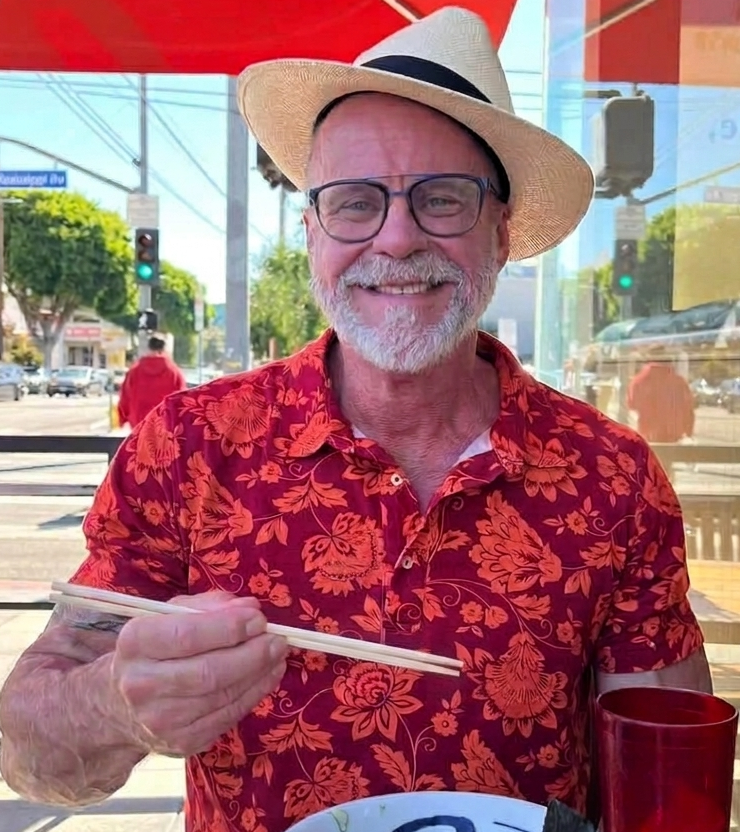
Grant is a retired French Immersion Teacher and Author. Born in Toronto, Ontario, Grant has lived in many of Canada’s major cities, but now calls Fox Point, Nova Scotia, his retirement home. He lives in an idyllic coastal location, which he calls Otter Cottage, with his canine friend, Finn the Border Collie. Grant has self-published his first novel, entitled “Life-Line: Origins,” and the second in the series, “Life-Line: Diversions,” is due out this year. Grant enjoys weightlifting and exercise as a mainstay in his life to keep his mind, body, and spirit in shape. He also has many creative hobbies and activities he is now free to pursue in retirement. In his 63 years, Grant has lived a life full of amazing experiences, despite what he calls speed bumps and roadblocks. These barriers blocked his way as he navigated his life as a gay man from the 1980’s until now. Encountering each of these hurdles has led him to grow and become a more creatively authentic gay man. His favorite saying is “Carpe diem” as he explores what lies ahead in his life.