

 Apple Podcasts
 Spotify
 YouTube
 iHeartRadio
 Amazon Music
 Bonus #066: Creativity, Neurodivergence, and the End of Self-Shame With Lindsey Kirkendall

Have you ever felt like the creative world makes sense to you… but the rest of the world doesn’t? Many artists, makers, and dreamers grow up believing something is wrong with them… too sensitive, too scattered, too much. They struggle in classrooms, workplaces, and systems built for brains that move in straight lines. And quietly, many are living somewhere on the neurodivergent spectrum. In this compassionate conversation, Lindsey Carpenter Kirkendall shares what it feels like to move through...
Have you ever felt like the creative world makes sense to you… but the rest of the world doesn’t?
Many artists, makers, and dreamers grow up believing something is wrong with them… too sensitive, too scattered, too much. They struggle in classrooms, workplaces, and systems built for brains that move in straight lines.
And quietly, many are living somewhere on the neurodivergent spectrum.
In this compassionate conversation, Lindsey Carpenter Kirkendall shares what it feels like to move through life with a mind that doesn’t quite fit the mold. She reflects on her childhood, her creative wiring, and the realization that many struggles she blamed on herself were simply the way her brain works.
Instead of fearing neurodivergence, this episode invites us to understand it… and even honor it.
Lindsey speaks about the pressure to appear “normal,” the overwhelm of overstimulation, and why so many creatives feel misunderstood.
Most importantly, she names a powerful truth:
Struggling inside systems that weren’t built for you does not mean you are broken.
It may simply mean you are wired differently.
If your creative brain feels both brilliant and exhausting… this conversation might feel like someone finally turning on a light.
You are not alone.
And you were never the problem.
Lindsey's Profile
Lindsey's Website
Neurodivergence Resources:
AQ-50
RBQ-2
This is Maddox & Dwight! More than anything, we want to connect and communicate with you. We don't want to think of you as listeners. We want to think of you as community. So, scroll to the bottom of the show notes and click the SUBSCRIBE link. Thank you!
Thank you for listening to the For the Love of Creatives Podcast. If you are enjoying the podcast, please scroll to the bottom of the show notes and Rate & Review us. We would SO appreciate it.
Book a Discovery Call With Dwight
Become a SUBSCRIBER to Get Notified of New Episodes
Want to be a Featured Guest?
00:00 - A New Lens On Autism
01:27 - Meet Lindsay: From LA To Nashville
07:53 - Building Creative Careers Without Gatekeepers
12:48 - From Strategy To Subconscious
18:31 - The Female Artist’s Double Bind
23:12 - Pivot To Hypnotherapy And RTT
28:58 - Late Discovery Of Neurodivergence
34:03 - Masking, Burnout, And Authenticity
38:35 - Are Most Creatives Neurodivergent
44:28 - Family Systems And Everyday Friction
49:58 - Normalizing Differences And Ditching Shame
54:43 - Finding Your People And The Stats Gap
A New Lens On Autism
SPEAKER_00Because I don't think anyone would ever look at me and be like, she's autistic. I look people in the eye, I'm very social, I'm very capable in social situations. Like all of these traditional things that people ascribe to autism, not me.
SPEAKER_02Hello and welcome to For the Love of Creatives. I am your host, Dwight, joined by Maddox. And today we are joined by Lindsay Kirkendahl. Lindsay, welcome to the podcast. Could you share just a little bit about yourself for listeners?
SPEAKER_00Absolutely. And I'm super excited to be here. So thank you for having me. Um we're glad to have you. Challenging. Well, thank you. I'm glad to be here. Uh, but these are always challenging questions for me because I tend to be a little long-winded. So I'm gonna try to do my best to keep it in a nutshell, and y'all can cut me off or ask a question and feel free to jump in if you need to divert me.
SPEAKER_03All right.
SPEAKER_00But my my story, if you will, um, I'm originally from Southern California. So I grew up very much wanting to be in the entertainment industry. I was very drawn to the performing arts, always wanted to be a dancer, et cetera, et cetera. Finally convinced my mother to allow me to get an agent when I was about 13. So I did some commercial work and started to do some work in film, um, you know, just really scratching the surface. I did have some national commercials, which was cool, but nothing significant that you would have heard of. Um, but I did a lot of work in that, in that world uh during that time, during high school and then a little bit in college, continued to pursue the arts. Um, I was I danced in college, I sang in a vocal jazz ensemble in college, and actually have an award for vocal jazz um solo hanging above.
unknownNice.
SPEAKER_00Very proud of that. But uh I always just was drawn to the entertainment world. I was drawn to the performing arts, I loved musical theater, um, wanted to do all of it. And got to a point when I was about 21 that I was so burnt out on LA. And understanding who I am now, I'm like, oh that I couldn't have articulated why I was burnt out, but I I understand now why I was like, I need to get the hell out of here. And I stick I still wanted to be in an entertainment city because I wanted to continue to pursue that professionally, but New York felt like more of the same, and it was colder and it was further away from my family. So I picked Nashville and met my husband there. I met him six months after I moved. He in his own right is a phenomenally brilliant genius, musician, songwriter, producer, all of the things. Um, and we have been married almost 20 years. It'll be 20 years in May.
SPEAKER_02Congratulations.
Building Creative Careers Without Gatekeepers
SPEAKER_00Thank you. Yeah. Um, and so we have kind of built a world together where we have got to continue to pursue a lot of our creative passions, but we also had five years after we married, we had our first son, and then we had another one two years later. And so that was for me a big part of what I wanted. I was not one of the women that was like career first and then babies. I was like, I'm gonna have both and I'm gonna do it great. And it was not a one without the other kind of thing. So it was a big kind of, again, talking about becoming, I know that's a big theme for you guys now. It was a big, ongoing, probably decade plus process for me of doing a lot of internal work around trying to pursue a professional career because I continue to have an agent even in Nashville, and I was acting and modeling and singing and doing background vocal work and I was getting to do a lot of fun things, but had really zero guidance. I did not come from a family that understood the arts. They were very religious, they didn't want their daughter participating in that industry. Um, so I just didn't have a lot of support and I didn't have a lot of guidance. I was totally flying solo with all of it and got married very young. We got married, I was 22. So, you know, when you get married, a lot of things shift and perspective, you know, now we have to pay bills and we have to, you know, do a lot of other adult type things that divert energy from just pursuing the arts and pursuing performing and music and all of these things. So, you know, we were trying to still build these creative careers, but also adding more adult responsibilities onto our plate at the same time. So my life kind of went like this, and I was serving two masters pretty significantly very early on. And I wanted both, but I had to, like I said, I went through this ongoing, you know, decade plus process of really having to reevaluate all of my internal beliefs around what it meant to be a female artist, be a female artist that was a mother, be um a businesswoman, because now I was like, well, I want to be at home with my kids. I don't work well in the corporate world. Tried that a number of times, not the place for me. And I wanted to create a flexible, you know, reality where I could be with kids, still help provide, um, and and have, you know, both of those things. And I was, you know, this was all during the era of like 2008 to 2012 when the internet was really, really coming online for particularly for artists, and them starting to understand that they didn't have to go through these gatekeepers anymore to have a career and they could connect with their audience directly. And one thing, again, I didn't really understand about myself back then. I knew I could do things, but I didn't know why. So, like I was very good at being able to read people's unconscious beliefs. You know, I was very good at helping people to understand what was happening in the un or subconscious. It just was how I'm wired. I could see that. And so because my husband and I were both working in the music business, um, he was producing full-time at that point. We started to get a lot of opportunities or artists asking us to manage them, but we didn't want to manage, but we loved mentorship and we loved educating and we loved guiding. So we started a business that was a production and um consulting company. So I was really just doing business consulting for artists, helping them understand how to build businesses online and also helping them to reframe what the possibilities were, because that was the part that I like really, really loved. And I really loved helping artists. Well, let me say it this way. What I was noticing in my work with artists is that part of the reason, or I don't know, if I'm being honest, I think like the fundamental reason that they were struggling so much was not for a lack of knowledge or strategy or know-how, but it was because they were still really committed to their career looking the way that the industry had worked for the last hundred years. And they were trying to apply that way of doing things to this whole new world. And it didn't work. And so there was a lot of really just by prop by by virtue of the work that we were doing and trying to help teach them strategy and business strategy, was I got to like really help them see how they were overly focused on this archaic way of doing things and way of doing things that were really disempowering, you know, and didn't place the power solely on their shoulders. And and so it was a really beautiful time for me to really understand that like my gift, my value to artists was really more in helping them better understand who they were, help them become, help them have a more connect, uh deeper connection to their artistry, to who they were as artists. We talked a little bit before we started recording about how when we're kids, we get asked, well, what do you want to be when you grow up? But Maddox, you said it wasn't about the being, it was, it was what how did you phrase that?
SPEAKER_01Well, I said, you know, it it's there's a what do you want to be, and there's a who do you want to be? One is an external process and one is an internal process.
SPEAKER_03Yeah.
SPEAKER_01We assume that most of our listeners are already determined that they want to be creative in some shape, form, or fashion. So we don't address the what. Yeah. We we spend our time and energy on the who you want to become in order to be that creative person, that artist, that dancer, that singer, whatever, who is it in here inside of yourself that you have to become?
SPEAKER_00Right. Yeah. And I was finding that helping people discover that was more transformational to their success than teaching them how to do social media strategy correctly.
unknownYeah.
SPEAKER_01I just want to call that out. You were cutting edge.
SPEAKER_00Yeah. And it was hard. It's funny. I was having this conversation the other day because I said, you know, it was hard because no one lays in awake in bed at night going, I really need to change my limiting beliefs. They go, I really need to have more audience members on my social media, you know.
SPEAKER_01Exactly. We we focus on the what and forget about the who.
unknownYeah.
SPEAKER_01Who we need to be in order to get those additional people on our as our followers.
SPEAKER_00Right. And so it was a really interesting uh marketing path because you like I did feel a little bit like, am I bait and switching these people? Because I'm telling them I can help them build their social media, but what they don't realize is I have them start at a more subconscious level first and we work through those pieces first before the strategy even makes sense, or we even know what the strategy is going to be.
SPEAKER_01Um, you know, I I had a I had a mentor one time say that whole bait and switch thing. I had a mentor one time tell me sometimes you have to give them what they want so you can give them what they need.
From Strategy To Subconscious
SPEAKER_00That's really good. And it's true. It's very true. But to tie up all of that, I mean, essentially through the process of getting the opportunity to work with a number of different types of artists and and also at that time raising kids, um, small kids. They're 12 and 14 now, but um I, you know, really started to feel passionately about supporting particularly female artists during that season because, you know, there is a difference between what a male artist's path and trajectory looks like versus a female artist's path and trajectory. Um, and I'm saying this with the assumption that in general, most females desire to have a family. I know it's not true for everybody, but most tend to want to have that be a part of their life experience. And we have a lot of different competing things that men don't have to contend with as they're building their career as a creative, one of which is you have to look young and sexy or you're not valuable, right? There's a ticking time clock. There's also, I think, a more intuitive unconscious awareness that like we want to be good parents. And if we are going to choose the path of becoming a mother one day, that we want to have enough time and energy and capacity to do that job well. And if we're still trying to get a career off the ground, but our biological clock is ticking, that creates a really weird push-pull that's very, very stressful on women that are trying to both build a career during their fertile years. Like it's it's funky. So we have these other things that we're dealing with that really there wasn't anyone in the space at that time that was really talking about these things and helping to empower women and help them navigate that push-pull.
SPEAKER_01You know, I think it's also important to call out maybe not at every society, but certainly in our society, we still very much live in a man's world.
SPEAKER_00Yeah.
SPEAKER_01We do the patriarch is alive and well. And I wish I could say that that wasn't true because if it was up to me, it wouldn't be. I'm very much into equality and equity. But it it it is still, you know, when you go in and look at the the wages, men are still across the board pretty much paid better than women are.
SPEAKER_03Yeah.
SPEAKER_01And, you know, you guys have to live to a whole different set of um standards. And not fair, but it but it is what it is.
SPEAKER_00But it is what it is, yeah. And a lot of that are things that we unconsciously uh understand from a very small age and learn through osmosis, and it's never explicitly said, but we just absorb that, you know, and and try to navigate without a whole lot of people, without a whole lot of guidance, I would say. So in about 2018, I really pivoted my practice to focusing primarily on female artists. I still did work with men, but it was focused and marketed towards female artists. And I did that for, I mean, I still do some of it from time to time. Um, I've got artists right now that I'm working with actually, but I did that very full-time for about five years. And then now I'm I'm pivoting. I did go and in 2022, I actually went through a summer certification course on clinical hypnotherapy because I found it to be really, really transformational in the life of myself and my husband. And so I wanted to add that to my practice. But at the time, I didn't really know that I was going to be pivoting from doing as much one-to-one client work as I had been. So I didn't really get a chance to practice that as much as I was hoping I would, but have decided at the end of last year to um start another certification course in a methodology called Rapid Transformational Therapy. And uh it's about an 18-month course where you get like level three certified as a master hypnotherapist. So I'm excited about that because it really is kind of like, oh, all of these things that I was seeing in my clients, and I really enjoyed like that deeper psychological subconscious work. Now I actually am going to be accredited and certified and be able to support artists with deeper subconscious level work instead of like, hey, it's it's like what you said earlier, Maddox. Um, give them what they think they want to give them what they need, you know. Um, but now I can just say, hey, like it's the subconscious that's driving everything.
SPEAKER_01Everything.
SPEAKER_00So I can do that.
SPEAKER_01Yeah.
The Female Artist’s Double Bind
SPEAKER_00So um, so yeah. And then as it relates to again going back to becoming and a little bit of my story there is I after I pivoted away from serving clients in a really high level one-to-one capacity, I went through a period of burnout in my late 30s and early 40s. And I mean, I'm still in my early 40s, but I I was just like, I don't know why I can't seem to energetically get it up to go back and do this work with artists right now. I just didn't really know. We had our boys were um, we had homeschooled them for the majority of their life. And then they did like a couple years in a traditional school, and then we brought them back home last year to homeschool. So this is like year two of homeschooling again, round two. And, you know, that that is does require some of my presence, but I also felt kind of in this amorphous soup of where am I going next professionally? Because I'm a really high-night energy person. I love learning and I I want to, you know, use that energy in a way that that helps humanity. And I still am so passionate about serving the creative community and um and in turn serving myself because I'm a member of the creative community. Um, and so I uh I was like, what next, universe? Like where where are we going next? Because I don't think I want to go back to what I was doing, but I can't quite put my finger on what the next step is. And um, you know, it was like through raising my kids and seeing behaviors in both my kids that that caused my husband and I to scratch our heads a little bit, like, is that autism? Is that ADHD? But never like when you sit down to read the profile of these like traditional behaviors, um, never really felt like, yeah, they check all the boxes. This is a clear, we need to go see someone to get a diagnosis. And our kids were functioning and thriving and doing fine. But all also there were things where we're like, mm, that's not quite what you would expect to see. And it didn't really become very obvious to us until our boys were getting like at middle school age. And so I started to research and we had had some evaluation done early on when they were homeschooling, because I it it was recommended to me because I was like, if I continue to homeschool, I just want to know how my kids learn, right? So we had a psychoeducational evaluation done and did cognitive skills and things like this. And both of them came back in the gifted range from like an IQ screener. It wasn't a full-scale IQ test. So we're like, well, we knew we were dealing with bright kids and um also like both of our kids had had some like claircognizant moments as children where they knew things that they shouldn't have known or predicted things that that's a whole other bottle of wine. But either way, like we knew we were operating with some like really tapped-in children here. You know what I'm saying? And uh, and so as I researched giftedness, and of course, giftedness is often cousins with neurodivergence or or is considered a form of neurodivergence. And one of the things that just kept coming back and back and back is like, well, it's genetic, it travels in families, you see it in families often. Um and so again, going through that period of burnout and and observing my kids coming to an age where like some of those differences were becoming more apparent. I I was like, oh, you know, like am I maybe on the spectrum? Like, am I neurodivergent? Uh and all that to say, I for many reasons, which again, I'm for the sake of brevity, told you I was long winded, warned you. So you can't be mad. But um, but I I came to discovery that like I was like, I am very confident in self diagnosing myself. As being on the spectrum.
SPEAKER_02And what changed for you?
SPEAKER_00Everything. Like it was weird because what I was observing in my internal experience was how intensely I, and I assume the mainstream populace really has come to understand autism to look very, very like this very specific thing. Because I don't think anyone would ever look at me and be like, she's autistic. I look people in the eye. I'm very social. I'm very capable in social situations. Like all of these traditional things that people ascribe to autism. Not me.
SPEAKER_02Well, you gotta admit that the marketing for uh autism spectrum disorder was pretty powerful. I mean, Rain Man was a really popular movie.
SPEAKER_00It was absolutely. And so that was one of my biggest shocks when I was learning this about myself was of course I never saw myself inside of this because we were only looking at it through this narrow lens of I call it white boy autism because it's like you probably know too, like the studies that were um where the diagnostic criteria was created were done on like upper middle class white boys.
SPEAKER_03Yeah.
Pivot To Hypnotherapy And RTT
SPEAKER_00And so it's like, well, then it's gonna, you know, my my oldest son, I would say, has traditional white boy autism. It's much more obvious for him because he like he likes tornadoes and cars, you know, and he can struggle a little bit with social cues and some social challenges, and he's very monotropic and like it's like very obvious white boy autism to me. And so in women, and especially women that find out much later in life, I was 41 when I found out very, very different experience, but also becoming aware of like, oh, all these things that didn't really add up, now it all clicks into place. So the thing that really changed for me beyond observing what was happening, like with the collective awareness and how I was never going to understand myself inside of that because we all thought it looked like A, but I'm over here like looking like X or something. And and when I realized, okay, that that's interesting. But also personally, it was like everything clicked into focus in a way that it never had before. The exhaustion, the burnouts, the um the high intensity, like need for lots of like learning and stimulation in that way, certain like internal sensitivities that particularly for women are not obvious because high high masking, you know, again, these are terms that I use just based on what I've researched. But um, women that like may have autism but fit in socially and can hide in most scenarios, their experience of their autism is very, very internal. So no one really understands or sees it. But it just once I understood that about myself, then I started to take that lens into like the world of creatives and the world that I was in and the people that I was serving. And I'm like, oh, now I can see it everywhere.
SPEAKER_02Well, and and it sounds like you you brought along with you a lot of the things that you had used in working with your clients to get them to excel despite how they had to perform for the male gaze.
SPEAKER_00Yeah, absolutely.
SPEAKER_02I I can definitely see how the masking uh behavior is going to be very similar to how it is that you need to thread your way in to get time in the right rooms and be taken seriously because you have to pretend to be a character.
SPEAKER_00Yeah. Yeah. And going back to what I said about like, oh, this is why I left LA, was because while I loved performing and I loved acting because it was fun, I I couldn't like, and I've heard this a lot in my research, is just people with um that tend to be on the spectrum, like have very, very what's the word? Um, they just authenticity is very, very important to them. Not be, and it's why some people that may have higher support needs can come across a little bit cold or overly direct because they just want clarity and they just want truth and authenticity. That's really important. Because if someone's shifty, it makes you feel unsafe.
SPEAKER_03Sure.
SPEAKER_00And so they're not gonna be the person that's shifty, you know? And so I couldn't, I couldn't really gel in that environment because that's all LA is is shiftiness and people jockeying for position and trying to play a role so they can, you know, and that was just so overwhelming to my nervous system.
SPEAKER_01Like a fish out of water, wasn't it?
SPEAKER_00Yeah. And even though I looked apart, I was a cute blonde girl, I was bubbly, I was, you know, intelligent and all of these things, like I just could, it was exhausting to me and exhausting in a way that I didn't understand at the time. But now understanding neurodivergence, I was like, oh, makes total sense. And it was beautiful because I think for a long time I had a lot of shame that I didn't have the stamina or the willpower or the drive, even though I'm an incredibly determined and driven person. Everybody who knows me would characterize me that way. But I was like, well, I must not be driven enough because I wasn't able to hack it. I wasn't able to stick it out. I left. And now it's like, no, I was way too, and I use this term not in a bad way because I don't perceive it in a negative light, but I was way too sensitive for that bullshit. Like and I had a higher standard, right? And I do think a lot of that is part of my neurodivergence.
SPEAKER_01Lindsay, you you have been involved in the creative world for way, way, way longer than we have. You know, we kind of stumbled into creatives when we hosted, co-hosted an event two and a half years ago with some artists, and it was all creatives that showed up for this event. And we had this awareness that, oh my God, I we just found our people. We just felt right at home. And so most of our focus since then, most all of our focus, has been on creatives. We've hosted events, we started this podcast, but we have about two and a half years worth of experience in the in the creatives world, even though we've both been creative all of our lives. Being in the creative community is a different different thing.
unknownRight.
SPEAKER_01You, on the other hand, have been involved a lot longer, so you have a much broader perspective. If you, I mean, perhaps there's studies that you're aware of, but what if you had to guess, what percentage of the creative's population do you think might be affected by some form of divergence or neurodivergence or or something that's associated with that? Because I know there's different things. Like, I don't, I'm not smart enough about this topic to know is ADHD, those initials always trip me up a little bit. Is that under the umbrella of neurodivergence or is that something completely separate?
Late Discovery Of Neurodivergence
SPEAKER_00No, it's it's under the umbrella. Um, there's a lot of conversation because this is a developing area of research, right? Like there's it's still so new. There's so much that we're we're learning. And I've heard a lot of researchers say ADHD autism, like, you know, as long as there's not an intellectual disability also present, it's like, you know, it's both sides of the same coin in some respects. So there's even some conversation of like, you know, which really where's one end and where's the other begin? I do know, and you guys may have heard this statistic, but I do know that the people that are like at the front lines researching this, they say that they believe that at least, I'm probably gonna botch this, but it's something along the lines of at least 50% of all of the people who are neurodivergent are not actually diagnosed. They don't know. Now, I'm not really sure how they came to that conclusion, but you know, because I am someone who can dive really deep on a subject and consume a lot of information on it rapidly, I do feel like I become a lay expert on a lot of random topics. And this was one because it concerned my children, and then, you know, for myself and then also for my husband, too. Um, we're like, oh, all four of us are really neurodivergent and like had no idea. And also no wonder there have been these things that we've struggled with for, you know, our whole adult lives. Um and I've just kind of felt like as I've better understood what it looks like, particularly in people who don't also have an intellectual disability. I'm like, I think the vast majority of the population, creatives or not, are probably neurodivergent on some level. I truly believe it. Because you think about it like this. This was something, if you've ever seen the movie Temple, have you guys seen that about Temple Grandin? That's a you've seen it.
SPEAKER_01Oh, yes, yes, I have.
SPEAKER_00It's so good. And Claire Danes is amazing in that role. But you know, I watch a movie and then I'm like Wikipediaing on the side and like, you know, reading about other things that they don't maybe explore heavily in the movie. And so I was looking at some articles and they've done brain scans on Temple's brain, and it shows how there's asymmetry in her brain, and one part of one lobe is quite a bit larger than another lobe. And I'm like, okay, well, you know, we haven't been doing brain scans on people, like the way we do x-rays on kids, the way we do ultrasounds on almost every pregnant woman that ever exists, right? But we can on the external observe that no one's physical external appearance is symmetrical. No one. We all have asymmetry on our external bodies. So stands to reason that we probably have asymmetry in our brains too. Now, to what degree, we don't really know unless we do a brain scan, but those are expensive and they're not mainstream, and we haven't decided collectively that that's a thing we do. So, to your question, I think a lot of creatives are probably neurodivergent. And I think probably the majority of the population is to some degree.
SPEAKER_01And I have to wonder.
SPEAKER_00Sorry, go ahead.
SPEAKER_01No, go ahead, finish.
SPEAKER_00I was just saying I'm using that like with my understanding, when I say neurodivergence, I mean brain asymmetry.
SPEAKER_01I I have to wonder if there is something about the act of creation that attracts neurodivergence. Perhaps because you know, we've interviewed between 50 and 60, not interviewed, I hate that word. We've had conversations for the podcast with between 50 and 60 people, and there have been like many of them that have told stories, described traits within themselves that look like they fell into that category. It's a number the number of people that have said, oh, I'm dyslexic, or I'm I I'm ADHD, or um, you know, I've I've a learning disability or something like this, it's been, wouldn't you say, Dwight, it's been pretty almost common.
SPEAKER_02Not not everybody, but and I and I would say that the idea that we have of there being uh some neurotypical uh path that we can have in the human experience is probably a rare thing indeed. It's just that the culture enforces that this is what the majority of the the mainstream should be experiencing.
Masking, Burnout, And Authenticity
SPEAKER_00Yeah, uh absolutely. I think creativity is something that uh well, I think neurodivergent neurodivergent people are drawn to creativity because their brain is already wired to see beauty, to experience beauty, to feel beauty, to resonate with art in a way that someone who is maybe more neurotypical looking may not notice, right? It just doesn't come into their system in the same way. Um so I don't that's not exactly what you asked, but that's one of the thoughts I've had as it relates to creatives. I think it's just we have, we tend to have a um, you know what would be really interesting is to take brain scans on creatives and see if there are certain parts of the brain that are more, you know, neurons firing or whatever, or maybe bigger or whatever, if those brains all looked relatively similar because they're people that are drawn to beauty, drawn to expression. Um, and is it because of a an actual like asymmetry in the brain or a different, you know, physiology in the brain?
SPEAKER_01Yeah, I think that would be fascinating, absolutely fascinating. I'd kind of like to jump forward a little bit and hear about you you've described your entire family as being neurodivergent. Yeah. And and so you talked about it made life make more sense when you understood those things about yourself. And I'm assuming that it also gave you clues into how you could more effectively navigate life from that place. Can we talk about that a little bit? Because I want to give it, I mean, if indeed creatives are are, you know, neurodivergents are drawn to creativity and a big portion of our listeners are affected by this, I want to give them something that they can walk away with, you know, even if it's just examples in your own life and your family's life, about how you have learned to navigate some of the challenging aspects of that. Because I know that there is that gifted thing, you know, you're not gonna probably meet a neurodivergent that doesn't have some friggin' superpowers.
SPEAKER_00Absolutely.
SPEAKER_01You know, and and then there's the other angle, the parts of it that make their life kind of challenging. They they process information differently, they process feelings differently, or I should say maybe we, because I'm I've not been tested. I'm not so sure I'm not part of that group myself. I wouldn't be a bit surprised. Um let's let's go into that vein and share, share what you have because you you are so knowledgeable about this and have put so much time and energy. I know you have some great things to share.
Are Most Creatives Neurodivergent
SPEAKER_00I think for me, the most fundamental piece, again, going back to our subconscious mind and the beliefs that we hold, is that I I don't see it as a disorder. I don't see it as a problem, I don't see it as something that is um pathological. I've never experienced those things. Now I can understand that yes, I actually have um my stepsister has a daughter who has a very, very high support needs autistic child. And there are some intellectual disabilities there, but also there was an intense amount of trauma that that brain developed in, right? So there's, and I've heard that too, is like, is this actually autism or is this a brain, an autistic brain that's experienced trauma? You know, some of these like diagnostic criteria. So for me, um, because I I kind of tend to believe that the majority of the population probably is neurodivergent to some degree. Um, I also think that it can't be pathological, then can't be a disorder, can't be something that's bad, it's just different. Or is it? And maybe it's actually very not different. So I think the fact that I see it in that way really shapes how I interact with the parts of it that are challenging. Um, I don't have a lot of shame around it. I don't have a lot of, um, I'm just like, yeah, this is how this is how I operate. Um, I know one really good example was when I mean the whole, again, been married almost 20 years, right? So we've we've been through the gamut of things with each other. And my husband is this absolutely genius, prolific musician and songwriter. He can sit down and like literally write 50 songs in a week. I mean, it's insane what he's able to produce. But he'll get into the kitchen and he's so focused and task-oriented on eating that he won't see that he's left the kitchen not put away. Like once the task is done and he's fed himself, the task is done, you know. And because we've always worked from home, or at least majority of our marriage, we've we've worked from home and we've homeschooled, there's a lot of upkeep that we all have to participate in to keep the house in order, particularly for me, because I'm easily visually overwhelmed. I'm a very visual processor. If there's visual clutter, I my brain literally shuts off. Um, and that's hard when you have to work from home. So when I've got someone who's like leaving stuff out, and I keep asking, like, hey, can you pick up after yourself? Like, uh-huh. Um, and it doesn't happen, like that was causing a lot of issues in our marriage because again, I didn't know of my neurodivergence, I didn't understand my visual overstimulation. And I started to take it personally, like, this mofo doesn't give a shit about me. I've asked him multiple times, then it becomes an issue in the marriage. And when I realized it was an ADHD trait, I was like, oh, his brain literally doesn't see it. And when he could also not feel shame about his wife constantly nagging him, and he was like, uh, it's just the ADHD, you know, or whatever, like whatever it is. Um, it's just like, okay, now we can better support each other. Now we can actually have quality conversations about what's going on, and we're not attributing, you know, untruths to each other and having these issues.
SPEAKER_01So you're you're said you've said a couple of things that I kind of want to recap for our listeners. Number one, not that you didn't say these words, but what I heard you say is there was power in owning that you're neurodivergent and accepting it and normalizing it. There was power in owning it. The second thing I'm hearing is because you live in a family of neurodivergents, it's not about learning to navigate your own neurodivergence. It is that, but it is additionally learning how to navigate the neurodivergent traits of each individual family member because each of you are an individual and you show up differently.
SPEAKER_00Can I add something brief to that?
SPEAKER_01Please.
SPEAKER_00This was a really healing moment for me because my whole life I grew up feeling like my dad was very emotionally neglectful and unavailable. And my oldest son is a lot like my father, like very, very, very similar. And they don't, my dad lives in California. My son was raised in Nashville and then Florida. So they've seen each other maybe once a year, his whole 14 years. Not enough to for him to learn behaviors because he was around the guy, but he is so much like my dad. And once I realized the genetic, you know, components and like, oh, this is probably passed down. And I it all clicked in. I was like, oh my gosh, my dad has autism. Brilliant guy, high IQ, autistic as hell. And he has a lot of alexithymia. Like he just doesn't experience emotion the same way. And it wasn't because he was an asshole. I was like, it's just him. It's just, he just has autism. And he does love me and he does the best that he can. But he has, I mean, he's turning 76 tomorrow. He's 76-year-old man that's never even given the opportunity to consider that he might be neurodivergent and also very, very highly brilliant. But like the whole conversation of alexithymia and like not really having that emotional depth. Um, that overshadowed our relationship my entire life up until the last year. And even though I had forgiven him and made peace with that and really had done a lot of healing in our relationship, something about understanding the neurodivergent piece snapped it into view for me in a way that was like, oh, bless his heart. Like now I have even more compassion for the guy because just doing he's just doing his thing, you know? Like it just doesn't occur to him to call me. It's not because he doesn't love me.
SPEAKER_02Yeah. What a gift for both of you.
SPEAKER_00Yeah. So to your point, it really is like not just managing the inner immediate family, but like even the experiences of you know, trauma, I guess we would call it like a low-key trauma that I've carried my whole life. And I'm just like, oh, how different would it have been if we had just known like dad's dad has autism and he's just not always this like bubbly. That's just who he is. Then I would have had a much more um rounded, grounded understanding, you know, as a child of how how we fit together as a parent-child team.
SPEAKER_01You know, it it really is important to normalize this topic. I mean, there's many topics in the world that we need to normalize, but this is definitely things that we just don't talk about. We we avoid this topic. We avoid talking about death or or sex or shame. We just there's a whole bunch of things we avoid, but this is one that would behoove us to to normalize in whatever way we can. And it sounds like you have done that in your life and in your family. And it's made all it's made a world of difference, hasn't it?
Family Systems And Everyday Friction
SPEAKER_00Yeah. I I I love it. I mean, I think even just observing differences, and my my oldest son has a dear friend who has autism, and he's got a pair of twin sisters who also have autism. And his parents are a little bit older than my husband and I. So just generationally, a little bit more probably of the generation where autism was a problem, you know, and it was it was spectrum disorder. It wasn't like, hey, we're neurodivergent, you know, which is kind of, I feel like how things are starting to shift. And so I can tell, even in just the way that like my son's friend and his sisters show up with this felt shame because of how the parents, you know, you get a diagnosis and the parents, oh no, my kid, there's something wrong with my kid. And the kids feel that, you know, they they receive that. And uh, and I I just I'm like, man. And then I see my son who's like, I'm here, wanna be my friend, you know, or like, and he doesn't, it's not even a thing. We do have to be like, hey, like you're a neurodivergent buddy. So like these things might be a little more challenging, but like that's it's not a big deal because everyone has got something. Right. And um, and not using terms like disorder and things like that. I just I don't I don't get it. It's just I think we've been duped collectively by God love them, the medical establishment, trying to do their best, but mm-mm, not having it.
SPEAKER_01I I think it's also important to spend some time focusing on the superpowers that come along with neurodivergence. Absolutely. Because I have yet to meet a neurodivergent that did not have some kind of amazing superpower. And most of all the ones that I've met have just this genuinely gentle, kind soul, just just so um naturally loving, like it's effortless, and very trusting.
SPEAKER_00Very, very trusting. But I totally agree with you. I mean, I think that you hear this a lot, particularly in parent advocacy groups. They're like, why are we focusing on what my child can't do? Why aren't we focusing on what they can?
SPEAKER_02Yes.
SPEAKER_00You know, but our our educational systems aren't set up that way. So, you know, but I I love the fact that there are more conversations like this happening because, you know, more people have to. This sounds wow, this sounds arrogant. I was gonna say more people have to be in the place that I'm at with it. That didn't come out right. But I I I hope more people can not have shame around it and champion it and not see it as some sort of problem. Because the more people that can, then that starts to push back against the systems and they start to change.
SPEAKER_01So let's let's back up for a minute and apply everything you've shared with this whole concept of becoming. You have become a person who has accepted, you have become aware of your own and your family's neurodivergence. You have become a person who has normalized it.
SPEAKER_03Yep.
SPEAKER_01You have embraced it, you have owned it. There's a lot of pieces of becoming. Do you have anything? What I've I've summarized, but do you have anything that you want to add to the list of things that you've become in this process of moving gracefully into just being the neurodivergent that you are?
SPEAKER_00I um I said this at the beginning of our conversation. It just feels like coming home to yourself. It just feels like I've been, and not to say that I haven't had a good life and had many amazing experiences, even if I was operating a little bit like outside of my most authentic self. But there's a level of peace and self-satisfaction that exists when you do come home, you know, there it's just like, oh, I can understand now why things in the past haven't worked out. It's having a conversation with a neighbor this morning. And, you know, there are a number of, we live in a very different neighborhood than when we lived in a very, very creative neighborhood in Nashville. We're in a very traditional neighborhood in Florida now, and we're not really around our people. And I was mentioning to my husband right before we got on this conversation, I was saying, you know, it's funny, we came down here so excited. Like this was the first time we were living in like a neighborhood with a lot of kids, and we were gonna make friends because, you know, we have a wonderful group of friends in Nashville. But sometimes when you live in entertainment hubs, there's always this undercurrent of like competition. And that can be a little specially again to a neurodivergent uh system. That can be very exhausting. It's one of the reasons we left and and wanted to try Florida for a little while. But now we're not around our people. So it's like this push-pull. But so I was saying, you know, we were really excited to make all these new friends and and we did, and and as quickly as we did, we we repelled some people, and people were repelled by a like, you know, it wasn't like this explosive thing. It was just like, eh, I can't go deep with them, or we just don't click, or whatever it is. And it just is tough, but at the same time, the understanding the neurodivergence piece, becoming someone who is very at home with themselves. I'm also okay with being like, I'm not for everybody, and and not, and again, this comes across sounding arrogant, but like I am a very, very deep person. And so most people can't meet me there, and that's okay, you know? Yeah, you get it. You get it. I get it completely, man. And so when I and my husband, he's a musician and he, you know, he likes tennis and he'll watch football games and stuff, but like he's like, What am I gonna talk to these guys about? I don't follow sports, you know, and so when that's kind of the typical world you find yourself in, which a lot of neurodivergent people that are a lot like particularly creative neurodivergent people, they're like, uh I've lived in that world my whole life.
Normalizing Differences And Ditching Shame
SPEAKER_01Yeah, and and being being a gay male in the gay male community, it it has been I have been on the outside looking in my whole life. I I have found few people that would get into those deeper and meaningful conversations. Few, few, few. Over a I I I came out 46 years ago, long time. Well, and the truck is normal.
SPEAKER_02Just adjusting the frame.
SPEAKER_00Absolutely.
SPEAKER_02I mean, it it makes all of those exchanges that you can have that's that dip below the surface that much more precious.
SPEAKER_00Yeah, and and it's it's statistically more challenging. We were having this conversation, my oldest son, because we're waiting, you know, in the state of Florida, they have some amazing scholarships. And if you can prove that you have unique abilities, then you get like 10 grand a year from the government to homeschool or private school or whatever you need to support your education. So we're in the process of getting him full-scale IQ and all the things. So we can show the government, like, hey, give us 10 grand. And um, and so we were talking to him because you know, he doesn't really have a lot of friends, but he also is very self-satisfied and doesn't seek a lot of social stimulation right now. But my husband and I are very social people, so it's a little bit like, oh, like, do we worry? Right. But then we were saying, you know, if you look at like where his IQ is, compared to the percentage of the population who also is in that same range, there's only nine percent of the population that are, you know, at that place, right? Like, so it is statistically gonna be more challenging for people that are, you know, neurodivergent to find their people. Um, so you know, that that is another piece of the puzzle where it's like, oh, okay, it's okay. Like it's just a statistics problem, it's not a me problem.
SPEAKER_01So, Lindsay, for the listener that may be now questioning themselves and wondering, could this be me? You know, if if they're listening to all of our conversation and realizing that they have some perhaps some traits that fall within everything we've discussed, would you recommend that they get tested?
SPEAKER_00I think that's probably a personal choice. I went through a battery of online, and I we had talked about me giving you the links so you guys can put that in the show notes. So I'll make sure you guys get the links to all the online tests. But there are a number of really, really well um researched and and well recommended from people that are more expert in this field, far more expert in this field than I am. But I did like 10 or 15 different online um self-assessments. Self-assessments. And it gives you a range. And then there's a number of them that say, okay, well, you've fallen within your score is 68, and people that usually fall within 60 and 70 or whatever are 80% chance of getting diagnosed with autism. You know what I mean? So some of them have some statistical reference data, which is kind of nice. But for me, I personally don't need it. I don't work in the corporate world where I need accommodations, um, you know, or anything like that. So I think it's a personal decision. Everybody is very, very different, but I do know, particularly for people who are late diagnosed and coming to an understanding of their neurodivergence later in life, the the neurodivergent community is very accepting of self-diagnosis.
SPEAKER_02Well, that's that'll be a valuable resource. I know that our our time is drawing to a close. Um is there anything that you'd like to share with our listeners that we haven't had a chance to get around to?
SPEAKER_00Oh, well, that's a good question. I feel like we covered a lot of ground.
SPEAKER_01We did.
SPEAKER_00Yeah.
SPEAKER_01This was absolutely amazing.
SPEAKER_00Yeah, it was. I'm really excited to be having this conversation with you guys.
SPEAKER_01I I hope my my genuine hope is that this con this one conversation um opens doors for many listeners, that they saw or heard something that sparked them, gave them some insight into themselves. Um, and hopefully, people can find their way to that place of accepting, owning, and learning to navigate more effectively.
Finding Your People And The Stats Gap
SPEAKER_00Yeah, that would be my hope too. I think I guess that spawned a thought. So I will I will leave this one. But I think the reason why we have so much shame and so much self-loathing and so much, you know, dealing with like internal stuff that just doesn't feel good is because we're all operating in a system where we're trying to compare ourselves to what, and you know, Dwight, you've said this really well multiple times. It's a cultural expectation that really is not relevant to anyone, especially in this day and age. And so we've all lived under this for so long that like collectively we just believe, well, this is the highest and best, is all these systems that we've built. And so if we don't fit in those systems, there's something wrong with us rather than the system is kind of effed or maybe totally effed, um, because it's not serving humanity, it's serving a very, very narrow aim.
SPEAKER_01Uh so that I would support that statement.
SPEAKER_00Yeah, I think that's what I would want to leave people with.
SPEAKER_01You know, I I grew I grew up in in a school system in the 60s and 70s that did not support my primary way of of learning.
SPEAKER_03Oh, okay.
SPEAKER_01It was and it was very difficult. Very difficult. I'm surprised that I even did as well as I did, and I was a C student at best.
SPEAKER_00Yeah. Yeah. And and you probably that probably informed your sense of self for a long, long time.
SPEAKER_01It did. And I I've never had an IQ test, but I'm I'm quite intelligent. I nobody needs to tell me that. I'm quite intelligent.
SPEAKER_00And that I I can appreciate that because it is a weird inner tension when you go through. I was the same way. I found my call it or my high school transcripts, and I was like, huh, I did better than this in high school. And and yet I was like in these AP classes, like really working hard for my C, but then also going, but I'm smarter than these kids. I don't get it. And then there's this weird internal dissonance because you're like, not adding up, but everyone says this is the measure of my intelligence, right?
SPEAKER_01Yeah, it's like you said, it's F'd.
SPEAKER_00It's totally effed.
SPEAKER_01And on that note, Lindsay, thank you. Thank you for this conversation. This was absolutely it just couldn't have been any better. Yeah, we really enjoyed it.
SPEAKER_00That's so sweet. Thank you. I had so much fun. I always have a blast with you guys. So thank you again for having me.
Artist/Entrepreneur/Mom
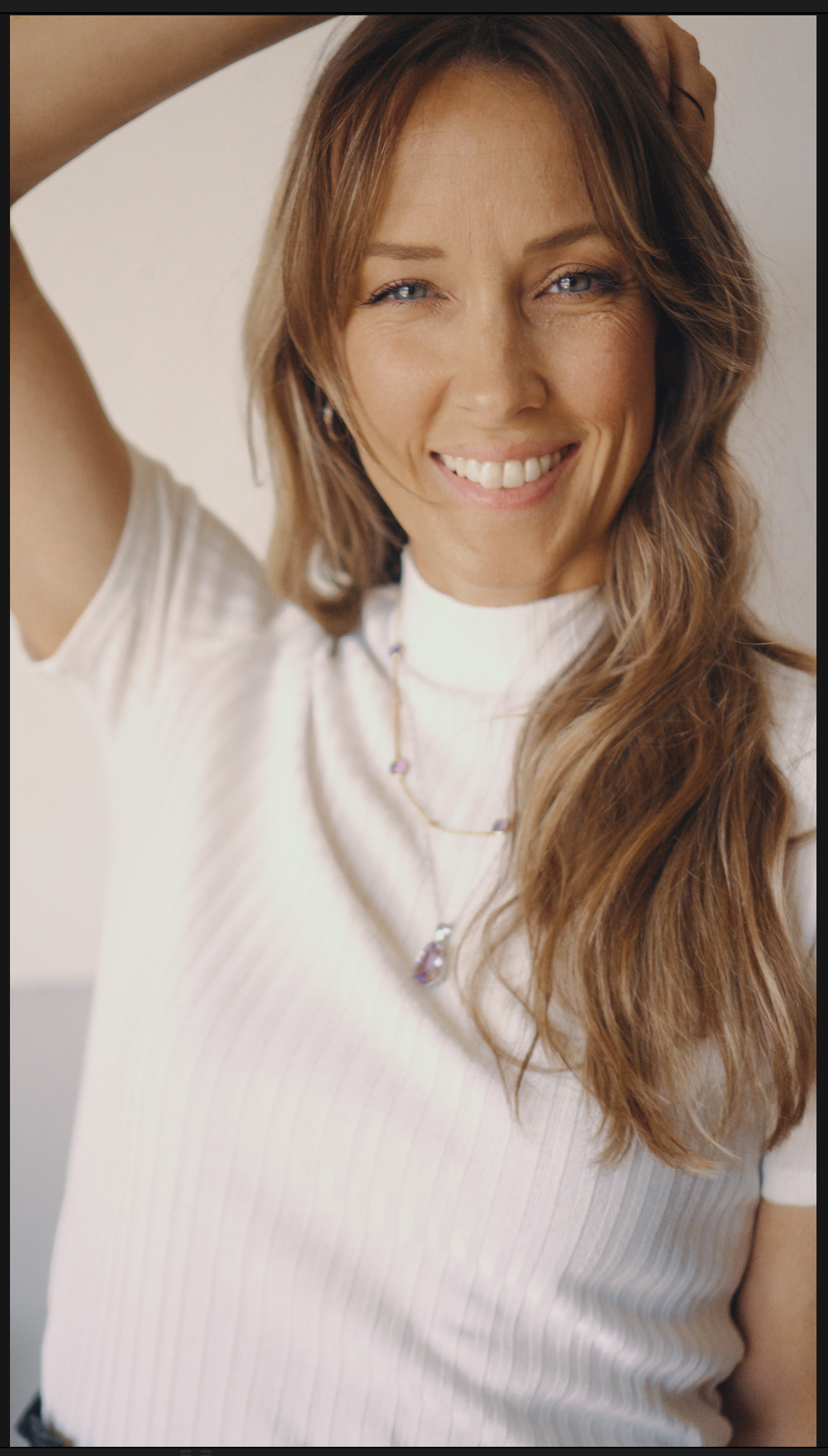
Lindsey Kirkendall is a creative strategist, streaming host, and lifelong artist who believes many of the most visionary creatives are quietly neurodivergent. With a decades-long background in the music + entertainment business, she has landed at the intersection of art, commerce and health — building brands, hosting live shopping experiences with JTV, and mentoring and teaching artists with a focus on helping them build sustainable careers without sacrificing their nervous systems.
After navigating her own late-identified autism and burnout, Lindsey became passionate about understanding the neurological and subconscious patterns that shape creative lives. She is currently completing her Master Certification in Rapid Transformational Therapy (RTT), a modality that blends neuroscience, hypnotherapy, and cognitive reframing to help identify and rewire limiting beliefs at the subconscious level.
She brings nuance, compassion, and real-world insight to conversations about neurodivergence inside the creative community.