



#070: A Life Interrupted… A Self Reclaimed With Lisa McKenna

What happens when the life you’ve built… the work, the rhythm, the people… suddenly disappears? For many creatives, identity is quietly woven into everything we do. So when something disrupts that… it doesn’t just feel like change. It feels like loss. In this conversation, Lisa McKenna shares what it was like to move through a season where everything familiar fell away… her work, her community, her sense of voice. And not in a gradual way… but all at once. There’s a moment many creatives know...



What happens when the life you’ve built… the work, the rhythm, the people… suddenly disappears?
For many creatives, identity is quietly woven into everything we do. So when something disrupts that… it doesn’t just feel like change. It feels like loss.
In this conversation, Lisa McKenna shares what it was like to move through a season where everything familiar fell away… her work, her community, her sense of voice. And not in a gradual way… but all at once.
There’s a moment many creatives know but rarely say out loud… when you’re left alone with yourself, without the structures that once defined you. It can feel disorienting. Heavy. Even a little frightening.
But something unexpected began to happen in that space.
Without pressure to perform… without an audience to meet… Lisa found herself returning to something quieter. More instinctive. A form of expression that didn’t ask her to prove anything… only to feel.
What began as a way to cope slowly became something else entirely… a reconnection… a remembering… a different relationship with creativity.
This isn’t a conversation about success or reinvention in the traditional sense.
It’s about what it means to lose your footing… and discover that something deeper has been waiting underneath the whole time.
And maybe… if you’ve ever felt disconnected from your creative self… you’ll recognize a piece of your own story in hers.
Lisa's Profile
Lisa's Website
This is Maddox & Dwight! More than anything, we want to connect and communicate with you. We don't want to think of you as listeners. We want to think of you as community. So, scroll to the bottom of the show notes and click the SUBSCRIBE link. Thank you!
Thank you for listening to the For the Love of Creatives Podcast. If you are enjoying the podcast, please scroll to the bottom of the show notes and Rate & Review us. We would SO appreciate it.
Become a SUBSCRIBER to Get Notified of New Episodes
Want to be a Featured Guest?
00:57 - Quarantine Losses And A New Medium
02:04 - A Life Of Visual Storytelling
06:27 - Empathy Driven Graphic Design Practice
09:37 - Collage As Agency For Vintage Women
13:27 - How The Guest Connection Happened
16:46 - The Anti Vision Board Framework
28:01 - Twitter Community And MoMA Recognition
32:50 - Moving For IRL Creative Community
36:02 - Hosting Salons And Accessible Art
39:07 - Mono Ku Method And Three Columns
43:32 - Making Art With Unusual Software
46:05 - Vision Boards And False Progress
51:54 - Analog Vs Digital Collage Defined
54:01 - Public Domain Foraging Course Plans
55:54 - Why Not Having A Style Helps
01:00:22 - Punk Bass Dreams And Closing
SPEAKER_01
With that 15 months of pure quarantine, we didn't leave. Um, my son has a heart condition, I uh also have a disability, and um we just really did a full-on lockdown, and um it could have gone in a really bad direction for me because I had lost so much, you know, from community to uh work. Um and like I had said, just feeling these really weird emotions. Um and it saved me. So I have I have the pandemic to thank. I don't know if I would have ever said that while I was in the middle of it all. Um, but it did give me lots of space to explore this this new medium that I ended up falling in love with. Yeah. So, and here I am.
SPEAKER_00
Welcome to another edition of the For the Love of Creatives podcast with your connections and community guys, Dwight and Maddox. And today we are joined by the lovely Lisa McKenna. Welcome to the show, Lisa. Welcome, Lisa.
Empathy Driven Graphic Design Practice
Collage As Agency For Vintage Women
SPEAKER_01
Thanks, you guys. Thank you. And first and foremost, thank you so much for reaching out to me to be here. Um, when I read what you guys are about and what's important to achieve in um every broadcast that you do, I I was just like, oh, this speaks to me, you know, the the finding your voice and community. Um that was so incredibly important to me once, um, especially during the pandemic, is when I lost my community. I lost my voice. And that spun once I was feeling better, and once we could get out in the world into who I am um today, I think. And uh yeah, so I'm currently I'm Gen X and um approaching 60 in a couple months. But a little bit about me is um I've been a graphic designer for about 30 plus years now. And that just defined my life. Like that was my vocation, that was the variety of different types of people I met. I didn't work um with one lane of types of people. I had a business partnership in Boston for about 20 years, and um I really enjoyed just meeting different types of people. Uh prior to all that, I went to art school, of course, for five years and um always loved art. Just uh I remember when I was four years old, we I live in Massachusetts. So we when you live in Massachusetts, especially Metro Boston, you know, your road trip is the is the Cape Cod, which is two hours away. We don't travel much. My husband laughs at me because he's from California and he and his family just drove like 16 hours to go to Utah or something. So it was just something that was so foreign to him. But anyway, we would go down to Cape Cod uh every summer, and I remember this so clearly. I was four years old. Um and caricature art caricature artists were really popular. We were in Hyannis walking up and down Main Street with all the candy stores and stuff, and there were like on the lawn, I remember this bank of caricature artists, and I just sat behind this gentleman drawing a family, and you know, with such like overdone like faces and big mouths and big eyes, and just I couldn't leave. I was so enamored by how from what he was seeing and translating it to a different story for the family that they could take home. And I was understanding all this at such a young age, and I remember, and I haven't stopped since thinking that's what I'm going to be. That's back then at four, I wanted to be a caricature artist. Maybe at some point I will explore that and run off with the circus or the carnival. Um but yeah, I think uh, you know, just as I was talking, um that storytelling has always been an important part of my life, and that's fun into visual storytelling. And with graphic design, that's that's very important because you meet with a variety of different people and you take their story and you put it into some sort of commercial art, be it a logo or a brochure or something that they're about to sell or packaging. Um and for me, and hopefully I'm not jumping around too much, but I'm I'm equating this with storytelling and and how important it is in my work, is um when I would meet with with my graphic design clients, it was so empathy was so important. It was like a lot of designers will ask business-related questions, like who's your competitors, but where is your compass going in the next five years? But for me, it was I would meet with with clients and um want to get them to figure out how they what makes them tick, like what's their personal passion? And it's kind of like the banter we're doing right now, like just give me a small story about yourself, and then I would listen to those pauses and the conversation and fill it in, and then we would go towards a more business conversation. And in thinking about today, I was like, wow, you know, what is a thread that's been going through my almost 60 years? Well, I guess if you start at four, so that would be 56 years of artistic interest, um is storytelling. And it's something like I was thinking that with the the collage I started during the pandemic, um, that I was just doing it for fun. And then uh I've been thinking like today, especially just thinking about the podcast, I'm like, no, like storytelling has been so important to me um all these years, and taking stories and dissecting them and breaking them down and pulling out nuggets that are important in the manifestation of a successful piece with my graphic design work, which I still do, um those nuggets get trans translated into a variety of different designs. So it's just when I first meet with my clients, you know, and I present the sketches after we've had our dialogue, they're like, and I always make sure they're like at least three different directions. They're not all the same direction, like where I change the color and it's the same design. And they're like, wow, I never expected that. You just took this like passion or my story and um translated it in such an interesting way. Now, sometimes it it doesn't hit the nail on the head. I'm not saying that you know my work is so, you know, wonderful that it wins awards all the time or not. But um once I got into collage, I realized that I was, you know, I would see a photograph and be like, what is her story? And a lot of it is is vintage photography that I work with in my work. And it's not just uh, you know, me pulling out a magazine image and just pasting it down because it's pretty, it's me like with any vintage image. And I don't know if it's because I've been in this uh vocation, so to speak, for so long where I have to think about storytelling, but I'll look at a photograph and think, you know, women have a very strong uh presence in my work, vintage women. And I always think like what was she d doing that day?
SPEAKER_03
Was she comfortable?
SPEAKER_01
Yeah, like was she comfortable in front of the camera? Um what and then like the photographer story, like if if he or she caught this person on camera in a candidate, um what caused them to click the the shutter to to capture them? So I my cult my style, like how I approach is very slow, very slow until it clicks and then it can come together because I'm so imaginative and just living in another world with my subjects. And you know, I'll even be like, you know, was she thinking about her laundry list that day? Or did she have to go to the store on the way home? Um so yeah, I love, I love, I love doing that and just looking at these images. And then when I was starting during the pandemic, I was enamored so much about like mid-century women from advertisements that were portrayed in these like submissive roles. And um as beautiful as these ads and photography were, these submissive roles were really bumming me out. And I was like, I'm gonna twist their stories and give them power in in my work. So early on, I started doing that. What's that?
SPEAKER_02
Give them agency.
SPEAKER_01
Give them it's perfect, yeah, that's perfect wording for it. And um my early work especially started to notice that. And um as I went along, um I'm getting a little bit more abstract, but if you look even at my Instagram, it's like, okay, there's another woman, there's another vintage woman. What is she doing here? And um sometimes they look really innocent, but for me, there's a lot of story under the surface. So um yeah.
How The Guest Connection Happened
SPEAKER_02
I I love how storytelling has been the central theme through everything you've done, but how it has manifested itself in different modalities. You know, on in one area over here, you did logos and and advertising things that literally did have their story wrapped up in that. It's just not a pretty logo, you know, and now with your collage, that is a visual storytelling as well. Um, it's really fascinating. You know, I I thought about this a moment ago, and I'm gonna I'm gonna take a quick sidestep because this just feels like important to me. I'm not sure why. And we'll come back in just a moment, but I want to tell our listeners how we came to be because I think it's part of the story. So I don't remember where I got exposed to you. I whether it was Instagram or Facebook. I don't remember. I just remember seeing your, I guess it was an ad for your newsletter, perhaps. And it's it's um Rebel Art, am I right?
SPEAKER_01
Rebel Art Lab, yeah.
SPEAKER_02
Rebel Art Lab. And I and I read Little Synopsis and I thought, well, that's cool. And I signed up to be on your mailing list and then forgot about it, you know. And then one day I get an email from you and didn't put two and two together. I was like, hmm, you know, I mean, my you said you were your next birthday was 60, my next is 70, and I'm I'm a little forgetful now. And so I couldn't, I couldn't remember where that came from, but I'm I'm that day your newsletter was the story about um the the visual board vision board, yeah. And you called it the anti-vision board, and oh what the heck is that? So I read the whole thing, and by the time I got to the, I've done vision boards that my life, by the time I got to the bottom, I was like, oh my god, this is brilliant. I need to meet this woman, you know. And I, and of course, you know, I kind of figured the likelihood that I would get a response was probably small because we get bombarded with so much stuff. I can't believe you bought that. I wrote you an email, and and of course I'm telling this for the for the listeners. I wrote her an email and boom, she responded very, very quickly. And and I said, I just think you're sitting on something that's amazing over there. Would you be interested in being the podcast? And here we are. And I just kind of wanted our listeners to know that because how we come by our guests can be so organic. We don't, they just come from anywhere and everywhere. That's right. But it was meant to be, because this is our second conversation, you know, when we don't, for the listeners' knowledge, when we don't know somebody, we have a little meet and greet before we actually plan the episode. So we can just get acquainted and get a little feel for each other and kind of make sure that it's all copacetic and a good fit. And it was so happy.
SPEAKER_01
Oh yeah. I think we went way over the time that we were so yes, it was such a bad conversation. That could have been a podcast on its own.
SPEAKER_02
It absolutely could have been.
SPEAKER_01
I felt that particular issue and in your response, it was so like like what my daughter would say, like it's so meta, because in that um that issue was if explaining if if you are envisioning you want to be on a podcast, these are the steps to do it. I I gave like three examples.
SPEAKER_02
You did, you did.
The Anti Vision Board Framework
SPEAKER_01
And I was like, this is so strange because you have like erased every single step that I need to do. And you just jumped over to like, you know, my goal. But the um that was my favorite one. Uh, and the title was Your Vision Board is Lying to You. And I I released it New Year's New Year's Day week. Um, and the reason I did was be I became I had unearthed this digital vision board I had done three years prior, so 2023. And it was, it was like this big, big lie. And it was um all these images of people I I'm not. And it could be because I had grown to a different person at the same time, but I felt like it was so surfacey.
SPEAKER_02
They were just pretty things, they weren't telling me how to get there, and um it wasn't the essence stuff in the side, inside it was all out of external stuff, it was all external, and it was like all these corporate women that were very strong, which I feel like that was back in the day during that time in 2023.
SPEAKER_01
Um, that I was like, okay, yes, definitely I am influenced by you know confident women. But it wasn't a thing like, I okay, I want to be a politician. Like what are you trying to accomplish there? So what I wrote about in the anti-vision board was um don't fill your vision board with the glossy things like your beat, like a beach house or uh you know, you painting in lavender fields and Provence. It it was more like how do you get to that destination? Like your vision board should be filled with you getting to the destination. So which is the internal stuff.
SPEAKER_02
The internal stuff you're I mean, you're describing the process of becoming, don't you think?
SPEAKER_01
Yes, exactly, which is another um you know part of aligning you guys. Yes.
SPEAKER_00
Well, and I'll I'll I'll drive the car for just a minute. Uh as one one of the things that that spoke to and and the thread that I got from the way that you talked about weaving in the story when or you know, finding the the narrative and being able to tell a story visually, uh, even when you were with commercial clients, is uh something that I've been studying rather deeply lately. Uh I've been reading a book called How to Live a Meaningful Life by uh Bill Burnett and uh Dave Evans of the Stanford Life Design. Uh and we get hung up in things that are transactional. Like we're there is a transactional world that we live in, and that's that's kind of where that vision board, the things that were were on it, you know, those things that that are at the surface, they're still very much steeped in that that transactional world when we really need to move over into that world of flow and of presence and of being uh being able to really get familiar with who we are and be able to see as see things as they really are. Um and you are uniquely positioned because you have a a deeper visual vocabulary than most. And you're you're able to deal in that visual language. And so that's something that you bring to bear when you're when you are looking at those those mid-century photographs. There's much more going on than time travel when you were envisioning these rich narratives and asking what if and inhabiting what was happening there, because you had the the experience that made it so that it had much more depth and meaning, and you could you could have uh something that you lived that was more than what the casual observer would see. It wasn't just a a photo, yeah, it was an experience for you.
SPEAKER_01
Yeah, yeah. Wow, that's so beautifully put. And I think also like as you were talking, I thought, you know, starting as a designer very early, I would say in the 90s, was important for me to walk in my clients' shoes as well. That connects to what I was talking about, like what jazzes you, but then also we need to walk in their clients' shoes. So, you know, and I worked with a variety of brands, and um one of my first clients was uh Ug Boops, and it was literally the their at the time, I think it was '93, when we were uh contracted by a PR agency, and Ug was one of their clients, and um they were used for diabetics to keep their feet warm, and those early Uggs were like fire furnaces, like they were so hot, because we got a pair um in exchange for some of the work we did. But um they had noticed that uh Pamela Anderson was wearing them on day watch in between takes, so they wanted To start tapping into that commercial market. So when I say like walking in someone's shoes, it's basically like who is that, you know, for for this particular project was who is that for future customer going to be? And what will it be like for them to wear these really, really ugly boots? Because that first round of boots were so ugly. And ugly. So, so ugly. And um, you know, it was kind of fun because we were like, where is where is this company that geared is geared towards diabetics going to make that pivot to a high-end market? So it was super fun to be, and again, I go to like imaginary worlds, which is, you know, how do we go beyond Pamela Anderson on the beach and her red one piece, um, to the the the com the civilian, the common, the common person. And that's just one example of just how I think. It's it's not just you know, for graphic design, let's make it all glossy.
SPEAKER_02
It's multi multi-layered.
SPEAKER_01
Yeah, it is.
SPEAKER_02
It's that sets you apart, you know. It's in a big way.
Twitter Community And MoMA Recognition
SPEAKER_01
It's resonance and relatability, you know, and accessibility as well. Like just, oh, I get it. I get it. Um and not so much with my collage work. Sometimes people will get like a feeling, but um definitely my graphic design work, it needs to hit that nail on the head almost immediately, or just evoke a feeling, you know, if anything. And that's you know, translating into my design work and my graph, my collage and fine art. It's just, you know, evoking a feeling is so important. And I love that since I've gone into more of a fine art, digital art realm, it's so fascinating that you can have artwork that just gets interpreted by so many different people and hearing like, oh, I saw that in your work. Is that what you meant? I'm like, no, but I love that point of view. And um yeah, that that's just it's so fun, and I'm so like thankful in a way to the pandemic for shuddering my business. I lost all my clients. I had this old iPad, this dusty old iPad, and I'm like, I need to do something because I was just, you know, feeling feelings I had never felt before. And uh I picked up the iPad, and it was really my, you know, saving grace, and just started working on it and uh joined Skillshare, learned how to make flowers and pandas and all sorts of things. I'm like, this is not I'm not resonating with this at all. Um and then I just saw such beautiful digital collages, and just thank God for Pinterest, because I was just looking up collage artists, and um that felt like home. And I had done my senior thesis back in uh art school, 1989, on vintage uh signage. And back in the, I mean, you couldn't research like online or anything, so it was a lot of going to the library and taking photographs and um, you know, going on road trips. And so I was thinking this is a nice full circle for me because vintage, you know, affinity has always been with me in my heart. So um, so I grew up with it because back then it was just doing a senior thesis on something pretty, but this now it because I had the graphic design and storytelling in between, when I revisited it um and and unrusted that muscle of fine art that I was doing in art school, um it felt really good. And I'm so grateful in that way of um with that 15 months of pure quarantine, we didn't leave. Um, my son has a heart condition, I uh also have a disability, and um, we just really did a full-on lockdown, and um it could have gone in a really bad direction for me because I had lost so much, you know, from community to uh work. Um and like I had said, just feeling these really weird emotions. Um and it saved me. So I have I have the pandemic to thank. I don't know if I would have ever said that while I was in the middle of it all. Um, but it did give me lots of space to explore this this new medium that I ended up falling in love with. Yeah. So, and here I am.
SPEAKER_00
Well, I just want to applaud you for being able to acknowledge the gifts that come from something that was probably quite painful at the time.
SPEAKER_01
It was, yeah. And to not leave your house and and what you what what you have, like the the center of your your beliefs of community, um I just was missing that so much because I had a community. And um that was probably one of the most painful things is you know, not even losing my business, it was just people, you know. Having your family here can only go so far because everybody else is really down. So being the mom, you know, it's the the nucleus of making sure everybody's okay, not just health-wise, but just you know, emotionally. And it was a lot, you know, my kids missed like a lot to carry. It was, it was so um, yeah, there was a lot of the pandemic I didn't like, but now that I'm five years away from it or six years, I do have it to thank. Now, you know, when I step back, I do have it to think because if it wasn't in my life, I mean, I did get really ill, um, I wouldn't have given myself the grace to explore something new. And it's really hard to believe. Like, because of that, I found community on Twitter before it was X. So it was a really happy playground there. And I found a huge collage community that was just kind of like hidden gem of like a thousand of us. So I rapidly built a community and um so grateful during the course of the pandemic. And um, you know, anytime there was a call for entries that showed up in the feed, I would just constantly be just, you know, we'd have digital work. It's so easy to be like, hey, you know, this is something I'm working on. Would you be interested? And um that was the trajectory where I started getting noticed by um smaller uh you know galleries up to um MoMA. Uh I got selected as the 100 artist to watch in 2024, uh, juried by MoMA and uh Christie's. And um, you know, they're they're there along with some of the smaller um galleries. They're they're all kind of the same for me. It's just knowing that I've done work that somebody was, you know, feeling resonating with.
SPEAKER_03
That's quite an honor.
SPEAKER_01
It was. And had I not joined that community on on Twitter, um it's so weird to say now because Twitter is a hellhole. It's just not my place anymore, which bums me out. Um that had I not joined that community, um, I wouldn't, again, I wouldn't um have gotten the recognition that really, you know, added to that trajectory and then filtered into starting Rebel Art Lab because I got some confidence that okay, I'm on to something. I don't know what it is yet, but I want to give back. Yeah.
SPEAKER_02
There's definitely a pattern of um synchronicity and serendipity in our conversation today. You know, I felt like it was very serendipitous to we met, and then you finding the community on Twitter very serendipitously sort of what it led to. Um how does that, now that you're you've left Twitter, how are you maintaining that community? And is most of it virtual, or is there an element of what we call IRL in in real life?
Moving For IRL Creative Community
SPEAKER_01
Yeah. Um, I live in a town, it's called Marblehead in Massachusetts, and um, it's a very creative community. Um, so I've done some connections, I've done some smaller gallery shows here. It is very um, it's already sort of established, so it's kind of hard to like kind of come in because it's such an old, old, old town. Um I'm not saying all the the people in it, but the the town's been here since like pilgrim times. And then don't quote me on that, but it's definitely since the 1600s and um birthplace of the Navy, Washington did stuff around here. But um so yeah, then there's IRL stuff, but we are moving to Cape Cod uh this summer uh for good. And the creative community is a different feel. We won't be far from Provincetown, which has this such an effervescent creative community. Um and and Dennis is is right on the elbow, so we are surrounded by just real people, like real creatives, people that are my age and above mostly. So that's really fun. And I can't wait to move down there. I think that's going to feel more like home than here. It's a beautiful town here, but um I I feel like I want to be in a place that is more diverse, um, more diverse in how they approach their their art, um, which I'm not getting here. Yeah.
SPEAKER_02
Sounds like you're moving in the right direction to me.
SPEAKER_01
I feel it, you know. I love the, you know, I talk about pivots a lot, but I feel like this is a huge pivot, not physically as well, but just um I just I again I'm craving community again. And um I, you know, so I'm gonna go down as we're moving in with my dad. So we're doing an old-fashioned like three-generation under one roof thing, which is gonna be like taking some some use to. It's gonna be a little awkward at first. Um, but we're just ready.
SPEAKER_02
You know, a lot of family.
SPEAKER_01
That is a lot. It's just dad. Actually, I'll be the only girl. Um, I'll be my son, my husband, our dog, and my dad.
SPEAKER_02
So um it'll be when you get there, you just need to establish who's in charge.
SPEAKER_01
Guess who it will be. Because my husband's not blood related, although he and my dad are just the cutest things together. Um, so it'll probably be me, making sure everybody's eating well, love to cook. Um, and then over time I could see us having parties and you know, with our new community.
Hosting Salons And Accessible Art
SPEAKER_02
And uh yeah, I that that was where I was gonna go next. I was gonna ask you, have you ever considered perhaps hosting well, maybe just one to to um try it on for size? But then if it works, then maybe a series of um salons. And it could be with a theme, it could be uh uh it could be a salon for collage artists.
SPEAKER_01
Yes.
SPEAKER_02
You know, everybody and their dog is doing art classes, but there might I don't see that many people that are bringing people together to talk about, you know, the challenges of being an art collage artist, or or the challenges of just being an artist in general.
SPEAKER_00
And um well, and and you spoke to something uh a few minutes ago about how with the community that you're in being so established, it can be hard for someone from the outside to feel like they have an opening. And yes, yeah. I I could see how you could be the catalyst for making it so that people realize that art isn't something that's for them over there, it's something that everyone can have an entry point into.
SPEAKER_01
Yeah, accessible art, which is also what I I firmly believe in. Yeah.
SPEAKER_02
Throughout my life, when there was something I was seeking that I wanted to join, and I couldn't find the good fit, I couldn't find what I wanted to join, then I started something. Throughout my life, I've I've started things. I've started networking groups, I've started social groups, I have, I've started all kinds of things because I figure, you know, if it doesn't exist, then make it.
unknown
Yeah.
SPEAKER_02
Create it.
Mono Ku Method And Three Columns
SPEAKER_01
I can totally, I actually was kicking around that idea. Um, there's a beautiful museum, literally at the end of Death Street, sort of like the busy street. Um there's a Cape Cod Museum of Art. It's like the big, you know, hub of creativity there. And they have these beautiful rooms to teach um art. And I thought, how fun would it be just to bring a stack of vintage magazines, which is that cabinet is just loaded with them. And um, you know, nothing's precious to me. I I probably have issues of things that are worth tons of money, but I don't bother. Like I have these life magazines from the 30s, and um I just am like, have at it, you know, I want you to enjoy what I enjoy, and I would love to just have some sort of, you know, salon, as as you call it, um, where we just come and we in a safe space have um some sort of storytelling and interpretation of maybe it's I'm really into mono kus, which are like the baby version of a haiku. It's it's a one-line Japanese poem and short, like you know, like a phrase at longest. And um I would love to just bring bring a line or choose a line, and um let's break it down and make a story out of it. I I taught an online class in storytelling using a mono mono, that's a hard one to say, mono koo. And um it's the was a supplied one online, and it was about a bullfighter. And I I had this technique, which is just to help people craft a collage out of it, which is um if the theme of this this poem was um his name was like Frederick the Bullfighter, had nightmares about a bull. It was along the lines of that. But my technique is let's break it into three columns: the who, the emotion, and the environment. So this one I chose an easy one because we have the who, which is sort of a little background, like walk in the shoes of this person. It's not just bullfighter, but it's like you could think of him as a scared child or um other stuff like that. And the emotion was like nightmares negative, was like negative stuff because he was haunted. So that was that column. And I I encouraged them to come up with several words, and then environment was like spaying, the fighting ring. Um, you know, he's wearing that beautiful costume that's all beaded. So um, you know, then you do like the crisscross and come up with the theme of say three words and then work on that. So that totally like cracks into my storytelling because it allows people that freedom to be like, oh, I can interpret the story this way, with you know, I've crisscrossed everything through these three columns, and I've opened up my head because, you know, for a lot of people, it's hard to take that one line of poetry and be like, I don't know how to make art based on that. So it's, you know, my other thing that's really important is accessibility and um teaching methods to people that may not have thought that way before and be safe and come out of it being proud that they have learned something new. And something like that storytelling technique could be applied to other aspects of your life when you need to dissect something or dissect an emotion. Um just put these three simple columns up and um see what comes out. Yeah. Pretty genius.
SPEAKER_00
Yeah, it's amazing how freeing the constraints of a framework can be.
Making Art With Unusual Software
SPEAKER_01
Yeah, and it's weird because there's constraints, right? But then what the result of is is very freeing. And um I taught that about a year ago um through uh Drew Steinberger. He does collage summits, and uh they were pre-recorded lessons. And um the response I got was so emotional and so touching. And um I love just seeing how people would like translate something, and I would be like, I would have never thought of that, and and gratitude that people actually were affected by it and actually went through the lessons. I mean, maybe how many times do you buy a video course and you don't go through the lessons? I have to say I I've done it, and just be like, oh, that's really interesting. And you know, I never go through the lessons. So just see people that um went through it and were really like enamored by it and um thanking me to learning something new really is is moving. So that's um sort of my mantra, which is to teach people different techniques using unconventional methods, software, um you know, thinking. And um I have I've had this in the back of my mind for a while, but just um creating art out of unconventional software, which is sort of a suite of courses that are in currently here, but I've been experimenting with Google Slides and creating um digital collage in Google Slides. I'm like, I never knew you could actually craft something so beautiful in Google Slides. I mean, the thing that just, you know, is known for health etica and bulletin list. And maybe if you're lucky, you can throw like a mountain background. Um, yeah, and it's it's teaching people to like push their their medium to the limit, which is um, you know, I work in Adobe Express a lot, which is like I call it Canva's cousin. And I just push it as far as I can go. And the end result doesn't look like something that was built in these either free softwares or these weird softwares like you know Keynote or Google Slides. And um, you know, I I didn't know you could put animation and and um video in there. So again, my my um method of of bringing in women that don't have a voice and bringing in like um vintage mid-century women from advertising. I I was bringing them in and going crazy and drawing and on the slides and finding vintage video that I could slide into the the presentation deck and it was, and then you can output it beautifully to you know the YouTube dimensions. So yeah, that's that's gonna be somewhere on Lisa's horizon. Well I'm just having too much fun experimenting right now.
Vision Boards And False Progress
SPEAKER_00
I I hope you bring it into being. And you called out something that I think we need to revisit when you were talking about the vision board lying to you. I I think that it hits on a phenomenon where people get the satisfaction of feeling like they've done a thing just because they have said that they want to do it.
SPEAKER_03
Absolutely.
SPEAKER_00
That's the reason that we we buy the video courses and we never go through them because there's some part of us that's checked the box and said, Well, I I got the course.
SPEAKER_01
Yep. That's so interesting. Yeah, yeah. And then you you get it or you reach there and you're like, huh, that wasn't quite, you know, quite it. Um so I think uh oh, I'm sorry, Maddox. You were about to say something.
SPEAKER_02
Oh, no, I I'm I'm good. I I have actually three things that I want to talk about before we run out of time. Um, but I want to make sure you were.
SPEAKER_01
Oh my gosh, we already are Yeah, the um I just I'll touch upon the vision board, the anti-vision board really quickly, which is vision boards are fine, but and you can have the destination, but the the anti-vision board will be like, you know, um, say for instance, you do want to do a retreat in Provence that's focused on painting, but you don't know how to paint. Like, why would you spend like$10,000 to do that if you don't know if you like to paint or you're shy or you hate to fly or something? Like it's just if you're curious about plain air painting, maybe you know, start in the home, then go outside, you know, paint in your park, do these little, I call them breadcrumbs, and that will lead you, like those little things should go on your vision board. The step by step by step rather than the picture of lavender with a little, you know, colonial manor um with you know easels in front of it. That's that could be years.
SPEAKER_02
Um what's coming up for me right now is uh listening to a fitness trainer one time asks somebody ask him what what's the perfect exercise for me to do? And his response was whatever you'll actually do. That's what you're describing with the vision board here. You're suggesting that they put things on their anti-vision board that they will actually do. Yeah, pare it down and and think smaller, in other words, because we've always been told to think big. And would you actually do that? Probably not.
SPEAKER_01
No, no, no, I I agree. And it was the same with the podcast. If you want to be on a podcast, you know, and I think on my uh five-year-old vision board, there was a a podcast representation of a woman in front of a microphone. Okay, but if you were doing an anti-vision board, there are so many breadcrumbs that get you to that destination. And you know, you start out with um interviewing yourself and maybe ask five friends to ask you a question, then you record it, do a voice memo and send it to them. Like little things like that that just get you, and then you find you find out who are the people that would be interested in your story. In this case, I didn't have to do that, and I'm very lucky. Um, but it was just lovely to find out that what you believe in resonates with you know everything that I believe in as well.
SPEAKER_02
When you get there, perhaps the first salon that you could do is the anti-vision board salon.
SPEAKER_01
Oh I love that. Will you fly up for that?
SPEAKER_02
You send us an invitation if we can make it happen.
SPEAKER_01
I totally will. Oh my gosh, that would be amazing. So fun.
SPEAKER_02
So there's a resource that I want to drop on you. You may already know about it. Um it was it's it's a digital um um kind of like um, oh my gosh, brain fart. Um when you buy, when you buy photos, stock photos, it's kind of like a stock photo site. It was started by a man and a wife who just saw a need. And so they they created this thing and it's all they research and they go to old libraries and they go to um estate sales and they go to places where they seek out the vintage and they scan them, and it's a whole are you familiar with Century Library?
SPEAKER_01
Yes, is that Tom Chalky? Tom and um I forget his wife's name. I think um it's called Century Library, I think.
SPEAKER_02
Yes, and it's all vintage, and you just download them and print them and collapse collabs.
SPEAKER_01
They do beautiful work. What I am such a fangirl of them is they not only do the, you know, let's run to estate sales, and you know, they don't just rip out images and scan them and call it a day. They I've watched, um, I think they do Instagram ads where they go in and they're like pulling certain patterns out and and repeating the pattern, and it looks like a wallpaper, and you can tell they love and they're passionate about what they do. I would love to like interview them at some point.
Analog Vs Digital Collage Defined
SPEAKER_02
But yeah, yeah, pretty fascinating. I stumbled across it somehow one day. So the other thing that was on my mind was I, you know, I'm I'm thinking there we may have listeners that aren't 100% clear on what we're talking about here. So you talked about digital collage, and that's probably easier to understand in that it's all done electronically. You know, you're you're taking images and you're modifying in them and you're cutting parts of them off, and you're doing whatever you're making them transparent and overlaying and all kinds of stuff for digital. Is that accurate?
SPEAKER_03
Yes, yeah.
SPEAKER_02
The other word you use term was was analog collaging. And I'm assuming that means you're literally using real life magazines and tearing things and paper and gluing. You're you're literally collaging, which I I love collage. I have not played with any digital minus all analog. I just hadn't heard that term used for for um collaging. So I wasn't sure. And if I thought, well, okay, you're a collage artist, and if you don't understand, there may be others that don't understand. So I just wanted to clear that up so they knew what you were talking about. It's, you know, um it's the best of both worlds.
Public Domain Foraging Course Plans
SPEAKER_01
It is, it is. And um, yeah, thank you for clarifying that because I think with the advancement of digital collage, we need to make that, you know, differentiation. Um, but the beauty is is if I see something, say, in a 1950s um McCall's magazine, or I actually have a Sears um 1960s Sears uh catalog. And so I'll just take a photo with my iPhone, which is perfect because the the resolution I want I want the resolution to be sort of low quality. And um yeah, so like I'm I'm looking this over here. This is my analog station, which is a disaster, a beautiful disaster, beautiful mess, which is just piles of papers. And um I love that. Um and then I do when I'm as I like to call it pushing pixels and cutting pixels, is um I call myself a digital forager and I am like very versed in public domain imagery and where to source it and where to find it and what does it mean. And um that's a product I'm working on right now, which is how to go about it, and then providing people with I have about 150 sources, um and providing people with um how to find it. It's all about paying it forward. I'm such a huge, you know, fan of that. And um, I think it's something that's that people might be needing right now.
SPEAKER_02
So this is a a course that you're working to launch?
SPEAKER_01
Yeah, I'm working, yeah. I'm just trying to figure out like um it's coming together. This is the first course I'm actually mapping out, but um, I think I was just like, oh, it'll be a PDF. But again, like people download PDFs and throw it in their down downloads folder and they never come back to it. So I um I'm going to do a video course as well and like explaining it. And I think also people love seeing faces and like not just a person behind a like a dry PDF. Like, how do you do it? You know, how did you craft that art with this piece of you know, this image that you found? And I can also weave in storytelling as well. Like, you know, she was sad, you know, let's do a sad collage or whatever it might end up being.
Why Not Having A Style Helps
SPEAKER_02
I I love that. So I just want to shout out for the listeners so they know there will be a link down in the show notes to take you to Lisa's website. You can find out more about Rebel Art Lab, labs or lab?
SPEAKER_01
Lab. Lab. Yeah. Well, now it's lab. Who who knows? Maybe it'll be labs and all franchise.
SPEAKER_02
But her website will will show you what's currently available because we want that to this to be ever green, and that will change over time. But we encourage you to check it out. Thank you. Lisa, have you got anything else that you would like to share with our listeners? Some some wisdom bomb or something.
SPEAKER_01
My thinking, and this is I was thinking, oh, this might just be for visual artists, but I think it's it's for any creative, which is um, I don't have a style. And I used to think that's a bad thing. You know, that's a no-no. You have to have a style, you have to have, you know, when someone sees that your particular piece of work, say, okay, that's Elise McKenna. Um, but it's okay to not have a style. I it's okay to explore. And I think maybe that came from me finding my voice in my 50s. And it feels very like there's a bird called the Bower Bird, and it just pulls any shiny object it can find and build its nest to, you know, attract a wife. Um, and I'm definitely shiny object. I'm definitely squirrel. I'm definitely um, you know, looking for the next. I'm not even looking for the next style. It just kind of comes to me. So um, you know, it's yeah, if you're any type of creative, not having a style is is okay.
SPEAKER_02
Is okay. You know, I love that you're saying that because I think that when we start creating, we think we've got to determine our style. Yeah, it just doesn't really work that way.
SPEAKER_03
Yeah.
SPEAKER_02
I think that we have to explore and experiment with anything and everything, anything we're drawn to, you know, shiny, shiny, yes. What you're drawn to, follow that. And and then there will be a point when you'll you'll go, oh, but all of the things I've explored, this is my favorite, or these three are my favorite. And it will emerge naturally. We don't have to figure it out. Just exactly.
SPEAKER_01
Early on, I I was, you know, I'd do something, be like, Oh my gosh, this doesn't look like me at all, and I'm not gonna post it on Instagram. And I was just like, screw that, I'm just gonna throw everything because that could influence somebody else, and maybe they're just starting out, like, oh, I could this is part of exploring, that's okay. And um, I like to I write about that in my newsletter every now and then that it's it's okay, you know. If you have one, that's fine. If you don't have one, that's that's double fine.
SPEAKER_02
Um I'm in multiple art groups on Facebook, and forever and a day people are asking questions is it right or wrong to do this? You know, and it sometimes it's about approach the way they approach their art, sometimes it's about the art itself, you know. And I'm like, I'm I'm always quick to say, you know, there's not really any definitive rules, there's no right or wrong way. Just explore and figure it out, you know. Yeah, I mean, there are some things that are in place. If you're wanting to have archivable work, then there's some rules you gotta follow so your work actually is archivable or archival quality, you know, will last a couple hundred years. Right. But other than that, no, there's not really any rules. You can do anything you want to do, mix me up that don't naturally go together and just see what happens.
SPEAKER_01
Yeah, hence uh the name of my business, which is you know, rebel within your lane, you know, if it's smaller and a little bit, you want to go tiny bit out of your comfort zone or big, um go for it. You know, it's a safe space, it's okay, and um you know, exploration is what it's all about.
SPEAKER_02
It is. Try everything.
SPEAKER_01
Try everything, yeah.
SPEAKER_02
Yeah. Dwight, have you got anything you want to touch before we No?
SPEAKER_00
This has been a wonderful conversation.
Punk Bass Dreams And Closing
SPEAKER_02
Oh my gosh, this was great.
SPEAKER_00
I'm so glad that you could join us.
SPEAKER_01
Oh, thanks, guys.
SPEAKER_02
Lisa, were you about to say something else? I didn't want to cut you off.
SPEAKER_01
Um, I was just saying part of the shiny object is I got a bass guitar um for Christmas. And it's always been my dream to do this like Gen Xy type type of punk rock band. And um, yeah, I'm about to like go way out of my comfort zone. And uh good to redo you. Yeah, but it's like what you were just saying, just like, you know, you want to experiment? Go. So yeah. Maybe I'll come back on and play at some point.
SPEAKER_02
Okay. Yeah, we'll make that happen to me. Thank you so much. Thanks, guys. This is great.
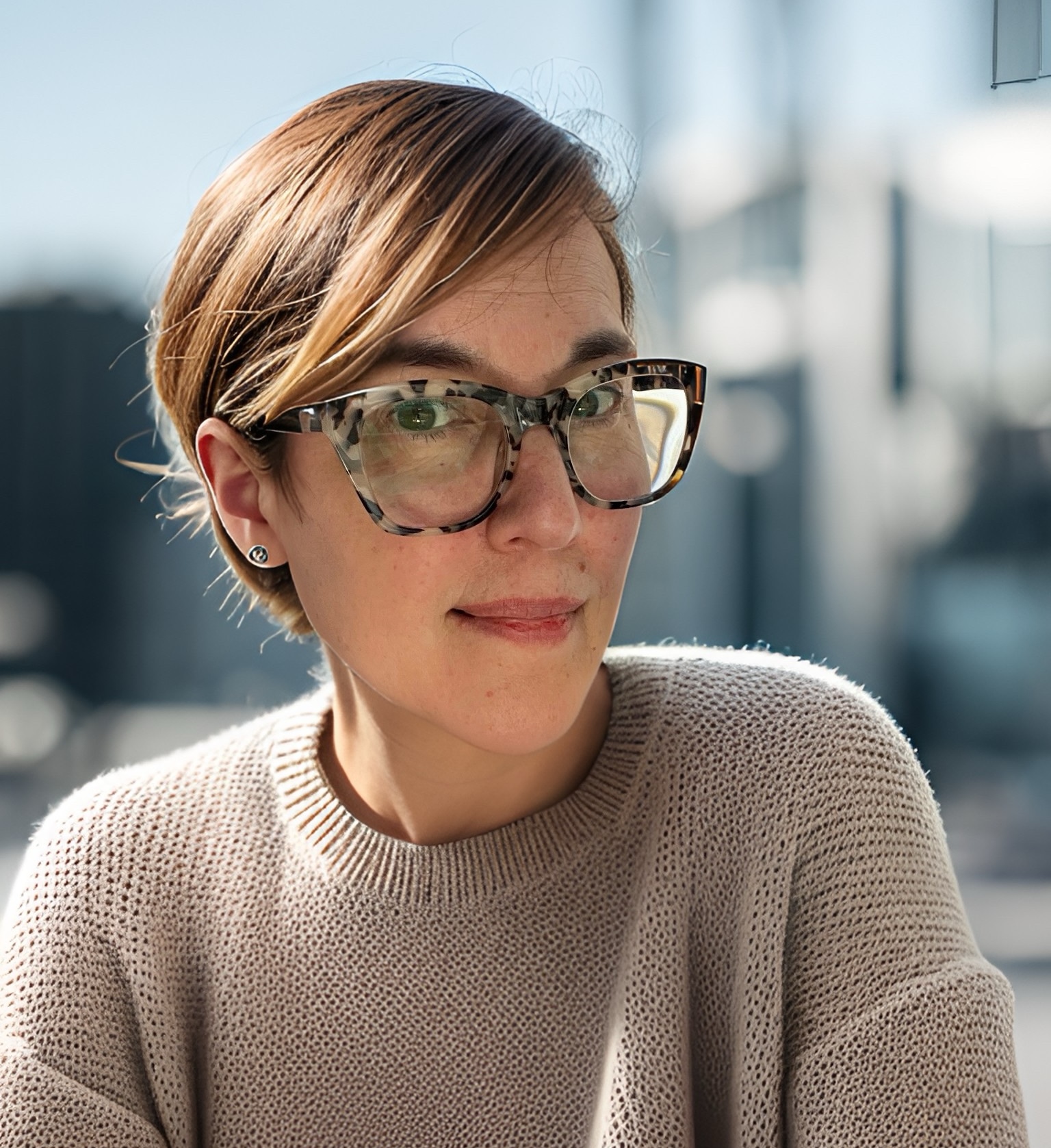
Founder
Lisa McKenna is a digital collage artist, graphic designer, instructor and founder of Rebel Art Lab, a thriving online community for artists ready to ditch the rules and make unforgettable art.
With 35 years in graphic design and two decades leading a Boston agency, she knows how to tell a visual story. In 2020, during the pandemic, she picked up her "digital scissors" on a dusty iPad and found her real voice, turning a survival tool into an artistic rebirth and gaining international exposure within two years.
Her work is unmistakably hers: surreal digital collages that flip the script on mid-century women in advertising, sourced from vintage imagery and rebuilt into something that makes you look twice. That work has been displayed in Times Square, London's Tube, and in Paris, Belgium, and Art Basel Miami. She was named one of 100 Artists to Watch in 2024 by jurors from Christie's and MoMA, and featured in actress Justine Bateman's Smarty Pants Women blog for reinventing her career midlife.
Today, Lisa teaches digital collage through Rebel Art Lab, using Adobe Express to make digital art approachable and genuinely fun. She's helped over 2,000 artists find their creative voice using free, accessible tools, and writes the Rebel Art Lab newsletter, weekly fuel for creatives ready to blow up the rulebook.
Lisa lives on Boston's North Shore with her husband, a mini-adult son, and Banjo, her scruffy Bichon office mate.