

 Apple Podcasts
 Spotify
 YouTube
 iHeartRadio
 Amazon Music
 #056: “It’s Okay to Be Me” … and the Courage That Took With Mason Van Katwyk

What happens when the thing you love most feels like it might cost you belonging? In this episode, we sit down with Mason Van Katwyk … dancer, coach, and self-described jack-of-all-trades … to talk about the quiet identity work that happens behind the scenes of a creative life. Mason shares what it was like to start dance “late” (at 18), self-teaching in mirrors and YouTube rabbit holes, then finding himself torn between what lit him up and what felt acceptable to his family. We explore the hidden grief of being asked to shrink yourself to keep the peace … and the turning point where Mason realized he had to become more vocal, more brave, and ultimately his own number one fan.
The conversation deepens into what it means to be a man learning vulnerability, the rare gift of friendships that can go all the way down (the “Sassy Bunch”), and why community isn’t a luxury … it’s how we remember who we are.
And just when you think it’s “about dance,” Mason names his next evolution: absorbing less, soothing overstimulation, and choosing stillness so his inner voice can finally be louder than the world. The thesis lands simply and powerfully: it’s okay to be me … and that might be the most creative act there is.
If this resonates, follow the show, share with a friend who needs it, and leave a review with the belief you’re choosing to rewrite today. Your words help more creatives find their way back to themselves.
This is Maddox & Dwight! More than anything, we want to connect and communicate with you. We don't want to think of you as listeners. We want to think of you as community. So, scroll to the bottom of the show notes and click the SUBSCRIBE link. Thank you!
Thank you for listening to the For the Love of Creatives Podcast. If you are enjoying the podcast, please scroll to the bottom of the show notes and Rate & Review us. We would SO appreciate it.
Book a Discovery Call With Dwight
Become a SUBSCRIBER to Get Notified of New Episodes
Want to be a Featured Guest?
00:00 - From Pleasing To Self-Support
02:40 - Meet Mason And His Creative Path
05:38 - Starting Dance At Eighteen
09:08 - What Makes A “Dancer” And Identity
11:43 - Injury, Livelihood, And Medical Gaps
14:16 - Male Dancer Stereotypes And Family
17:38 - Choosing Dance Or Playing It Safe
20:54 - Bridging Science And Art In Movement
23:38 - Leaving Campus Support And Rebuilding
26:28 - Dad’s Mindset Shift To Support
29:28 - Becoming Bold And Self-Defined
32:28 - Beliefs Shape Experience
35:13 - Tuning Out Noise To Find Stillness
39:43 - Community, Depth, And Male Friendship
43:23 - Creativity As Ongoing Becoming
52:03 - Gratitude And Closing Reflections
From Pleasing To Self-Support
SPEAKER_03I had to go from being a people pleaser and just being submissive and just doing as I'm told to and essentially being the middle child, having the middle child syndrome behaviors to being more vocal, being the person that does speak out, even though it might rock the boat occasionally or maybe all the time, and to have more confidence in supporting myself because and I say that in the term that there came a time where I was talking to one of my life and health coaches where I again we we were actually talking about my relationship with my father and how I just did everything that I was told to do, but now I had to switch to being the person that says that I have to defend my myself. I have to support myself and being okay being okay with that, not saying that I would not get in any support from them at all, but just that I had to be my number one fan, be my number one support group.
SPEAKER_01I'm your connections and community guy host, Dwight, and I'm joined by our other connections and community guy host, Maddox. And today we are joined by Mason.
SPEAKER_00Mason, you usually have the senior moments of what's happening to you today, Dwight. It's contagious. Oh my god. Well, Mason, welcome to For the Love of Creatives. Um I'm so glad that you could join us for this session.
SPEAKER_01Uh one of the things that we like to do is kind of orient our listener to let them know exactly who you are and what you're about. So could you just share with us for a couple of minutes a little bit about your creative journey and and how it is it that we're talking to you today?
SPEAKER_03Thank you. Thank you for the intro too. And I'm happy to be here. This is so much fun. And actually, this is probably my very first podcast to be on. So new beginnings for everybody. Yeah, so my name is Mason, and uh I think many would probably would call me. I'm a deck of all trades, master of none. Um, but I definitely come from a a background of people in development, learning development, teaching and training, been a dancer since I was 18 and just kind of fell in love with the performing arts. I've always been in that space since I was a wee lad. Um danced, taught, choreographed, was an artistic director, and did all the things. And I'm other than that, I'm just a a food lover, an active individual, and just a lover of life.
SPEAKER_01Well, and it's been easy for us to minimize our accomplishments, but for for you to be able to hold on to any one of those things is it's a lot for for most people.
SPEAKER_03It is, yes. Yes.
SPEAKER_01So I I know I'm I'm really intrigued by um the work that you've done with dance. I mean, as as a form of expression, it's something that a lot of this well in Western society, it's kind of one of those things that's reserved for those people, you know, the the people that will that are bold enough to call themselves dancers. But for a lot of people, uh that's something that they're they're kind of discouraged from doing because you know, either from overt or you know, the ways that people are kind of kind of bully people into thinking that they shouldn't try. So uh I'd love to hear a little bit uh about that journey.
SPEAKER_03Yeah. Oh my gosh, I mean, where do I start? It's a big story.
SPEAKER_02How old were you when you started dancing?
SPEAKER_03So officially I started dancing. My first dance class when I was 18 in college, freshman year. Before that, I was just doing little things here and there. My parents were dancers, they they were barum dancers and taught so social dance. And that's how they kind of just taught us a little bit, but it was very minimal things. And then my older siblings, they were also in the dance world too. They started, I mean, they they took lessons since they were little kids. I did not, but they did the tap and the hip-hop and the clog and maybe some moral dances, like internationally cultural dances um and ballet, just pretty much everything when they were a kid. Um, and so that kind of always just stuck with us, but I never really got a lesson. So my lessons was just watching a whole bunch of YouTube videos, and who watches YouTube videos anymore? But I sure did. I was watching professionals dance, and I was watching every dance movie and TV show that I could find and that I was interested in. I would just watch and observe, and then I would even try to do it and do what they're doing in front of the mirrors, like what this is what it looks like they're doing, and so maybe I could do the same. So I was pretty much self-teaching myself for a year since I was a young kid until I got to college when I actually started taking classes, and I just really enjoyed it because I it was always a passion, it was always an interest of mine to be in that space. And during my college experience, it was first just a hobby, just something to enjoy and to kind of because we all need at least one or two classes that you can just enjoy, not have to think too much about. It's it's so much fun because I was studying um to be in the medical field, to be a physician or doctor. Of course, that's a different story in itself, just jumping around different places. But dance was always something that I really enjoyed doing. Um, so yeah, I guess my first lesson was when I was 18. And when I went into my first class, everyone thought that I had tons of years of experience. I said, nope, today's my first day. This is day one.
SPEAKER_01So were were you in was it a kind of a pressure situation where that was people's lives up until then?
What Makes A “Dancer” And Identity
SPEAKER_03Yeah. So going back to your comment about people calling themselves a dancer. It really is, I it's it's a form of identity for many dancers. We call ourselves a dancer, and dancers usually equate to being able to do the splits or have high kicks or be able to do some really amazing acrobatic work. So then you get somebody who's maybe not able to do those things, they can't really call themselves that because they they know what a dancer looks like and they know they are so far from that. So then they just say, I dance. Um but going more into depth about dancers and calling ourselves a dancer, we dancers tend to go through an identity crisis when they get injured or when they don't get to perform or when they don't get to teach. Um so then they're wondering, well, then who am I if I'm not a dancer, whatever that is to them? So they kind of go down this rabbit hole and depression cycle of just a I don't know who I am if I'm not doing these things, if I have to pivot careers for whatever reason, injury, just the industry itself, the inability to move or to actually do what you consider as a quote-unquote dancer.
SPEAKER_02Um, that's that's really interesting, Mason. I I've never considered it, but now that you say this, I'm thinking, wow, probably more than a lot of different types of professions, dance has a high risk. If you're a dancer, you're at risk for energy, I mean, injury and in a way that so many others are are not. I never considered that. And it makes sense, you know, when suddenly if your whole life is about dance and you're injured and you can't dance. I mean, I was a beauty professional for 40 years. And really, you know, if something had happened to one of my arms or hands where I couldn't have worked, I would have experienced the same thing that you're talking about. But, you know, there's less risk in the salon of injuring yourself. I mean, I not that I couldn't have had a car wreck or some some other accident that took one of my appendages away, but the likelihood of that happening while on the job is much less likely.
SPEAKER_03Yeah, and when dancers do get injured, the doctors and physicians and therapists will just tell you, well, just stop dancing. But if that is your career, that's not an option for anybody. And so there's then there's then just to add more more flame to your fuels, then you're just frustrated because there's nobody there to help you. You're just all by yourself. It's like, well, then I'm just gonna keep going, but yet you're gonna continue injuring yourself because there's nobody that understands what you're going through, what this is, that this is a livelihood, this is your career.
Injury, Livelihood, And Medical Gaps
SPEAKER_02Um, yeah, it's you know, I'm I'm thinking maybe we've had three other dancers, maybe four on the show, and they have all been female. I don't think I think you're the first male dancer we've had. And so I guess what's really coming up for me right now, because I love things like that, and I just know of course I came up in a completely different era than you because you said you're what 32 you're 33. 33. Well, I'm more than double your age. I just recently turned 69.
SPEAKER_03Oh, you look great, by the way.
SPEAKER_02Well, well, thank you. Thank you. I I was definitely in a different era where um being male and a dancer was kind of a kiss of death. And I'm I'm wondering when you came up through the ranks, you took the first class at your first year of college. How did that play out? Did you get a lot of grief and bullshit from from people about all the stuff that goes along with being a male dancer?
SPEAKER_03Right. Yeah, there's definitely that stereotype for your male. You must be gay or something, not something you you are. So it's definitely there's a battle for that, um, especially if you're doing ballet, uh, especially if you're doing ballroom, because those those seem to be the two genres where people think that, oh, they they must be gay. I'm not entirely sure why, other than that's just what's wrong with people? What's wrong with people? Probably because in ballet you wear tights and a dance belt, and you just like to float around.
SPEAKER_02Yeah, and have you ever seen a ballet dancer that didn't look amazing in those tights?
SPEAKER_03And that's no, they're all they're all pretty well fit in belt. So I mean, I think they're just jealous. That's what I think.
SPEAKER_01I I think I think you're you're calling it out exactly right because I think there's an element to that where they know that they never could on their best day approach anything like it. And so the easiest way to make them feel better is to tear down other people's towers and and make it so that, well, that thing that I'll never be able to do, well, that's silly. I that's just that's just one of those things for for those people.
SPEAKER_02How did you deal with that, Mason? When that came about at that tender time in your life, how did you deal with that?
Male Dancer Stereotypes And Family
SPEAKER_03That's a really interesting question because I don't think I've ever had to deal with that stigma and stereotype. I know others did. I know, but I did not. It wasn't until maybe towards the end of my college experience when I was considering going out into the real world that that was gonna be something that I would have to battle, if that's even the right word to say. Um that people are gonna, because we're now in this day and age where people want to know your your sexuality. Like it's so on the table and out there now. So having to tell everybody every time.
SPEAKER_02Oh, yeah, it's it's it's it's like pick tampon commercials on TV now, you know. So like boys, you like girls, you like both. I mean, yes.
SPEAKER_03Yeah. Um, I know so my older brother, he went into the dance world. He got a bachelor's in dance, he got a master's in choreography and performance. And I don't think it was a huge deal for him, but I think the only issue that was a problem was the conversations and arguments he and my dad would have about it. More or less about how can you support a family while doing this? This doesn't support enough. But I think there's probably some embedded concerns about what is my dad going to have to continue defending or proclaiming about his son, his older son, um, of what he is or or who is not, or trying to support him, even though he's really concerned. Um so I think for me, when I got to that point, it wasn't the the end all of end all decision, but it was something that I was considering at the time. Because around I was also considering switching my major from being in um public health to dance. And I was having conversations with with my dance professors about this because they're saying, Mason, just just switch your major. You're you're like, you already have all of the credits here, you're doing amazing, you know you love it, so just do it. And that came a point where I told one of my professors, my professors, I can't, because I'm wanting to support my dad and wanting to make him happy, and seeing the conversations and arguments that were happening between my older brother and him, like, let's not start a World War II. And they understood, they respected it, yet they still treated me as if I was a protege or just a prized position that they're happy to have.
SPEAKER_02Um so you gave it up to keep family peace.
Choosing Dance Or Playing It Safe
SPEAKER_03I did for a bit, and then it wasn't until after graduating six months, uh I guess a year after I graduated, where I was trying to figure out what to do next with my life, well, what was the next step that I really thought I really want to go and get my master's in dance. So I was doing research, I was looking at programs, I was doing deep dives into what is it about dance that I really do enjoy. It came to where I really enjoy the science part of it and also the artistic and trying to bridge both gaps. So I thought I could be a physical therapist for dancers as well as teach and and choreograph and create work. Um, because I really wanted to create to bridge both together. Because I really do enjoy science. I loved kinesiology, I loved anatomy. I was taking dance classes that incorporated body patterns and somatics. I was like, oh, this this just makes sense to me. Um to wanting to put that into dance. I was like, this is it. This is this is what I want to do.
SPEAKER_01Well, and at that pivotal time, I mean, when you were going to go out into the world, um what was it like for you leaving the support of the the community that you had and those those professors who believed in you and balancing what you were dealing with and the the backdrop of the battle between your dad and your older brother? What what community did you draw from?
Bridging Science And Art In Movement
SPEAKER_03Yeah, it was very hard to leave them. Very hard because I was excelling well. There were so many countless opportunities that I wanted to take more advantage of, just didn't have enough time to do it. Um leaving friends. So going from having a lot of every a lot of everything to a lot of opportunities to having nothing was was really hard. I was looking for studios to join just so I can continue my craft dancing, but there was not classes for adults, it was all for little kids. I thought, well, this is not gonna work out. But then they say, well, then you could teach. Like, I don't want to teach, I really don't want to teach this age. If I did teach, I'd want to teach college students because that's what I was doing, because they want to be there, they want to learn. Teaching younger ones is just babysitting for me. Others love it, and I'm grateful that they do it because without them, we I wouldn't have anybody to teach. Uh, but yeah, it was hard. Um, and trying to keep the peace with my dad, it kind of just turned into where what he doesn't know won't hurt him, so I won't tell him anything about anything. Um it took him a while to come around. Um, because I think he was seeing the relationship again with my older brother and how there were a lot of dents in their relationship. And so I think when he was kind of discovering that I was looking to go into the dance world and that I wasn't just doing it just to dance, but I was doing it as um, I guess that had a little bit of a white collar valve value to it, if for lack of a better term, to where. I'm not just dancing. I'm doing something on the side with it, like being a physical therapist or a chiropractor or being a physician's assistant or things of that nature that is understanding for him. Um, I think that's when he finally started to turn around and became a little bit more supportive and interested in asking questions, not to be of concern, but to really understand what he could do to help support me. And that was great.
SPEAKER_02I'm I'm a little curious. I mean, you did say that your mom and dad were dancers. And your dad, having been a dancer all of his life, is so unsupportive of you and your brother doing that. I don't, I'm I'm missing something here. There's like a what? What's going on?
SPEAKER_03Yeah. So I mean, my parents did dance. It wasn't their profession. My dad is in my dad in the construction management. Has always loved that too. That's always been a passion of his. And knowing his history, his family history of he comes from a long history of getting an education, being able to support a family and to the family structure where the man is to provide the bread to make money to feed the family. And that has always been part of just our growing up, our structure as a family. And so when those principles and teachings taught are challenged, it's it's a concern. Um so yeah, it's interesting how they they met in a dance class, they hated each other at first, but then it took just dancing with each other once. And so, long story short, we're all here now.
SPEAKER_00That's beautiful.
SPEAKER_03But yeah, it's it's an interesting dynamic where he loves it. Whenever there's there's a a dance floor, when we were kids, my mom and him would be tearing up the dance floor, and people would move out of the way because they take it up. Yeah, it's it's interesting. So it's great as a hobby. But knowing the history of what dance was back then, where you either perform or you teach, neither of them really make enough money. The concern is you need to find something else to do does ring, has rung strong for him.
Leaving Campus Support And Rebuilding
SPEAKER_02You know, this is a theme that has run through so many of our episodes where the person, you know, that we're having the conversation with is talking about how their parents pull support because they didn't really believe that their creative endeavor was a real job or however you want to word that. And I think there's a lesson here, and and we've listened to this over and over, but I think I want to call this out now, you know, for our listeners. If you're a parent out there and you got small children, if you've not heard enough stories on this podcast to see how negative it negative it has an impact on your child to not let them do what their heart is telling them to do, uh, it never works well. It never ends well, never ends well.
SPEAKER_01Well, and and I can appreciate that your where your dad was coming from was that sense of safety. He uh the grief that he was giving your brother and the grief that he was giving you, it came from a a good place because he just wanted the best for his kids. Right.
SPEAKER_02Yes, it always is from a well-meaning place, but you know, we always talk about the intention versus impact. Yes, you know, they have a great intention, but the impact can be really negative, especially during your formative years when everything you love, you're being given the motion, the the given the message that it's not viable.
SPEAKER_01Yeah.
SPEAKER_02And that that just, I don't know, man. I I've lost count on how many people didn't really discover their passion as some form of creative until they were in the mid-part of their life because it took them that long to break away from all of that family pressure, you know, to stand on their own two feet and finally do what they had been called to do for as long as they can remember. And I find that just sad.
SPEAKER_01Well, and and Mason, it sounds like the arc of your journey is such that you could find that place where you made peace with it. You could actually have a sense of alignment and have those open discussions with your dad and he was on board. What was that like?
SPEAKER_05Yeah.
Dad’s Mindset Shift To Support
SPEAKER_03That's a really good question. Because before, like I said, it it was a bit hard to talk things out and to tell them, like, you know, I really do enjoy this thing or this idea. I really want to run with it now. Example, um, get I started a little sidekick as a holiday and event decorator. Um, and I've been doing it for a couple of years. And just last year, actually, he was finding ways and at least helping me trying to build a business of my own, who to talk to, how to start one. Because he also tried to start his own consulting firm as an as an engineer. So he was definitely giving me tips and suggestions, what won what went well for him, what didn't go well. Um, and so he was giving me feedback and just things to think about as finding clientele, who do I want to work with? Do I want to work for more luxury people? Do I do I want to work for corporations or businesses? Um and how to market myself. So the conversations turn to being more what's the word I'm looking for?
SPEAKER_04More supportive.
SPEAKER_03Yes, more, yes, more supportive. So yeah, it's been really interesting. And I think our not saying that we had a rocky relationship to begin with, but there would I think our relationship has turned for a better because we were able to have these open and these more supportive conversations.
SPEAKER_02Do you do you feel like you have gotten to where you do what your heart leads you to do now?
SPEAKER_03Yeah, yes, 100%.
SPEAKER_02Okay. So so that begs the question. You went from a place where dad was really thwarting your desire to be in the arts in some shape, form, or fashion. And you've come full circle now because you're you're doing what you love. And so to go from point A to point B, who did you have to become?
SPEAKER_05That is a really good question.
Becoming Bold And Self-Defined
SPEAKER_03So thinking about who I was back then and who I had to become then in order to make these changes happen, I had to go from being a people pleaser and just being submissive and just doing as I'm told to and essentially being the middle child, having the middle child syndrome behaviors to being more vocal, being the person that does speak out, even though it might rock the boat occasionally, or maybe all the time, and to have more confidence in supporting myself because and I say that in the term that there came a time where I was talking to one of my life and health coaches, where I again we we were actually talking about my relationship with my father and how I just did everything that I was told to do, but now I had to switch to being the person that says that I have to defend my myself, I have to support myself and being okay being okay with that, not saying that I would not get in any support from them at all, but just that I had to be my number one fan, be my number one support group.
SPEAKER_02The buck stops here is what my dad used to say.
unknownYeah.
SPEAKER_02Wow. So you're you're listing off things like boldness and bravery and courage. Um, you had to step into a greater sense of self.
SPEAKER_05Yeah.
SPEAKER_02Have you ever looked at it from that standpoint? Have you ever looked at who you had to become to get where you are now?
SPEAKER_03Yes, all the all the time. Being as also a life and health coach, this is something that we talk about a lot with our clients and also with ourselves of figuring out the roadmaps that got us to where we are, figuring out what are the ones that no longer are of service to us. And there's even an exercise that I did with my clients that we would roleplay, where we I would ask them, so if you could be anybody you wanted, who would it be? If you if there was somebody that you admire most about them, what was it about them that you really admired? And there were always characteristics. And then I tell them, well, the funny thing is, is that that is our what you what you admire and what you want to become in somebody else is already embedded within you. If it wasn't, you wouldn't have been able to to to recognize that and oh much. They're like, oh, what? What that's already in me. And so being able to tap into that has really enlightened a lot, a lot of people. So I definitely take that into my own self. It's like, okay, who was I then and who do I need to become now in order to move forward? So yeah, I think about it all the time. All the time.
SPEAKER_02So if you're looking at next steps, you know where you are right now, you know what you've achieved up to this moment. If you're looking at next steps in a nutshell, what is the next? Do you haven't know what the next step is, the next level that you'd like to go to?
SPEAKER_03Yeah, that's another great question. I think I have ideas of and I want to be more internally, not externally. Well, I I guess it could be more external because there has to be some tangible result to it.
Beliefs Shape Experience
SPEAKER_02I I think one drives the other. I think you kind of have to decide what you want to be in order to figure out who you need to be to get there.
SPEAKER_03Right. Yeah, you need point B so you can figure out where you are in point A to get there.
SPEAKER_02They're very connected. They they're very intertwined and connected. But I do think that most of the time one the the the what you want to be needs to be determined to be able to know who you need to be to get there, but not 100% of the time. It's it's all kind of fluid, I think.
SPEAKER_01Yeah, and another wrinkle to think about is uh it's much easier to do the exercise backward. So if you look at exactly where we are now, then you can make certain assessments about who you are, or you could you could take a poll, ask the people around you who they think you are. And what you arrive at is, oh my goodness. So there's aspects of it that if someone sees it, well to them it it's true. Well, what did it what did I do to get to this point? How is it that I got in this shape health-wise? Uh how is it that I was able to achieve some level of success? Because it didn't just happen. It was a series of actions.
SPEAKER_02I I heard something earlier today that really struck me, and it was, you know, um when we get when something comes about in our life, you know, some dream comes true or some achievement, it it is not because we got lucky or not because we wished it so, but because we moved into a place where the universe could reflect us back to us.
SPEAKER_03Right. I mean there's a paradigm that I was taught and learned that the universe, whatever's happening outside, is just a reflection of what's already happening with within you. So if the world looks chaotic, it's probably because internally everything is chaotic in your life. If everything is great, or a little bumpy hand there, that's just being human.
Tuning Out Noise To Find Stillness
SPEAKER_02Um the universe doesn't give us what we want, it gives us who we are.
SPEAKER_03Yeah.
SPEAKER_02You know, if you're if you're a if you're a liar, it's gonna give you all kinds of things that it wouldn't give you if you weren't a liar.
SPEAKER_03Right.
SPEAKER_02Or a truth teller. They they really create very different realities.
SPEAKER_03Right. There's another paradigm or teaching where it's your it's about your beliefs and experiences where your beliefs um create your experiences, and your experiences are just confirming those beliefs. So if you want to change your experiences, you have to change your belief system.
SPEAKER_01Absolutely. And sadly, we're living in a world where that's accelerated because that's that seems to be what's baked into all of the all of the information providing platforms.
SPEAKER_03Yeah.
SPEAKER_01They they want uh they hold a mirror up. And uh the the engine that drives it is confirmation bias. Right. Everything that we see in our feed, it's uh we can love it or hate it, but we're seeing ourselves reflected back.
SPEAKER_02In some way, yes. Because you clicked on something that the algorithm said, oh, he likes that. We'll give him more of that. So be careful what you click on. Um, you said a minute ago, I want to ask, you know, what are the next steps? What's the next big goal? And you said, maybe I maybe I have some, you know, like some ideas. Do you want to share what those, even if it's not, we're not asking you to sign it in blood or anything, but what what what's bubbling to the surface as you think about what next steps might be? Let's play this moment.
SPEAKER_03Thank you. And I was actually gonna answer your question to what does the future self look like for for me? And the first thing that came up was absorbing less externally in a sense. I've always been somebody that loves to listen and to absorb my surroundings and and everything around me. But it's gotten to this point where that's all I'm doing, and I'm have absorbed so much, and I'm consuming so much that I have very little output going on, or I'm just getting overwhelmed. I'm hearing what everyone's saying, and it's just loud. It's where my in my inner energy is just going haywire. It's going crazy.
SPEAKER_02It's sound describing over-stimulation, yeah.
SPEAKER_03Yes, over-stimulated, overcrowded, over, yes, whatever is too much. That's me. So I'm wanting, so the future me wants to be less stimulated, more grounded, listen to what's going on. But from a probably from a neutral third-party perspective, then somebody that has to react to a situation. I just like, yep, that's just what happened.
SPEAKER_02You know, my my intuition is giving me the word stillness.
SPEAKER_05Yes. Yes. Yes.
Community, Depth, And Male Friendship
SPEAKER_01Well, I applaud you for arriving at that. Uh I'm assuming without something tragic driving me toward it, but I'll just share a a little bit about my story. I had to deal with a rather tragic loss during COVID. Uh, lost a partner of 20 years after uh a year of having to deal with critical care. And it woke me up because the the person I was before was someone that was always seeking, always thriving on trying to take in as much as I could so that I could be the one to provide the answer. I could put out the fires, I could do everything. And I I lost that ability. I I lost any desire to have anything like that. And something that I seek in as as great a quantity as I can find it is that stillness, that quiet. I I need silence. I need I need for things to be, I need the volume of the world to be turned down in many ways. I I I know that we're we're taught at a an early age that we have five senses. Well, somehow I have an awareness of there being several more, and all of them are turned way too high sometimes. So there are there are days when I carve out a little white space for me and I just shut it all out so that I can allow everything that's internal to be turned up a little bit louder. I can shut everything else out.
SPEAKER_03Can I ask a follow-up question to that? How has it been since being able to do that?
SPEAKER_01Here's the thing. There's definitely a sense of losing something greater when you're when you go through a profound loss. And there's something scary about and the whole thing you talked about with the identity, it's similar to the experience of the dancer that that can't dance or has lost a limb. It is there were times when it was frightening because it was a crisis of identity. But by embracing what new abilities came from having that grounding from an inner peace, it made it so that even though I I might not have been able to deliver an answer fastest, I could arrive at a truth that was more grounded and based in something that was more thoughtful and in in some ways, by some measures, more useful and helpful.
SPEAKER_05And that's something that I've I've learned to embrace. Thank you for sharing that. Really sounds touching.
SPEAKER_02Mason, I am going to ask you a question now that I'm going to very, very intentionally word because it it it it this is not the way it would normally be worded, but I want to kind of steer away from achievements and success. So my question is looking back from the beginning to now, to this very moment, what would you say is the most your most celebrated aspect of your creative journey?
Creativity As Ongoing Becoming
SPEAKER_03The first thing that came up to my mind when you're asking that question was an aha moment I had with my life and health coach at the time that it's okay to be me. It's okay. And we're not sure why that came up, but I'm just putting it there that after you asked that question, that was the first thing that came up, and I think that probably is probably the synopsis of this entire podcast episode is being okay to be me and how that showed up through going different routes, through trying different things, to going down the dance route, to exploring more about dance and exploring more about decorating and tapping into that, being okay with being me of being a dancer and being other things too. So yeah, it's okay to be me.
SPEAKER_02Does that equate that okay to be me? Does that equate in some way to being more comfortable in your own skin?
SPEAKER_03Yes, I definitely think it it is.
SPEAKER_02Yeah. So that leads to a little different, different, we're gonna go off on a little segue. That that part that you're celebrating, that it's okay to be me, how did community play a role in that? Or did it?
SPEAKER_03It did. Um, because I think when I was still trying to figure out what was me, also being okay with what is me. I seem to find, I seem to have landed, I didn't find them, and I don't think they found me. I think we just came together naturally where there was a support system happening. I have great friends. I still keep in contact with two of them from college, and we've were pretty much known as the Sassy Bunch. That was a name somebody else gave us, not us. But to this day, we have really stayed close and we would have conversations with each other constantly through text, through WhatsApp, through FaceTime. And so I think having a community even just allowed um like one me to explore more what me is into accepting those parts of me.
SPEAKER_02So these friends are people that you can go deep with.
SPEAKER_03Yes, and boy, have we gone deep, even to the point where we're just sobbing and we're just crying. Like there's we're not talking anymore.
SPEAKER_02Mason, do you have any idea how rare that is and how valuable that is? I've searched most of my life for what you just described now. I do, I do have it now. I do have a very, very small handful of male friends, you know, because men, we're not straight, gay, doesn't matter what orientation you are. We're not good at deep with each other for the most part. I mean, I I have a small handful of friends that I can go very deep with. Some of them are straight, some of them are gay, but they're men. And I feel so blessed for that because there have been long stretches in my life where I couldn't find any men that would dip below the surface. And I have very few gay friends for that very reason. I have a lot of gay acquaintances. But as far as gay friends go, those solid friends, mm-mm. Mm-mm. Couple.
SPEAKER_01Yeah, there's a a lot of discussion around how with men there always has to be the third thing. It's it's just really hard to have a serious conversation and to just be in each other's presence without there being a distraction.
SPEAKER_03Yeah. And I think there's probably to add to that, there's also this the stereotype that men, whether you're a gay, straight, bisexual, or non-binary or not, men are usually rock solid. They don't show emotion. Vulnerability is almost a sign of weakness. Even though I do see it changing, and more men are being more open about their mental and emotional state. It's just been a long, like it's been conditioned in our brains for so long that it's gonna take a lot more time to cut those knots.
SPEAKER_02This is something I've studied because it fascinates me. And we're we're talking about the result of the patriarchy. This is this is what men have done to men. And and we have a four times greater um suicide rate than women do for that very reason, because you can only keep that shit bottled up inside of you for so long, and then it comes out sideways, and that sideways sometimes just looks like ending our life because we can't handle anymore.
SPEAKER_01Uh I hate to put this spoiler out there for anyone that hasn't figured it out or ruined what might be a classic, but what you're describing is the the grotesque real truth behind the the Greta Gerwig uh Barbie movie. It wasn't just a cute story about toys coming to life. It was a conviction of the patriarchy.
SPEAKER_02Yes. And a very well-done conviction. Yes. Yes, yes, yes. Well, I'm really glad, Mason, to hear that you are so fortunate to have that circle of influence and that circle of support. We we're we're very big advocates for community. We think that we thrive when there's community and we survive when there's not community. And we're living in a world right now that's doing a lot of surviving because people are unplugged. They're just so caught up in their own little, you know, that those that hierarchy of needs. Maslow, man, I can't say its name. Hierarchy of needs, when we're in survival mode, we we can't think about anything else but just keeping our head above water.
SPEAKER_01Yeah, it makes people lose sight of the fact that if there's anything that's worth doing, it's it's much better when you have someone that you can do it with.
SPEAKER_02If you were gonna share any words of wisdom that you like with our listeners, anything that has to do with, you know, what we've talked about, uh, their creative journey, their life, their way of navigating through that finding that place of uh being comfortable in your own skin and being okay with me, what would your words of wisdom be? Anything you'd like to share?
SPEAKER_05No wrong answers here. Right. It's never a final destination.
SPEAKER_03It's always a journey. We might arrive somewhere temporarily and it would be great. Change if if it's consistent. So it might change in the future, what satisfied you, who you were. Um there might be other parts that come out. I was told by a friend that there are as as many there are as many parts of you as there are stars in the sky. There's so many parts of you. You might not get to see them all, they might not be very present, they might be working with other parts of you, you just don't know it. But we are all dynamic, masterful, creative beings with shades of colors, different shades of colors, varieties of textures and flavors, and that's how I view all of us is we we're all masterpieces, and I hope that's something that people can and those who are listening can take with them and remind themselves that we are amazing.
SPEAKER_02Go forth and be a masterpiece. I will go.
SPEAKER_01Is there anything that you would like to share with our listeners that we didn't have a chance to talk about in this time?
SPEAKER_05Oh no, I think everything is good and said, really.
SPEAKER_03I don't have anything else to share.
SPEAKER_01Well, this has been an amazing hour, and we're so glad that you could join us, Mason.
SPEAKER_03Happy to be here. This was great fun.
SPEAKER_02Yeah, Mason. I really appreciate your realness. You know, that's something that's sometimes kind of hard to find in our community. But I appreciate your your realness, and it's been a breath of fresh air.
SPEAKER_03Thank you for making a safe space where I could.
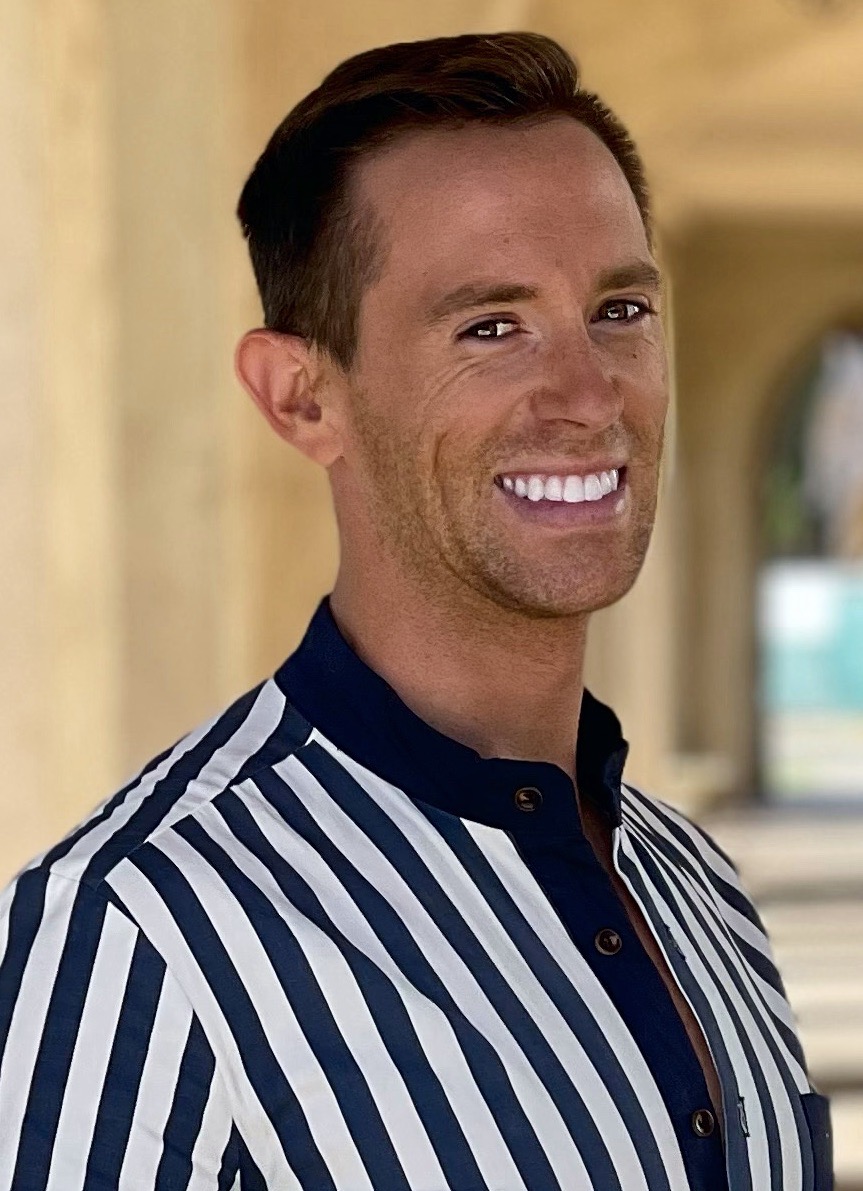
Mason Van Katwyk is a multidimensional creative and People & Culture strategist whose work spans dance, choreography, holiday and event design, leadership development, and human transformation.
With 14+ years in the performing arts and creative direction, Mason has choreographed for color guards, dance companies, and student ensembles—blending storytelling with movement to help performers connect deeply with their bodies and each other. Off the stage, his love for visual design comes alive through immersive holiday installations and experiential décor projects that turn ordinary spaces into artistic worlds.
As a Career & Well-Being Development consultant and People & Culture practitioner, Mason brings the same creativity to organizational life—designing people-first systems, learning experiences, and leadership pathways that help teams grow with intention.
At the heart of everything Mason does is one mission:
to help people and communities step into their highest potential—creatively, spiritually, and humanly.
He believes creativity is not just an ability, but a way of becoming. And whether he’s shaping workplace cultures, coaching leaders, choreographing, or decorating a 12-foot tree, Mason shows up to elevate connection, meaning, and beauty in every space he enters.