

 Apple Podcasts
 Spotify
 YouTube
 iHeartRadio
 Amazon Music
 #065: When You’re Too Close to See Your Own Brilliance With Matt Yigit


Have you ever been so close to your work… so deep in the tiny details… that all you could see were the flaws?
In this conversation, mosaic artist and workshop founder Matt Yigit invites us into a powerful metaphor that feels almost too familiar for creatives. Participants in his workshops spend hours placing tiny pieces of colored glass onto mosaic lamps… leaning in close… noticing every misalignment… quietly judging themselves.
And then something unexpected happens.
The lamp lights up.
What once felt messy or imperfect suddenly becomes luminous. Whole. Alive.
Matt shares how this moment mirrors something much deeper in the creative journey… and in life itself. When we’re too close to our work, we fixate on the imperfections. We assume we’ve ruined it. We question whether we’re capable. But when we step back… when we allow perspective… something shifts.
The “mistakes” soften. The pattern emerges. The light transforms everything.
Originally from Turkey and trained in mathematics, Matt’s path into mosaic art bridges precision and surrender… structure and soul. His workshops aren’t just about making lamps. They’re about confronting perfectionism. About noticing the stress in the room. About guiding people from self-doubt to surprise.
Again and again, participants look at their finished lamp and whisper… “Did I really make this?”
This episode is a gentle reminder that creativity isn’t about flawless alignment. It’s about courage. It’s about staying with the process long enough to see the whole picture. It’s about learning to embrace what doesn’t fit perfectly… and trusting that, in the light, it might be the most beautiful part.
If you’ve ever judged your work too quickly… or yourself too harshly… this conversation will feel like someone turning on a lamp in a dim room.
This is Maddox & Dwight! More than anything, we want to connect and communicate with you. We don't want to think of you as listeners. We want to think of you as community. So, scroll to the bottom of the show notes and click the SUBSCRIBE link. Thank you!
Thank you for listening to the For the Love of Creatives Podcast. If you are enjoying the podcast, please scroll to the bottom of the show notes and Rate & Review us. We would SO appreciate it.
Book a Discovery Call With Dwight
Become a SUBSCRIBER to Get Notified of New Episodes
Want to be a Featured Guest?
00:00 - Seeing Beauty Beyond Imperfection
01:52 - Meet Matt: Mosaic Artist And Founder
04:48 - The Magic When Lamps Light Up
07:46 - Stepping Back For Perspective
11:18 - Imperfection As A Life Lesson
16:05 - Gifts, Meaning, And Human Reaction
18:47 - Passion, Energy, And Transformative Workshops
23:04 - The Layoff That Sparked A Leap
27:03 - Going Public And Viral Growth
31:28 - Culture, Hospitality, And Authenticity
36:33 - Servant Hearts Over Perfect English
41:43 - Refunds, Trust, And Over-Delivering
46:32 - Empowering Instructors And Creativity
52:08 - Community Over Corporate Control
56:56 - Becoming A Delegator, Not A Doer
01:01:23 - Letting Go Of Control With A Plan
Seeing Beauty Beyond Imperfection
SPEAKER_00When they are too close, they see all these imperfectionism and they judge themselves. What does that mean? Oh, when I I couldn't align that properly. I could because this shape is not a perfect cut diamond shape or perfect cut square. When I try to match them right here, it doesn't touch like perfectly. So I mean I think I messed up. But when they come back and see the big picture and that light, like that light is the magic. When it lit up, they are saying, Oh my gosh. I am trying to tell them, like, as part of my workshops, we are trying to teach you or experience you how you embrace imperfectionism.
SPEAKER_01This is Dwight and Maddox coming into your ears for another edition of For the Love of Creatives podcast. I'd like to give a special shout out to our listeners in Frankfurt, Germany. And today, our featured guest is the wonderful Matt Yidget. Hey Matt, welcome to the podcast.
SPEAKER_00Hey Dwight. Hey Maddox, thank you.
SPEAKER_01We're so glad that you you could join us. Um I know that we've bumped into each other at events around town. And um I know that you uh I've known about your wonderful workshops where they're really just uh an opportunity for people to come together and to celebrate. Um but I think it's great for you to share with our audience a little bit about who you are and what you're about.
SPEAKER_00Uh thank you for inviting me first of all. I appreciate all the time. Uh and this amazing I am so happy to be part of this amazing podcast here. Uh who am I? Uh my name is Matt Hidit. I am a mosaic artist uh by core, but I am in multiple different things too. Uh I am originally from Turkey and I moved here to States like uh more than 10 years ago or so. I have uh a math degree, nothing to do with art or creativity. I mean, kind of some sort, but always uh I learned this art when I was in Istanbul during my college years, so it was like stunning to me uh that mosaics, all these tiles and shapes. I think with the math background, it makes sense, uh, you would imagine. And this was always my passion. I just become, and now I am the founder and and CEO of uh a Mosaic Lamp Workshop Company. We are in Dallas, I'm based in Dallas, Texas, but we are in multiple cities nationwide right now.
SPEAKER_01Matt is amazing. It sounds like quite a whirlwind. Uh I mean, just hitting the notes for for what you've described for just where you've been. I mean, to um learning in Istanbul. Yes. And uh everything that you're doing all over all over the country.
SPEAKER_02Um entrepreneur.
SPEAKER_00Tell me what go ahead.
SPEAKER_01Um what is what is it that uh that drove you to um pick up and and go from something that uh it sounded like it was quite um traditional, like very uh mathematics to uh building these uh wonderful uh beautiful pieces of art and inspiring people to do the same.
The Magic When Lamps Light Up
SPEAKER_00So what uh what is what's stunning to me with the with these lamps specifically? I am a mosaic artist multidisciplinary. Uh I can do like regular rock mosaics and and things, but but what these lamps uh brought to me specifically is uh so the colors with mixture of lightning, lights like that changes the whole thing. So this proves on our workshops too. So people make their lamps, I mean shapes, patterns, whatever colors they want to match, uh, whatever they want to use. And sometimes they ask me, like, what should I use? I I tell them, let me ask you, what do you want to use? Like, just go wild, whatever thing you want to use, go for it. And then they work on it like for about for about two hours or so, and they are like tiny, like small things, they are extremely closely, intricate detail of work that they are doing over there, and at the end they kind of have some kind of feeling like, oh, I think my lamp could have been better. I I don't think it is the thing that I want the wanted the most over there, but then the magic happens. What we do, we assemble their lamps and then hit that button, light it up. They are saying that we got this reaction all the time. Wow, I can I I even have a recording for this on my Instagram channels and YouTube, like every single workshop, same exact reaction. Wow, can you imagine that? Because when when we are extremely tiny, close to the things, and when we take ourselves out to see the big picture, and that light changes the whole environment over there. So I think when I see that first in Istanbul, like all these colors with the light, like it changes the whole thing. Like when you turn them off, oh they look they are still beautiful, whatever it is, it is what it is. But when they light up with a different pattern, different shape, different variations of uh patterns, like they like we can tell them. I mean, lamps look similar to each other, but they have all uniqueness uh in each other, like us human beings, basically. We have similar skin colors, we have similar like beard shapes, whatever. And then when we go into detail or when we light up the people, everybody has their own uniqueness over there. That's kind of what I believed in when I uh saw these lamps, this art form in Istanbul. And this is like uh generations of generations, like it's a pretty pretty ancient art form coming from Roman uh Empire, and then Byzantire, and then Ottoman Empire, then Turkey. So it's not just in Turkey, it's Morocco, Middle East, like all of these cultures are pretty much baked in into this art form, too.
SPEAKER_02I have a question.
SPEAKER_00Yes, please.
SPEAKER_02You said something a minute ago that really sparked my curiosity. You talked about the detail and how people are working in very close to the lamp as they uh add the different colored stones to it. And sometimes you have to step back a little bit. And and I in that moment I thought, yes, you know, it it's true with painting as well. You know, you're in so close and you're doing fine detail and you can't really see what it looks like until you step back a few feet. I mean, think about if you were a mural painter, you know, where you're working and it's really big, you've got to step back more. But what came to me in that moment was, and tell me if this is part of it as well, because this what came up for me is it's it's it's on two different levels. You're physically stepping back to get a different perspective of it visually, but sometimes like metaphorically, when we step back, we're we're we're stepping back from our perception of it and we're giving it a rest for a few minutes, you know, or maybe even a day or two. Sometimes I walk away from a piece I've been working on and don't look at it for a few days and come back. And invariably, when I come back and look at it, I see it differently than I did when I was working on it. We're it is that in line with what you're talking about as well?
Imperfection As A Life Lesson
SPEAKER_00100% in line. Let me tell let me even add on to that. I totally agree. This this is like art in different shapes or different media of art, basically. Like uh, I think mural example is an amazing uh example. You have a big uh wall over there, you are making a mural, and like you like you're on this tiny pixel of that mural, it doesn't look anything just like little blue color over there. But when you are done, you have the whole be beautiful artwork and picture over there, similarly, and even with ours, when they are too close, they see all these imperfectionism and they judge themselves. What does that mean? Oh, when I I couldn't align that properly, I could because this shape is not a perfect cut diamond shape or perfect cut square. When when I try to match them right here, it doesn't touch like perfectly. So I mean, I think I messed up. But when they come back and see the big picture and that light, like that light is the magic, when it lit up, they are saying, Oh my gosh, I am trying to tell them, like, as part of my workshops, we are trying to teach you or experience you how you embrace imperfectionism. So life is not always perfect, like cut lines, it's not not always math. Do you understand what I mean? We always practice this every single day, like we always embrace our imperfectionism, we move forward, we try to find some other solutions, and then go for it. So, I think our experience that we are providing as part of our workshops is the similar copycat of the life experience, life journey we have over there. So they they they don't know that. I understand, they don't know that, and when they see something challenging that they think they can't do it or whatever, or it's not perfectly aligned, but when I bring that uh journey to their attention, they then realize that oh now it makes sense. I am now more relieved, more stressed out over there. Now I can do better, and then now they start looking things differently. Oh, if it doesn't fit, just go with go with that. Again, like sometimes they even like jokes to me. Oh, I think I know this part is kind of kind of messy, so this is gonna be back of all my lamp. Okay, so solution is uh uh fine since it's a circular lamp, they can just turn that back uh to to their wall against their wall, and then they won't be able to see that part. But sometimes we wanna come back to that imperfectionism uh section and then turn your lamp back way, and then you will remember how you how that moment was that you think that's like challenging. I couldn't do it, it wasn't perfectly aligned, I kind of messed up. But then at the end of the day, when we when I pick uh look at the old big picture, I think I made something tangible, something good that I I did it the testing type of thing. Plus, imagine you we had a lot of uh customers, uh a lot of I won't say customers, I will say guests. So we have a lot of guests that they come and they make something and they gift it to someone else, they are mothers, they are sister-in-laws, they are wives, whatever. But so, do you think that the the person taking the gift is gonna think that oh this is so imperfection? Why you mess this section up? No, they will say that, oh my gosh, this is the best thing ever. Did you spend time making a lamp for me? This looks amazing. I I've been wanting to to see these years, but I didn't get a chance to buy. But you handmade this for me. This is extremely valuable for us.
SPEAKER_01It's an it's amazing because as you describe that, I can't help but see how you have found the end. You found the way to bring something physical to people so that our our doing minds have something that we can focus on, and then you start to unpack all of those things that hold people back through the process. Like there is so much more than there being something consumable that's taken out of this hundred personality.
SPEAKER_02You're you're touching on a big life lesson here because uh art is life and life is art, and you can't really sell uh separate the two. And when we can, whether it is our art or our life, when we can step back and not just be okay with, but actually look, seek the beauty in imperfection, it will change our art and it will change our life. 100% not not not just be okay with it, but search for the imperfection. Exactly. And look for the beauty in that imperfection.
SPEAKER_00Exactly. I can I can't even like I mean for me to explain this, you should come to my workshops and then you would like just sit, observe people, like okay. In two hours, I can teach them how to practice that. It's not just like, oh, get your stuff and do do these things. This is like paint with a paint and sit type of like class, just do that and take it home. It's not like this is not our experience that we are trying to uh promote and provide over there. So they got stressed out. I I couldn't do it, and they can't do, I mean, or like when I first start the workshop, I always like make this joke. I feel the stress on the air, and everybody laughs because they are stressful, because they are, and then I tell them, like, you don't know what to expect. I mean, some of you can't even think that I can even paint, I can even draw. How am I supposed to make a lamp like the looking like one of yours over there? And I always tell them at the end of the workshop, you won't believe your eyes, and we'll get reactions like, Oh, did I make this? Your lamp looks so cute, look so beautiful. Those reactions and feelings, and then when we have that reactions and feelings, I tell them, Do you remember what I told you in the beginning? Yes, you told us. Did you believe what I said? No, we did not believe you. Now, this is what happened. Oh my gosh, this is amazing.
SPEAKER_02That's beautiful. You know, the the tone of your voice, your energy, and the look on your face so clearly demonstrates how much passion you have for not just the lamps and the mechanical aspect of it, but the way it transforms people.
SPEAKER_00Yeah, yeah, appreciate that.
Gifts, Meaning, And Human Reaction
SPEAKER_02And we we we all we all could use a little transformation. I did I I I didn't notice I didn't say need, but we we all can benefit from a little transformation from time to time.
SPEAKER_00Thanks so much, appreciate that. So, like there is also, you know, I am also a business owner. Uh I have, I mean, I I did some corporate jobs. I I know the white uh is part of the corporate culture too.
SPEAKER_01Yeah.
Passion, Energy, And Transformative Workshops
The Layoff That Sparked A Leap
Going Public And Viral Growth
SPEAKER_00And I was always I I also share share this part of life, life of myself too. Uh because I'm sure we have artists, we have creatives listening, and sometimes they are like hesitant to each to themselves. Like, should I take this leap? Should I take this action? Like, what happens? And I don't wanna like uh take bold action sometimes, but let me tell you also my journey on that part and how my passion become a like a nationwide uh business, uh pretty growing rapidly, fast, and how I can turn my passion into a real uh real deal, basically. I can say so. I had a corporate life, you know. In a corporate life, you are in a like a safe zone, basically. You you got you got big paychecks, uh, I got six sixty figure whatever payment, whatever, and then good life. They feel like you are valuable, uh valuable over there, and then that one day hits okay. That one day you have your manager in a meeting, in a zoom meeting, like this one, and there's another lady that you don't don't know, claiming to be HR person, and you just there's a weird silence over there, okay. And that was like so shocking to me. Uh my manager told me, Okay, we have some updates, whatever, for you, and then now he just stopped, and then now HR is gonna talk to you. I said, Okay, fine. Uh HR told me that today is the last day of your work day. Okay, you got laid off. Oh, I said, Oh my gosh, like, how I mean, how, why? You have a million different questions. Why me? I mean, did I do anything wrong? Like, what was the issue? And I got laid off basically after that corporate that six-figure big check, and then there is no then it it comes down to a zero dollar check basically to you in one day. So then I start looking at jobs. I mean, I love corporate, I learned so much from them. I learned how to be professional, how to uh talk to each other, how to like do planning in advance, and like I learned so much how to be agile specifically, how to change, how to be more flexible based on the needs of the customers and things. I love my team, I love my manager, and then one day everything is gone. Okay, and what do you do now? So I start looking at jobs and things. Um I mean, did some interviews and things right now? I I was in the IT field, as you can imagine, with the power with the impact of AI. The lot jobs are tough right now. It wasn't like what it used to be back in the days. And I did some interiors and things uh with with Big Corps again. Then what we did, okay, I uh we we start our workshops too. Like because I was this was my side project. I was kind of trying to do it on the on the weekends, and then some family friends and and things. Then I told myself, like, let me make a bold action here, let me open this to a public, okay, and then let me establish a good system and uh team around it. Uh then let's see what happens. So we did our first workshop, it was our very first workshop, okay. And we only had 10 people, only 10. Five of them were free. I called them for free because just to I I called a photographer to my workshop in Dallas, and she, if she's listening, her name is Liz, you know her too. So, to have like to have a content, enough content for the pictures and videos over there. So then the next one we called an influencer, Instagram influencer. You know how those like lifestyle ladies they do food, whatever activities and things. We called one of them, she's also in Dallas, and so we after she shared our content, we got a viral content. Her content got almost a million views on Instagram, and then I think she passed 500k view on views on TikTok. Then this was a big sign for me because I think the God or whoever okay was telling me just or pushing me into this, so it wasn't like something uh I kind of plan every single detail, I plan ever, I made a five-year plan. I'm gonna start from here, go from there. I'm a math person, I'm a corporate person, everything is planned, okay. Then I learn how to let it go, just let it go, go with the flow, okay? Basically, because there was a message coming to me. So in your first call in Flux Collab, you got viral. There is a sign right here, okay. Go for it. I told myself, let me give break to myself, okay. Um, Maddox was saying, sit back and then focus on this thing only, okay. How I can provide the best experience possible that I can generate and create. And what is our customer service and in profession in the business side? What is our marketing team looking like? So I spent a lot of time. I spent I I stop doing the interviews with B Corps and then give myself a promise for three months break till June, uh June of that year, and then things change differently. But when you focus on something enough, okay, then there will be like open doors opening for you, and you will never ever imagine something will be coming to you. Oh, I mean, like again, like you are. I think I feel like I'm blessed, okay. Things happen for a reason that you don't know of, okay, basically. Then things happen and things go. From there. Then after that, my friends, like my like close friends, they heard me. Uh they heard me that I am doing that in one city. They wanna uh open up in their city that said, I mean, I don't know this, like I don't know how to run a business. I have never run a business in my life. I don't know how to run a business operation. So if you are okay, uh we're gonna learn together, okay? But I will not let you down for sure. Whatever it's uh the thing, I'm gonna take the whole risk, entire risk. But if you would like to be part of this experience, let's go and do that stuff. Then uh after that step, we expand to multiple cities. I tap some friends, and then they tap me sometimes, so then we were able to become a full-scale business. But our main core is always the guest experience. So, number one thing that I want from my most of our instructors are Turkish because this is an authentic experience, uh, like Maddox, the the lines behind Maddox was saying, this is an authentic cultural experience for us. So I love American people. I mean, I would love to put those people over there, but people are coming to us here to get that Turkish Moroccan culture. That's why we serve baklava and Turkish coffee during the workshop, too. So yeah, it's a full immersive experience for everybody. So we have food, we have taste, we have different things over there, and then number one, number one thing that I want from my instructors are a big smile. Okay, I don't care how amazingly you speak English. I understand you might have some accent and things, those are totally okay. But big smiles and Turkish hospitality, these are the two things that I value the most. And then the rest is gonna come, ladies and gentlemen. I am uh I told them, and because they were always they also don't know. They they they have some of them were not even teachers, or they're not like taught maybe 20 to 30 people classroom or anything like that. I mean, when we say classroom, our like classrooms are amazing, ladies and gentlemen, like mature ladies, they always like well behaved, listening and things, but but I mean, still, you need to like teach, you need to learn you have those teaching skills and things. So they are this that's why they are like hasten. I mean, can I be a teacher? Can I I I have never done an art in my life, or I am like kind of crafty, but I have never done a lamp in my life. So, how can I that stuff? Don't worry about the lamp. Like, I mean, lamp is amazing. Fine. I'm gonna share some techniques that you can share with them. But at the end of the day, big smile, hospitality, those are the only core things we value here in our workshops. And I teach my people, and they I trust them, uh, then they do like how I how I taught them, how we shape their uh experience with them. So, as a summary, I will circle back. From a corporate person, our life is like pretty much structured. You have your cubicles, you have your life, you have your meetings back to back, you have your. I mean, I am an engineer. I have for engineering, there is like one zero. I mean, there is no like gray zone or anything like that. You guys know what I mean? I know you, you know, you know me the white. Totally, yes, but going that out of box, letting it go, and then go with the flow, be flexible and be open-minded, and big smile, like when like Marx was saying, me, when people see my energy, like when my instructors, my local people see me that I am hosting the workshop. I don't think we can be like you. I mean, I told them like why okay, because like you have so much energy. I never sit down during my workshops, so okay, I never, it's a two-hour workshop, never on a seat at all. You have too much energy, you are laughing, you are joking with with people. I mean, I tell them just do 60% of what I do, that's enough, that's enough for me, okay. And I'm some some of them like go away about above and beyond me, but that energy I think is contagious to people, and they now they are like also they feel like energetic and they go from there. So, what I'm trying to say officially, if you sometimes we are scared in our boundaries, in our safe zones, and I know not everybody is the same, not everybody has the same opportunities and things, but on the side of our like safe zone, if we look for some opportunities, try things out. If it doesn't work, try something else out. If it is imperfectionism, how can we learn from it and then go go forward? If we can maybe do that, especially in the age of things unknown with the AI, everybody's gonna lose their job, nobody has any jobs over there. But what I'm telling some people, I have a business that AI can't break. Okay, why? Because I mean, at the time, I feel like at the end of the day, people want some in-person experiences, they may value the more. We also sell DIY kits, like we can ship kits to your home. There was a lady, she said, I can't come because I'm from Boston. Uh, you don't have a workshop in Boston. What should I do? I told her, like, I mean, I can send you the DIY kit. She said, No, I don't think it's it is the same experience with an in-person version of it. I said, That's true. Then come to Dallas, I'm gonna offer a free workshop for you if you uh so you can cover at least the uh flight ticket, basically. And that's not happening yet, but so what I'm trying to say, uh uh sometimes go out of box, the world is unknown, world is changing, we are changing, you are changing, and you can't control every single thing in your life. There is like things happening outside of your plans, outside of your life, and just go with the flow sometimes.
SPEAKER_01Yeah, well, and I just want to call out how the the thing that you're encouraging when people show up, when when people just lean into who they are, you're they're able to reap the benefits. And I think it's it's kind of the theme of what we've been talking about with even when when you have your guests who are building their project, when they're building their lands, you know, they they're not sure. They start and they keep going even though they're uncertain, and then they wind up with something beautiful. It's the same thing with your hosts. It's like you you want them to celebrate who they are and what they bring. And I have you reached out to the Turkish embassy yet? Because my goodness, like you're you're you're doing uh a lot of work for the their mission in the US for sure. 100%, 100%, 100%.
Culture, Hospitality, And Authenticity
SPEAKER_00I have a uh I just recruited uh like another instructor in Dallas, uh, and I told him like oh no, also I have another instructor also, like right now I am extremely busy with the business side of things, unfortunately. I will say unfortunately because when people ask me what is the what is the that you like during your business, I tell them the most thing that I enjoy is hosting workshops. I wish I can host workshops every single day 24-7. Okay, and I see the joy of uh of the people that when they that lamp lit up, that joy you can't like change that to anything. I don't like accounting, I don't like uh inventory management, warehouse management, market. I mean, I like marketing too, but I mean those are kind of you have to do new things right now. Since because of the scale, we are kind of bigger, bigger, everything we are trying to be bigger. I have to deal with the other things, not the host workshop. So I have two two inspectors here. I just hired one, so I I asked him to observe that person and me, and then uh I I told him that can you please like share your experience? Like, what did you see me from me? What did you see from him? He told me, I mean, the other guy is amazing, fine, but he's like more professional, he knows step by step. He's a corporate guy, you know. Again, and and what with you, he told me, you are just I mean, you came there just enjoying the experience, like you're not like instructor or anything like that, you are just like enjoying part of it, making jokes, laughing over there, just like part of the flow. Like that's what I mean. I told him this is exactly what I want it to be. Exactly. I enjoyed the whole moment over there.
SPEAKER_02Matt, what what you're describing is what I call a servant's heart. You know, uh, we're either born with a servant's heart or we're not. And when you talk about the the big smile and the hospitality and just being present with the people, with the guests, um that is a servant's heart. I'm I'm wondering if when you hire these people who are are instructors, when you hire your instructors, all Turkish people, are you hiring specifically people that have a servant's heart? Because you can't really teach that.
Servant Hearts Over Perfect English
SPEAKER_00100% exactly. You hit the point. Exactly. I right now I am in eight uh cities. I can be in 20 cities in one month if I want, okay? Or like 30 cities in one month. I don't want that. I don't want that. I am looking for that right person. I think you called out amazingly, that has servant heart in it, in them. Uh, and then then I go work with that person for sure. That's why slowly but surely, and we can continue. I mean, I'm losing profit, fine, I don't care. When uh, like let me also tell you about that. We are not about money though, like here. I mean, money is fine, money brings what happiness, whatever, whatever. Uh, I have to, I have to I have like nine people marketing team here that does all of our marketing, it's like it's their professional people. I have to pay their salaries and things. I understand, but when a client asks or a customer or a guest asks us, I mean, I can't make it. Can you uh refund me? Yeah, why not? I mean, I'm I'm sure that person is gonna come back in two, three months. Fine. Uh I am sick today. Can can you be refunded? Why not? Yes, go refund. So I don't even check refunds anymore. Like, I uh sometimes I tell them, we can tell hopefully names, we provide way better than customer service than Costco and Amazon. So you know, command you called Costco, no question, like you can return anything you want. Okay, so ours is pretty much similar. So what we what I tell them to say they have to do some like grout, like grouting process at home. Sometimes they mess up, sometimes like they don't know, they they they cannot prepare the texture and mixture properly and stuff. But what I tell them, you can come back to any of my workshops for free at no charge. Just come back, redo, remake your lamp. I don't care, I don't want you to like see that lamp and then remember me as a like a bad memory over there. Just come back, let's fix that, and then go from it. So that heart, uh that servant heart people also tolerate this this type of people, like they believe my mission, they believe my mission a vision for sure. And uh when I otherwise, like when I let a workshop uh make them run the workshop, I don't look back. Did they do a good job? Did they do a bad job? What did they do? Did we get how is their feedback looking like? I never check that stuff at all. I know those guys are gonna be serving like me, similar to the experience like me over there. Otherwise, you I mean, if you do, if I do a micromanaging, like did you do how did you today? We got like five feedback from your you from your guests, it wasn't good, so can you do it better? I am also limiting them. Some of them, like I told you, they went above and beyond me. Why? So there is a group, there is a there is a a wife and husband uh group that we they they host our workshops in San Antonio, Texas, and Austin, Texas, and everybody loves them. Why? Because the husband just read the whole uh Turkish coffee culture uh and Turkish coffee history, where is that coming from? What does that mean to people? And then in the middle of the workshop, they pause people, husband come up to the stage, and then they explain them this is Turkish coffee, this is uh what it means for this, it's like the culture. So he gives them like five-minute briefing about Turkish Turkish coffee history. I mean, did I teach them? No, they came up with that idea. Now I am learning from them. Like I said, oh my god, this is an amazing idea. But if I try to micromanage them, like put them in a box, so you are these are your guidelines, just follow these steps, do that, and then uh I will limit their ability to be first of all, to own the uh the business, to own the structure, to own the company, and then represent properly. Then, number two, I mean, I I pretty much kill their creativity over there. They can come up with any ideas they like. Okay, is my structure perfect? No. Is my setup perfect? No. Is my instructions are perfect? No, of course no. So now they are teaching me. I am learning so much from every single one of them. And one more thing, this is my jealousy. I feel like I should be somehow, like hopefully AI can help us with that, somehow, in Tucson, in San Antonio, in Columbus, in Chicago, and teach everybody, all of my clients. I want to see, like, I want to meet every single, every single person in that in those cities. But can I right now? No. Hopefully in one day, yes. But that's why I feel like jealous of my instructors over there. I mean, they are the ones teaching our people, they are the ones teaching my guests over there. Those are my guests, but that's why I pick handpick these people, and so I can trust them, I can value them, I can let my precious guests in their hands, and then they can serve for them too.
SPEAKER_02You know, Matt, you're you're on to something where corporate America could take a page out of your book. You know, if if if all companies operated from the energy that you operate from our world would be a different place. You know, you you said that working with the people and teaching was your favorite part. But when you're setting up a new host and you're teaching them the business, do you get equally as much fun and pleasure out of that?
SPEAKER_00Of course. Of course.
SPEAKER_02You know, you you have put all of these instructors in place. And I I'm wondering, since that is your favorite thing to do, have you considered how you might put an a a variety of people in place in the parts of the business that you don't like to do as much so you can spend more time in the because we we've all been there, we all know that uh uh no business is all good 100%. You don't want to you will never want to l love to do all of it.
SPEAKER_00Exactly.
SPEAKER_02There's always going to be some of it that you don't love to do, but so often we we we lose it because we do too much of what we don't want to do and we don't do enough of the part of the business that we really, really love. And there's I mean, and I say this because there's so many people out there that are doing something different from what you're doing, but similar, in that they're trying to build something. And we can't in my personal experience, because I've stepped away from things because I was so burdened by the things that I didn't love to do and wasn't really getting to do the things that I love to do. And I it could could only go so far with that and had to step away. So it's real important to find ways where you can be more injected into the parts of the business that you love. You're onto something really big here.
SPEAKER_00Thank you.
SPEAKER_02And it and it's clearly, yes, you want to make a decent living. Of course you do. You want to provide for family, but it's clearly not all about money. It's it's it's money's not the number one thing. I approached my career of 40 years that way. I loved what I did. I I wanted to make a decent living, but money was always secondary.
SPEAKER_01Yeah. Yeah.
SPEAKER_02I didn't get rich.
SPEAKER_01Oh, the beautiful thing is when you do such a good job of taking care of the main thing, the money comes.
Refunds, Trust, And Over-Delivering
SPEAKER_00You got it. You got it. I didn't know about that. And I've been always like reading from those books, like so those business books, I mean, or those like financial uh literacy books and things. But now I am 100% seeing that for sure, for sure. One thing, let me share Marax with you. I think you hit a great great point. That was my biggest fear. What was that uh my biggest fear? Oh, like nobody is gonna work with me. I don't think I can manage people. I don't think like okay, I can do all the work, I have like limited abilities. Am I gonna be able to like serve and whatever? Do every single thing? No, so then forget about business. I can't do business in my life. That was my biggest fear. That's why sometimes I I wanted to quit corporate, but I couldn't because there is no alternative to that at that time. Uh and nobody's gonna work with me, nobody's gonna like to work with me. But but when I see and then when you uh share like like I mean, some parts you thought you can do amazing, some parts you don't know. But what I believe that I I try to for plus when you start like from zero, I had zero followers when I first started on my Instagram. Right now we we pass a 8k okay followers. But when you start from when you were at zero, uh when you start from zero, you can't obviously like hire marketing manager, hire ad manager, hire uh inventory guy, hire customer service people. I have to do, I mean, I had to do the everything basically.
SPEAKER_02You have to wear all the hats.
Empowering Instructors And Creativity
Community Over Corporate Control
SPEAKER_00Yeah, I was customer service 24/7. I I was answering the calls while I I am trying to host a uh workshop, okay, and then I was trying to prepare the workshop, optimize the flow, whatever, and hosting the workshop, then going back with the accounting and everything. But now, so when this is again like challenging, this is not easy. Uh, also, this tests your mentality, your uh strength of your like psychological brain, basically. So, I mean, saying that value the the uh experience, value the culture, value the uh business, and then money comes uh second might be a bit easier than doing that. Actually, do you understand what I mean? Money is like pretty much everything. You can't run your ads without money, you can't run, you can't hire a person without money, and you don't know how to do that part of the business. Since you can't just like uh hack that thing when you hack it, it just doesn't work, and you just like waste your money basically, as sometimes. So, again, it's always uh testing your uh strength basically, okay. So that mentality is also important, otherwise, that next step never comes. Okay, so now, like you said, I am on a scale that uh that I am letting off myself from this experience. So let me have people that they like what they do. There is a person now likes accounting, there is another person that likes inventory management. Okay, there is another person loves so passionate about meta, Instagram, Facebook ads. The guy like is a guru over there. There is another guy is extremely detailed and passionate about email marketing. Okay, so I let them now go and do their things. I am taking myself out from the business. Now I'm gonna be just doing like so what how I do this too. If you are a micromanager, life will be unbearable in this type of scenarios. Like you said, you should find the people or similar minded people like you do, like servant heart, you you call that great. then let them do what they wanna do in your on your platform create the platform let them show of uh the themselves and when you do that stuff uh they like the person in san antonio they come up something creative okay and that way you can easily outperform your uh if you have uh a like competitor you can easily outperform uh them and then in the long run the guys are now feeling that this is my company this is our company let me just do what i what what it needs to be done here okay i never go and maybe it's a bad we'll see from the experience i never go and check check my marketing guys oh did you do that ad don't worry about that that one and then to do this one like i never like micromanage on what they do they know exactly what they do and then overall i just like they just tell me we did this we did that i create some like dashboards for them so that way they can see and then we just run that whole company they are happy i am happy then what is the problem let's go with it oh yeah it's perfect proof that it i mean you're you're giving a great example um it's the applied business uh um application of um mel robin's let them theory okay right i didn't know about that no uh matt have you ever considered that somewhere down the road the next step might be as you as it continues to grow to franchise your business i am not thinking i we already started doing that you you already you already started doing that i already started yes i already started doing that so with with our model it we call it like franchise but similar to more like revenue share so i know my guys like work uh sweat and tears over there they work like extremely hard i know how much care that they provide to our guests i wanna uh i wanna share what i earn with them too so i pay them hourly a good money of uh uh uh with them hourly but i don't think this is enough and this is fair for them because hourly is limited so if they serve for one session for hours whatever that money and then but i can feel 20 people and i can feel 30 people sometimes in that session so but serving for 20 people and serving for 30 people there is a big difference i know that how i've been hosting workshops till sometimes till day till till uh today so then i want to reward what they do i want to reward uh of their uh servant heart so that's why we have a franchise model or revenue revenue partnershipship model and that way they can get rewarded and when they host more bigger groups and when they host more workshops and they can also make a a pretty decent living uh like a similar to corporate job uh living basically I have some instructors they are my friends again they are uh data scientists at McDonald's another guy is data scientist at IBM okay I mean they are tired of like going corporates as well I wanna also give them an opportunity to have an another idea art can change our lives gentlemen okay ladies so here is your exit so if you get laid off i you already have a business with me just go for it okay so when I have the franchise model or revenue partnership model they also now start thinking of the owner of the business now they are training other similar like minded people over there instead of hosting one uh Saturday now they are hosting in multiple locations in their region two workshops three workshops at a day now they're making more money obviously I'm making more money too do I have to deal with that hassle of that train more people reach out to more people no they do that for me now you know you're you're what separates you from corporate is your people are your community exactly exactly and with corporate the people are just just there they're just employees they're just a number they're just disposable employees but you I mean a community is a big part of our platform and I've been thinking about this in the last few minutes and thinking about how we haven't said the C-word community but you have been talking about all these people and and how you relate to them and how you help them get started and how you uh and it definitely is a community you're collaborating with all these people 100% 100% really phenomenal thank you thank you speaking the corporate let me tell you also this uh we host a lot of corporate events too so that's interesting part of it yes my my main goal uh is to host a corporate event for the company that I got laid off okay that's my main it's gonna happen one day I will let you know that will be amazing but in Dallas in Chicago in Ohio and in all of our cities we host Fortune 100 clients all the time their year end celebration employee wellness events their uh team building events okay they come to us we come we go to their uh their locations our December was like packed during the weekdays it was like packed like back to back we we had to decline uh uh some clients even so the corporate culture now is also seeking for these type of things okay you're you're building an empire truly oh thank you but a but a conscious empire it's it's um it's not just what we would normally see so so so Matt we a big part of our conversation is about becoming you know we're we're always in a state of becoming and I want to reflect back for a minute the on the time period in your life when you got laid off from that corporate job and then you saw the vision of what you're doing now you had the vision who did you have to become that you weren't already you know the day the dot the job came to an end you knew who you were that day who did you have to become and when I say who I'm talking about the in interior stuff you know what qualities did you have to um embody um what mindsets did you have to embody what things did you have to let go of are are kind of where I'm going with this the becoming part to get where you are right here and right now I sometimes feel like I'm I'm a pretty smart person. I have a math degree minded in computer science whatever whatever and I did corporate uh IT for a while and I feel like I can do everything okay I mean meta ads Google ads this that type of thing I can host workshops I can inventory management I can create a software easily like just in less than a day with the AI power now and then to manage all these like imminent inventory all this that so what I become I learned work working with professionals so that is that wasn't an easy thing because bringing a professional to your business is that means money I mean you will pay extra money for that guy and you now you are in the verge of like thinking that can I just do this job not just keep that money to myself okay yeah maybe no you are I mean before I was the person I can just do that stuff just like do this thing and just hit the next next next button and then just do that thing on your own but then I learned to let it go and work with only professionals that part changes the whole image so it is not like sorry and then now it is not like just a little craft art you are just trying to do on your own thing now it is a corporate I will say say corporate but it's like a full scale business professional business scale if you want to uh if I I I wanted to come to that level uh but I didn't know how but now and then I learned to become work with professionals pay whatever the money they need and then go from there.
SPEAKER_02Okay so I'm I'm gonna replay what I heard to you for our for our listeners benefit. Um so what I'm hearing you say some of it's what what you didn't say some of it's what you said some of what you didn't say what I'm hearing is that you had to let go of being the person who did everything. Exactly that's not easy. Exactly that's not easy for any of us because most of us have an element of control. If I let it go what's going to happen so you had to let go of control you had to let go of being the the person who did everything you had to lean in you had to become the entrepreneur that delegated yes that chose people wisely turned it over to them and let them do their job. Yes that's huge.
Becoming A Delegator, Not A Doer
SPEAKER_00Along the way in there were there any beliefs that you had about you that you had to let go or any beliefs about the world that you had to let go again uh control was the thing okay like so I mean when I say I mean I gave the example like work with the professional it can be applied to anything basically it doesn't have to be a business when you work if you are artist or you're a creative that you want to partner with someone or you want to do another work with someone whatever work with professionals find those people and then if you have to like let go some of your shares whatever let go work with them grow together basically so this doesn't have to be just a business model too and it can be applied to any business model. Another thing like you were saying control I am a math person. So in math life in corporate life everything is controlled like you are in a controlled environment plus I mean when I got laid off I still had my mortgage that I need to pay I we have bills to pay like we have I have two kids here I have to like take care of all them like this is this is giving you like I mean control like this giving you a lot of pressure pressure and things but that control when you let it go you know like business is just wild or creativity is wild like there is no control in creativity there is no control in artists okay so like I mean do you know you're gonna make like one million dollar in uh in 10 years no you don't you might be bankrupt after that one single project that you mural that you you made uh during that time and then next day I mean so that control thing letting it go but when you are letting it go it's not just like I will just lay down and then just wait and then just see what happens if it works it works if it doesn't work it doesn't work no it's not like that too when you let the control off that's why I'm saying work with professionals have a plan in mind like it doesn't have to be like exactly step by step plan like an overall structured plan. What is my thing? What is my passion that I like to do and then how can I make it that it it gets back to me it's put me that I the position that I can pay my bills whatever and then this is again it's extremely important but when I say control letting it go okay but have some kind of a like action plan as well it's not just like let it go and then see what happens it won't happen anything like that. You're still involved you just don't have quite as tight a grip on everything yes when you work with the professionals though so I always tell them I am buying back my time I am paying one thousand dollar to that person to manage my ads okay fine but I am buying my back my time back otherwise I have to go and do that every single time okay over there well so I can spend more time with my family I have like less uh stress on my to-do list of from this to that type of thing and now I am working on how can I grow my business now with we started with the lamps now what other experiences we can provide people are always asking us do you have any other workshops so right now no but it's gonna be happening so there's your there's your next steps so okay that that's that's another stepping off point we're getting close to having to wrap here but that's another step another point and that is you you know who you had to become to get where you are now but you also probably know that that won't get you where you want to go next so when you look at that foreseeable more different workshops what what's something that you will have to either embrace or or let go of to be able to step into that next phase so in business life or in creative life I think pretty similar it is uh testing things out fast and frequently okay you don't know what people are gonna pay attention you don't know where is that business coming from you don't know any of this my LAMP workshop wasn't could could have not been a successful business model too. So what I mean it's what it is right now but thankfully but right now I need to be able to replicate my experience model because we are basically selling experiences to our guests okay it's not like workshops it's not like lamp uh I even tell them you can't buy lamps from me if you want to buy a lamp go to Amazon just go buy find fine whatever but uh so I we have the experience we have the core culture core business model now how I can replicate this thing to other models over there so I am now trying to become more flexible try another workshop maybe a couple months and if it doesn't work maybe tweak that a little bit and then see if people are gonna show interest or if they're gonna be I mean not everybody might show interest but you are gonna get some traction over there and then if it doesn't work shut that down and try another workshop and maybe try different model there is again we are creatives we have we have like uh imagine is is our limit basically right so we can come up any type of ideas and things and people are looking for these ideas that's why creatives are creatives yeah yes you know what one of the things you have now that you didn't have before is you have a list you have a big list of people all over and and you could just put an email out there that says if I created a workshop that did XYZ would you be interested would you come 100% 100% you have people that will give you honest feedback now because they they know you and they love you.
Letting Go Of Control With A Plan
SPEAKER_02Exactly that's so true what an amazing story Matt I had no idea I I I kind of sensed but it just all I gotta say is wow your your your business model is truly inspiring.
SPEAKER_00Thanks so much let me also tell you one more thing so when I first moved to Dallas I was looking for like creative community around Dallas and then I saw there's like comment called creative mornings like that group taught me a lot like a lot a lot like amazing people amazing like experiences amazing like uh models over there like I right now I am so sad that I can't be part of because I have usually big workshops on the next day of that on a Saturday sometimes I I am out of state uh most of the time and but that group is amazing like I love that group all the time I mean that's that's where we met there too but I did a lot of business with the people that I met over there they they shared uh my my experiences with other people I got like a lot of business from uh other people so this is like real deal creative mornings for sure let me give out so it it is yes shout out to creative mornings and that's just creative mornings.com for those of you that want to check it out there's probably one near you we we have been going for two years yeah uh I I started two months before Dwight did but um in that two years I've only missed one meeting and that was because I was under the weather not feeling well and since he started going he hasn't missed a single meeting.
SPEAKER_02Amazing group it's amazing where if they hold it we're there. Yeah Matt thank you so much for taking the time to be with us today it's such an honor to have you here and I know for those people particularly your your your story is inspiring to any creative because the what you're doing translates into a lot of different areas but I know that the creative entrepreneurs are going to find this particularly interesting.
SPEAKER_00Thanks for sharing so openly let me also thank both of you you are doing an amazing job here as part of putting uh creatives on the spot I love it I've been like an avid follower of your content so it's an honor for me to be here as well thank you so much.
SPEAKER_02Well we're we're very blessed to have you as a um a super follower so thank you. Yep you got it thank you
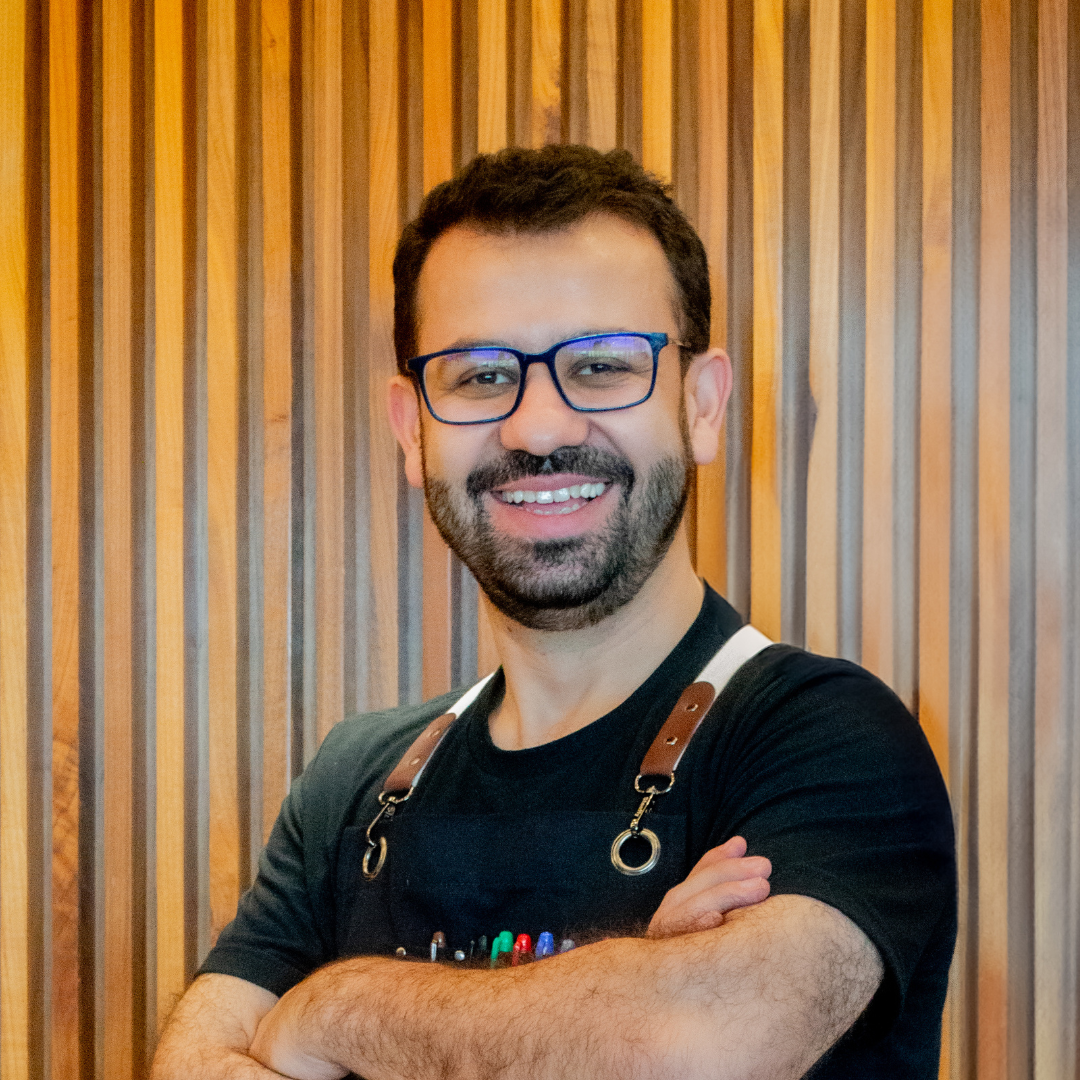
Artist / Founder
Matt Yigit is a glass mosaic artist and the Founder of Tiles Workshop, a multi-state experiential art company rooted in culture, craftsmanship, and connection.
What began as a personal artistic journey working with traditional Turkish mosaic techniques has grown into a movement centered on immersive, story-driven workshops across the United States. Through Tiles Workshop, Matt designs experiences where participants do more than create mosaic lamps. They gather around shared tables, engage with cultural storytelling, and leave with something both beautiful and deeply personal.
His work sits at the intersection of art and intentional experience design. As the company has expanded across states, Matt has navigated the tension between scale and authenticity, building systems that allow creativity to grow without losing its human core.
Matt is passionate about helping creatives think beyond the product and focus on the moment, the memory, and the meaning behind what they build. His journey reflects an ongoing process of becoming: from artist to founder, from maker to community builder, and from local workshop host to multi-state experience designer.