
 Apple Podcasts
 Spotify
 YouTube
 iHeartRadio
 Amazon Music
 #063: When You Know You’re Becoming Someone New… But Can’t Quite Name Them Yet With Nicko Coleman
What if the hardest part of creativity isn’t learning the craft… but learning how to stand inside who you really are?
In this deeply human conversation, Nicko Coleman joins Maddox and Dwight to explore what it feels like to be in the middle of becoming… when the old identity no longer fits, and the new one hasn’t fully formed yet. This episode isn’t about labels, achievements, or artistic milestones. It’s about the quieter, more vulnerable work of listening inward and choosing honesty… even when it feels awkward, late, or unfinished.
Nicko speaks candidly about the discomfort of growth, the impatience that comes with learning, and the emotional weight of realizing that self-expression isn’t just creative… it’s personal. As the conversation unfolds, we hear how creativity becomes less about output and more about alignment… how clothing, language, pronouns, and self-recognition all become part of the same story.
Rather than rushing toward clarity, this episode lingers in the in-between. It honors the pauses, the cringes, the moments of quiet resistance, and the courage it takes to say, “This is what feels true… even if I’m still figuring it out.”
This is a conversation for creatives who feel late, tender, or unsure… and who are learning that becoming isn’t a destination. It’s a practice. One brave, honest moment at a time.
Nicko's Profile
Nicko's Website
This is Maddox & Dwight! More than anything, we want to connect and communicate with you. We don't want to think of you as listeners. We want to think of you as community. So, scroll to the bottom of the show notes and click the SUBSCRIBE link. Thank you!
Thank you for listening to the For the Love of Creatives Podcast. If you are enjoying the podcast, please scroll to the bottom of the show notes and Rate & Review us. We would SO appreciate it.
Book a Discovery Call With Dwight
Become a SUBSCRIBER to Get Notified of New Episodes
Want to be a Featured Guest?
00:00 - Pronouns And A Breath Of Relief
01:47 - Meet Nico: A Multitalented Creative
04:53 - Perfectionism, Neurodivergence, And The Inner Critic
09:04 - Daily Wins And The Art Of Masking
14:53 - Childhood Wounds And Finding Therapy
20:58 - Choosing Joy Over Bitterness
24:43 - Becoming The Who, Not The What
28:08 - Love As Catalyst: Meeting The Wife
33:53 - Living Authentically In Middle Age
38:23 - Identity, Style, And Nonbinary Language
45:23 - Losing Friends And Finding True Community
52:33 - Family, Small Towns, And Hard Conversations
Pronouns And A Breath Of Relief
SPEAKER_03I felt there was such a difference because every time somebody would say she or Miss Nico, there was this cringe, this just very silent, very small, but it was just like, eh, you know. Then when she would say, Well, they, there was just like this breath that I took every time that was said. And okay, well, that feels really comfortable. That feels so much more me, you know. Um, and then I said, Okay, yeah, well, I feel like I've I found where I I stand because I'm just in this weird middle space where I'm just me.
Meet Nico: A Multitalented Creative
SPEAKER_00Hello, hello. It's for the love of creatives, Maddox and Dwight here. And today we're welcoming our host, Nico Coleman. Welcome, Nico.
SPEAKER_03Thank you so much. I'm really excited to be here.
SPEAKER_01Oh, we're glad you're here.
SPEAKER_00Yeah, we're really glad you're here. We've been looking forward to this, and I can tell you've already calmed down. What a beautiful thing.
SPEAKER_03Ain't that the truth?
SPEAKER_00So I'm gonna pass it over to you for a moment and let you just share a little bit about who you are and what you're about with our audience because you can do that better than I can.
SPEAKER_03That's that's a loaded question. So um, I'm Nico. I am just the most creative version of myself, I think, that I've ever been. So I grew up doing art and I now have a design business. And uh, the more that I have created with this design business, the more I have kind of opened myself up to all the things creative that I've done growing up. So I do photography and I do music and I um I draw and I paint and it it's it's all such a multifaceted thing. So I've that's me. I'm multifaceted. I always used to call myself a jack of all trades or a Jill of all trades or whatever you, a Joe of all trades, either one, but I do all the things. So uh it's always really hard to pigeonhole myself into this is who I am. I feel like I'm constantly becoming more, which is really exciting.
SPEAKER_00But you know, I think that's why I love the term creative so much, because it kind of encompasses all of that so beautifully. Absolutely. There's a wide berth when you're a creative, you're not pigeonholed into any one thing.
SPEAKER_03Yeah. And growing up as like everything creative was automatically, it just came easy to me.
SPEAKER_00So um, and and I have you know you got some haters right now because it doesn't come easy to all of us.
SPEAKER_03I think it's nothing new either. Everybody used to, you know, give me a hard time and be like, what do you not do? In well, I don't know. There's some things I haven't tried yet. So I don't know. I'm I'm fortunate that that just rolls, you know, really, really easily. But it's also hard when I want to try something new. And if it doesn't come easy, then I don't have a lot of patience for that.
SPEAKER_00So oh my God, you are telling my story right now. I mean, I've been a lifelong creative and it most of the time comes easy to me, but I'm painting now, and I've been painting for like seven or eight months, and and I'm I'm still waiting for that breakthrough when it feels like it gets a little easier. It's just lots of ugly right now.
SPEAKER_03Yeah, I do not, I despise the learning process, which is horrible to say that I do not like that. I like to be automatically good at everything. And I feel like something set me up for failure when it made some things come natural because I don't have patience.
Perfectionism, Neurodivergence, And The Inner Critic
SPEAKER_00Okay. There's a great starting point. What you just said, I want to hear more of that about that, because something in your environment informed that, you know, I want to just start something and be good at it right away. Talk a little bit about that, please.
SPEAKER_03Oh, absolutely. So I am um I am on the spectrum of autism, and I have ADHD and I have OCD. So I have all of these things in my brain constantly fighting against each other. I have this ADHD that's very creative and wants to do everything a certain way, but then I also have autism that needs everything to be this way, and then I have OCD that needs it to be perfect. So um I'm constantly having to look at myself and say, it's okay, you know, progress is better than perfection. I hear that all the time. I hate it, but it's true. I have to remind myself because I growing up, I've been around perfectionists, which I feel like kind of brought on some of these ticks or these, you know, act the way that I act. Um, so everything that I do is very needs to be a certain way. And I'm very hyper-critical. I have a very loud inner critic. So what other people see is wow, that's great. I'm like, well, it could be better. So it's horrible.
SPEAKER_00Nico, was there Oh, go ahead, White?
SPEAKER_01No, I I I think that there's ways that we can all relate to that because I know that there are certain things that I have to lean on just to be okay with getting through the day. So uh uh a very interesting ritual for me is I try to set myself up so that I I know that I can have some degree of success in each day because I can't relate to everything being easy. For me, life is a constant series of challenges that I overcome. And it's in that that process of being able to meet those challenges that I can mark progress and feel like I am I'm not stuck.
SPEAKER_03I I kind of do the same. It's almost like creating a checklist of things that you've already done that day to check them off and feel accomplished. It's it's similar. And I do that. You know, I need to say, hey, I did one thing today. Good job, you know.
SPEAKER_00You know, I I think it's very common for people on the spectrum, neurodivergence, to mask. We've had a lot of conversations about this. And I never really think about it too much because Dwight doesn't necessarily talk about how challenging things are. But I as he was saying that just then, I was going, but my God, you make it look so easy. He does. He makes it look very easy most of the time. He just takes on a task and and and then it's just done and it's done well.
SPEAKER_03But you don't know everything that's like swirling in here to make that happen. It's the same with me. Um, I just I try to make it look easy, but that's all about masking. It's all about that duck on top of the water that looks calm, but it's paddling furiously underneath. That's me 100% of the time.
Daily Wins And The Art Of Masking
SPEAKER_00So you mentioned this inner critic that's pretty tough on you. And now I have one of those as well, so I can really, really relate. And I know that's environmental. You know, we don't come into the world with that inner critic. There's somebody in our life, somebody that was um significant that modeled that for us, usually a parent. And then when we leave home and we get away, we're so from that is so familiar to us that we have to take it with us. And that's when the inner critic is kind of born. When the when the person who criticized us is no longer there, um, we take over that role. So, I mean, we don't want to throw anybody under the bus. This isn't about making anybody wrong, but was it a family member or somebody close to you that was that critical? For me, it was dad. It was my dad.
SPEAKER_03Yeah. My dad, um, so my parents divorced when I was two. Um, and my dad remarried quickly thereafter. And his wife was not good to me. Um, so I went through, they were married from the time that I was two to the time that I was twelve. So um there was a lot of you know child abuse, you know. I look at it now and it feels like such a big word to say, but it was abuse. I wasn't hit, but it was abuse. And um that, you know, from two to twelve, like that's so much.
SPEAKER_00Well, there's your formative years, you know. Yeah. And emotional abuse is usually worse than physical abuse.
SPEAKER_03Yeah. I mean, and there was some like slightly, but like nothing that was, yeah. I I probably downplay it to myself because like saying that seems so huge, you know. Um, but yeah, so during that time, that's going on, you know, 10 years and the formative years. And so um I I learned one thing was to be critical, but I also learned that the first time I told my dad that anything was happening, he went to her. And then the next weekend that I was with him, it was worse. So that also taught me as a young kid, don't talk about it because things get worse. So then you start bottling everything up because we don't talk about things, you know. Um, so yeah, that taught me that young, and that's that's why I'm in therapy today, is because I'm finally here I am, I'm 45 years old and just been in therapy for a year. So that's a lot of years to have a whole lot to talk about that I haven't really done. So um, yeah, that that definitely formed that criticism of myself from a young age. Yeah.
SPEAKER_00You Nicole, I I want to acknowledge you and honor you for getting help. Appreciate it. It's a it's a it's a big step, and sometimes it's a really hard step to take that first step. But you know, it's up to us. No, nobody can can help us through all of that except for, I mean, a professional, yes, but they can't do it for us. And you've stepped up and um it's it's just a really big deal. And so now I, you know, I think in just you sharing that on this public platform, you're modeling to other people, you know, that we have to do our work. If we want the life we want, we have to do our work.
SPEAKER_03Definitely. I mean, I grew up, you know, that was my my weekends with my dad. I grew up in a very religious, strict home with my mother, which my mom's great. Uh, she's amazing. Um, but being raised super religious with so many rules and such high expectations to be perfect, you know, you're attaining, you're always told that you're you're not enough. You need to constantly earn something. And so that also, so I'm I I'm getting it from two sides, but I have a home full of love, but with this indirect criticism there, and then I'm getting direct criticism from another, and those are the two people that have all my trust. So yeah, I mean, I grew up very, very critical of myself because there was it was never, there was never, it was never good enough, and I still hear that.
SPEAKER_00Yeah.
SPEAKER_03Better, but I hear it. Yeah.
SPEAKER_00You're you're describing family dysfunction. You know, if we're gonna put a label on it, that's family dysfunction. I don't know very many families that don't have it, but that doesn't make it okay. It is easy. Right.
SPEAKER_01Well, thank you for being so public and so bold uh and sharing, um, because it it makes it easier for others to even know that there's an option.
SPEAKER_03Right. And that you can come out on the other side of it. And it doesn't, you can choose how it affects you. And that's one thing I've always said. I could be so bitter and so closed off to everything. And instead, I'm just super enthusiastic and positive and excited about things that are just nerdy and dorky. But I can that's how I find myself. That's where I find my joy. Um, I'm glad that I was able to look at it from a different way and not let it destroy me, but instead just kind of catapult me into a better person.
SPEAKER_00So you know, you're you're really doing a beautiful job of demonstrating our what we talk about a lot here on the podcast, which is becoming. I mean, you you could have taken a bitter route, you know, but you chose to become a different person. You consciously and intentionally made that choice. And I think there's a lot of our world that doesn't really realize that they actually have a choice. I hear people say, This is the hand that I was dealt. You know, well, yes, but you can always throw those cards down and and deal again.
SPEAKER_03Exactly. Yeah, you know, just reverse like an Uno, just flip it.
Childhood Wounds And Finding Therapy
SPEAKER_00And so I'm I'm gonna take this a little step further because I think this is important. And I think since this is past, this is something that you can probably answer. We've discovered this question is too hard for future, but um, you know, in order to not become that cynical bitter person based on all you had endured, you chose to become something else, something that is outgoing and positive and uplifting and joyful. Who who was it that you had to become to be able to make the choice that you made? That you know, for for us, the becoming thing is it's it's the who, not the what. You know, the what is I I decided to become an artist, or I decided to become a musician, or that's the what? The who is and this internal thing. We had to let go of something, maybe a limiting belief, or we had to adopt something new. Um, we had to choose a different way of seeing ourselves. Who did you have to become to to get where you are right now in that positive, uplifting, let go of the past type person?
SPEAKER_03While it may sound like an easy answer, it's so multidimensional, but I had to become me. That was I was never me. I was always masking, I was always performing, I was um being what was expected of me. And like all of this, my business, my creativity, everything has been happening because I became myself authentically and didn't hide and didn't mask it from people because I lived years as a chameleon. That's what I tell people, is because I knew how easily it was for me to turn it on for this group of people and then turn it off. And I'm with this group, so then I turned this personality on and I knew how to please everybody, but except for myself. And so when I dropped all of that and became me, that's when it all kind of started falling into place.
SPEAKER_00Can you articulate what enabled you to do that though?
SPEAKER_02My wife.
SPEAKER_03Um that was the biggest turning point. Um, I needed I needed encouragement because I had lived that way so long, living double lives, being different personalities, pleasing everybody, and um I wasn't out because uh I'm I'm a non-binary, um and I was not open about that. I was very hidden and I lived separate lives. So I went to church and I did this, and then in my free time I might drive an hour and a half to go be somebody else, you know, because that's the way I was raised. I was raised that it was so wrong. You don't live like that. So um I didn't tell anybody, I just hit it and I masked it and I went along with the motions and made everybody happy except for myself. And so when I met my wife who was my friend at work, um that was the first time I felt like I had met somebody that it was worth blowing everything up over. Like this is the moment where I have a really big decision. I can do this and I can be happy and I can just live how I want to live, but that's gonna require so much. And I might lose everything, but is it worth it? And to me at that time, and still today it is, and it was, and that's that's where I found myself is because there was finally somebody who was telling me do what, do what you want. And there was nobody having any expectations of me other than just being happy. And that first time was just, and so it's been a slow pro you know, slow progress because how many people are 40 years old and trying to discover themselves and figure out, okay, what does all this mean? How do I be myself? I don't know. Um, but yeah, that was the moment. I just said, okay, well, here we go.
SPEAKER_01And it well, good on you.
SPEAKER_03It's been great. Yeah, it's been great. Um, but yeah, it's been a lot at the same time.
SPEAKER_00So you know, it's that that that step that we always hear about the story about taking the step before you see the stone that you're gonna step on, you know? Um, or or jumping off of a cliff and and knowing that you're gonna fly rather than fall to your death.
SPEAKER_03It was definitely jumping put jumping off a cliff, no parachute, just hoping, you know, you find a canopy down there.
SPEAKER_00How long have you and your wife been together?
SPEAKER_03Um, we've been married for two years, together for four.
SPEAKER_00Congratulations. Congratulations.
SPEAKER_03Thank you. And she's amazing, just so everybody knows.
SPEAKER_00So she showed up as oh, I guess a confidant, an angel in disguise. She encouraged you, and she met you where you were.
SPEAKER_03Yeah. And still to this day, she is like the biggest cheerleader for me. I I've never had somebody just to go ten toes in for me, no matter what. Um she roots me on daily. And no matter what I'm doing, she celebrates everything. She thinks everything's a big deal that I do, and that's just huge for me.
SPEAKER_00It's a life game changer, isn't it?
SPEAKER_03Completely. Yeah. The life that I'm living now, like five years ago, wouldn't even believe it.
Choosing Joy Over Bitterness
SPEAKER_00You know, you're very blessed that you fortunate blessed, whatever the right word is, that you came to this at the time that you did in your life. Some of us I didn't get where you are till much later in life. Much later.
SPEAKER_03And I feel so late.
SPEAKER_00You know, I I don't I don't question that because I think everything happens in in its own time. It it wouldn't have worked if it had come down at an earlier time. There's a reason it didn't come down in an earlier time.
SPEAKER_03Right.
SPEAKER_00But I still think, you know, what a what a beautiful, fortunate thing for you to have a longer period of your life to live after you you found somebody that celebrates you, but you also found yourself the part of you that celebrates you. And that's probably which came first, her or you?
SPEAKER_03Her.
SPEAKER_00Yeah, see, you're really blessed because I don't think that's usually maybe, I don't know. I guess work, I guess it works both ways. For me, it did not work that way. I had to find me before the right person showed up.
SPEAKER_03I had to really knew who I was, but I no one ever got to see that. Yeah. So it's like I knew, but I wasn't living that. I was that wasn't me to anybody else. So she kind of gave me permission to just take off all the masks and just be real.
SPEAKER_02Wow.
SPEAKER_01Well, I I think of what you've experienced, and I'm reminded, we we saw a biopic, the the Whitney Houston story, I want to dance with somebody.
SPEAKER_03Yeah.
SPEAKER_01And she was in a situation where she uh had a very similar path. She was very much whoever it was that she was supposed to be at it at any given point until we got to see her crack up quite publicly. It's uh it it's painful to to watch. I I know we can look at clips of her uh on on any of the the scrolling feeds and it was very public how it just all came crashing down at the end. And I I'm so glad that you can share a completely different way that things can unfold when you can just be true to yourself.
SPEAKER_03Absolutely. Yeah, I am I know that I am very fortunate that I although I feel late to the game, I'm also like it all happened right at the right time when I was ready. So yeah.
SPEAKER_00Yeah, that late to the game thing is really very um relative, you know? It really is. Um but what yeah, what a what a beautiful thing. What a beautiful thing. So what is what would you say what is some of the primary things that have changed about your life after you've stepped into that vulnerable authentic Niko, you know, no more pleasing people, no more putting on the masks. What has that facilitated in your life?
Becoming The Who, Not The What
Love As Catalyst: Meeting The Wife
SPEAKER_03That there's so much. I'm trying to think of all of them. So I so being raised very uh strict, I was raised, you know, I I did not wear anything but skirts. You don't cut your hair, you don't wear makeup, you don't, you know, don't, don't, don't. Um, and then all of a sudden I'm like, let's go shopping. So I started dressing what felt comfortable to me. Because although I was wearing skirts, I'm wearing, I was also wearing like flannels and baseball caps and tennis shoes. You know, I've like, whatever I can do to kind of like make this me, I would do that, but it was, it was never me. Um, I I started dressing the way that I felt, the way that felt comfortable for me. I stopped my so my first name, uh, you know, everybody called me that. I moved to this area and was like, I'm going by my middle name immediately because that's not me. That doesn't feel like me. Um, so I started going by Niko. Um I went through this whole transformation of how do how do I even identify myself to people? You know, a lot of people who have been in the community for a long time are automatically, you know, well, how do you identify? I there were so many options. So I had to do a lot of research about how I even feel that I exist. Um, and even then, you know, it's like trying on coats to see what fits. Um, so I did a lot of that. Um, and then coming to a realization of where I am and how I feel in my own skin, um, that's a whole other coming out. Um, and trying to get people who don't really understand your lifestyle in the first place to understand why this is why why you gotta be even more different. Um so I thought, okay, well, maybe I'm a little gender fluid. And then I was like, no, because it's not really fluid because I don't really flow into a really feminine space very often. I yes, I was assigned female at birth. Um, I know that I was assigned female at birth, but that's about the extent of it. I have no, I don't want to be a man, but I also don't want to be called miss or anything like that. So I started kind of like thinking about the you know, non-binary, doing my research. I'm finding creators who also identify that way to see if that's kind of something that feels comfortable. Um, and it took me a few years to really come into that, really that decision that, okay, you know, this is exactly what feels good. My wife started using they, them pronouns for me. And I felt there was such a difference because every time somebody would say she or Miss Nico, there was this cringe, this just very silent, very small. It was just like, eh, you know. Then when she would say, Well, they, there was just like this breath that I took every time that was said. And okay, well, that feels really comfortable. That feels so much more me, you know. Um, and then I said, Okay, yeah, well, I feel like I've I found where I I stand because I'm just in this weird middle space where I'm just me. That's how I identify. I am me and I wear what I want to wear, which most of the time is going to be joggers and Jordans and baseball hats. And that's just my comfort level where I, you know, where I like. And yeah, it was just finding this like what what feels like me and the to be at that age and trying to figure out what feels me has been, you know, the few years to really kind of take a deep breath and go, okay, that's it, that fits, you know.
SPEAKER_00As you begin to discover the way you wanted to dress, the the the way you wanted to present to the world, and you you begin to lean into that, how did friends and family respond?
SPEAKER_03Um, well, I lost almost all of my friends initially when I came out because I was raised in a church, and the church is where my social crowd was. Um, all the kids that I grew up with, that I was in youth group with, you know, everything. I went through a lot of hard conversations with the people who I felt like were my core. Um, you know, those are the people who I didn't send a text and I didn't write an email. I made lunch dates and I made coffee dates and we did one-on-one meetings, and I'm coming out to you face to face and I'm having a conversation with you. And most of those conversations, I came home one less friend. And it wasn't ever just like, absolutely not. It was this very, I can't even really explain the response. It was more like, well, this changes everything. Or, okay, well, you know that this means I don't want you around my children. Or um, well, you know how we believe. You know, it's nothing that was ever just like, hey, I love you no matter what. Um so those conversations were hard in the beginning because I was somebody they thought they knew me. Um but when I started becoming myself, I had people who surprised me and really showed up hard for me, who I didn't ever feel like were my core people, but have somehow become those core people.
SPEAKER_00Isn't it amazing how the universe works?
SPEAKER_03Yeah.
SPEAKER_00You know, uh you those people were revealing that they never were your friends to begin with. But you know, that's not making making them wrong in any way. They were friends with somebody that didn't exist in you know, in reality. They were they were in they were friends with somebody, they were friends and loved somebody that was an illusion.
SPEAKER_01Right. Well, and in some ways, they may still be trapped. They may still be clinging to what they what feel are their only options, and they may have yet to uh be able to embrace their their full truth because they're picking from the menu of choices that were assigned.
SPEAKER_03Right. And I I I can see that as somebody who was raised most of my life the same as them. Like, and I don't condemn that at all. Um everybody makes their own decisions. And that just ended up where I knew that that was something that could I I could not be and be myself. So there was a decision to be made.
SPEAKER_00I can remember at one point after I came out to my parents that they were like, you know, we were we were raised that this was wrong. You were talking that this is so hard because we were raised that this was wrong. And I looked at him and he said, excuse me, you raised me the same way you were raised. All my life I've been told this is wrong. And and it's it it's like something that's inside of me. I said, I was like, you know, I really don't want to hear how hard this is on you. I I don't want to hear that. I I took a stand because you have no fucking idea how hard this is.
SPEAKER_03Right. And people who think I'm just making a choice off of a fad, off of something that I've watched on TV or that I've been around certain people. The anybody that would choose to make their life harder on purpose, that doesn't make sense. And I was raised in the most, if anybody was gonna be straight, it was gonna be me if we go about how you were raised. Like I was I was raised around only straight people, you know, uh small town, country, you know, that it was very conservative. And I was in church every Sunday morning, Sunday night, Wednesday night, you know, youth group, everything. So if anybody was gonna like it was gonna work for they were gonna be straight, it would have been me. But of course, my mom didn't know that in elementary school, I would tell the little girls in like first, second grade that, well, you know, my name's really Nico, and um my mom just likes to dress me like a girl just so that they would kiss me. So I've known for a very long time without the verbiage for it as a young kid, but when I look back, like even a friend that I talked to, she was like, Do you remember when you used to all tell us, you know, that your name was Nico and you'd kiss the girls? I'm like, Oh yeah, totally. I wanted the girls to chase me on the part on the playground, not the boys. So it's good.
SPEAKER_01Elementary school player.
Living Authentically In Middle Age
SPEAKER_03I know. And I told mom, I said, You didn't realize that my first crush was Claire Huxtable on the Cosby show. That was that was my awakening. So uh it's it's been there for a long time.
SPEAKER_00So that leads me to to believe maybe that mom's come full circle. You can have that conversation with her.
SPEAKER_03We're working on it. You know, some I I know it's uncomfortable for her, but we're while it may be uncomfortable, she lets me know, you know, that I love you unconditionally. So that's still there, you know. But I do know it's uncomfortable for her too. So I'm trying to take it. A lot has happened in five, six in the last five, six years for her to have to come to terms with. I mean, I I came out and then I brought my girlfriend there, which because I am from a small country town, my my wife is uh a woman of color. So um I bring my black.
SPEAKER_00I'm sorry.
SPEAKER_03I bring my black wife home to you know, her small town and and and then now I'm wearing pants and I've got you know tattoos. And um, so she's she's for all that she's been dealt in six years, she has she is gracefully handling this. We'll say that.
SPEAKER_00You've you've broken all the rules.
SPEAKER_03I am, I'm the worst child. It's it's so true. But even my wife says, you know, hey, slow down, Granny's still alive, don't get any more tattoos, you know, like take it easy on her, my grandmother. So um I try, but at the same time, it's like you feel this excitement for life all of a sudden because it's yours. It's not you're not living somebody else's. So you want to do all the things that you want to do and just live, you know. So I I try to be mindful of, you know, not letting my family stroke out from all the changes that they're having to deal with at once.
SPEAKER_00So well, let's let's circle back and talk a little bit about your creative journey. You said that you've been creative all your life. How did that get started?
SPEAKER_03You know, uh, my great-grandmother was a painter. And then my great aunt and my grandmother painted, and I grew up, you know, with their paintings were everywhere. And my great-grandmother painted on everything. It wasn't just canvas, she painted on like denim jackets and rocks. She would get rocks and paint things on rocks and um old tin cans. I mean, everything she painted on. Um, the world was her canvas. It was. And if you went into her home, I mean, everything was painted by her. And she had a store, my great-grandmother had a store when I was younger, and it was called Call Cobblestone Way, and it was full of all these little things that she painted, and she loved to paint roses. She painted roses on everything. And so I saw that. That was never my style, though. I always grew up drawing more, well, I drew a lot. I I was always into drawing and did a lot of like cartoons, animation type stuff. I could just look, you know, look at something and draw it. And um I got to wear in school when we got lockers, my friends would be, hey, can you draw me this for my locker? And I'm like, Yeah, sure. And then I got more questions for that. And then I started drawing like sports teams, logos, and all kinds of things, and everybody was loving it. And I'd have the Tasmanian devil wearing the jersey that they wanted or whatever. So I realized there was a market for it. So I'm young and I'm like, okay, I'll draw it, but you pay me 50 cents. And so then I started selling my art in elementary school. I became an entrepreneur at a very young age.
SPEAKER_01Oh, loving it. Beautiful.
SPEAKER_03Yeah. So that's where it all started, was all with drawing. I I drew and I've um been in music. I've been playing music and singing for 30 years, 30 years now, I guess. So um it just everything creative.
SPEAKER_00I started doing murals and I started talent just oozes out of your pores, doesn't it?
Identity, Style, And Nonbinary Language
SPEAKER_03If it's creative, I can do it. That's what I tell everybody. It's almost like the tagline for my business now, because it's not just I don't just design logos and things. I mean if it's creative, let me try. You know, I I even if I've never done it, I can probably do it. That's how I I feel. Or I can give it a good stab.
SPEAKER_01So that's great. Tell me this. I mean, with all of those things that you've done, like what are your your proudest achievements?
SPEAKER_03Right now, I think I I am just a little over a year into going full-time with my design job. So I started my business full-time thanks to my wife and CFO uh funding the dream. She has the serious job between the two of us, but she said, you do this on the side for so many people and you love it so much, why don't you just go full-time? And I was like, I've had a serious job my whole life. I've I've worked in in healthcare for almost the majority of it. Um, I was in uh healthcare administration. Uh it's crazy, you know, and nothing nothing creative about that. But um I said, okay, well, you know, if you think we're good to go, then I'll I'll try it out. And um just December was one year, and then I have been announced by the Frisco Chamber of Commerce that I'm up for entrepreneur of the year at their gala this year.
SPEAKER_01Good for you.
SPEAKER_03And the business, the business excellence award. So that's huge for me.
SPEAKER_00Oh my gosh, that is so fabulous.
SPEAKER_03Because I do not feel like I have a serious job. So when they said entrepreneur of the year, I'm like, that sounds way bigger than what I do. I just I work in my office that has like toys in it, but they're they somebody sees something um and that I'm doing and appreciates it. And I I'm honored.
SPEAKER_00We we have to change the narrative. You know, that comes from someplace too. There's there's programming. We we've gotten messages at an early time that creativity is for your hobby, but you need to get a real job.
SPEAKER_03Exactly.
SPEAKER_00And and what you're doing is a real job, or you wouldn't be getting ready to take an honor of entrepreneur of the year. Amen.
SPEAKER_03I I hope so. Yeah, a three-time nominee for my first year of business is I I'm I honestly thought that they they just told me that I was nominated, that somebody had nominated me, not that I was on the list of nominees. I really just thought they were like, oh, good job, somebody nominated you. But then they put out the list and I said, Oh no, this is for real. I'm I'm up for three awards this year in my first year of business. That's just mind-blowing to me.
SPEAKER_00You know, I love that. And people need to hear that. Our creative community needs to hear that. Creativity is real as anything else.
SPEAKER_03It is, it's all the way we hold it in our mind. Right. There's not enough people who put it out there as this is what I do, and you know, this is my job. You know, a lot of people like to say, Oh, well, I do this, but no buts. This is what I do. And that's uh funny how and I and the biggest thing about my business is that I started off very cookie-cutter with like, this is my business, and I provide these services, the end. And then I the more I started thinking about it, I thought, well, I want my business to be me. I want my business, I want to be the brand. I don't want to create some logo that I think everybody likes, but I want everything about this business to reflect me. And so that makes me the brand. And then I started changing how I marketed my business into, hey, I'm neurodivergent and queer. Welcome to my website. You know, very like I'm here. I'm I'm very open. So you're gonna get a different experience with me than you're gonna get with just anybody else. And yes, my brain works differently, but that's a superpower at the same time. So I can probably give you something that you haven't gotten from somebody else. And ever since I started doing that, then people start showing up because they want something real.
SPEAKER_01I'd like to reflect how that's that mirrors exactly what you went through when you had to go through that um whittling away of having to do what everyone expected. You know, having to be one way in church and having to drive uh an hour in any direction to go and uh wear some other mask.
SPEAKER_00It's so true. I think it's so amazing that you said out loud it's a superpower, because it is. And I think a lot of neurodivergent people don't see it that way. And it's you know, we've been having this conversation a lot lately because we want to normalize neurodivergence. You know, I I'd I wouldn't be a bit surprised if more than half of the world's population is neurodivergent.
SPEAKER_03Oh, yes, we talk about like to be normal.
SPEAKER_00Well, what what the hell is that? You know?
SPEAKER_03Never been there. Who is she?
SPEAKER_00I mean, I everything has its good and its bad. You know, every coin has two sides, and there are things that make life more challenging as a neurodivergent, and then there are things that are friggin' superpowers.
SPEAKER_03Mm-hmm. You just have to lean into it. Yes. And that's kind of what I've done is just I could look at it. Exactly. I could look at it as uh my brain is it some days it doesn't work at all. I cannot make it work. Like it, the the switch is broken or something, but then some days it's just sparked and it's on fire. And it may be 3 a.m. when it comes on, but it comes on, thankfully. But it is, it's totally different the way my mind works, and it doesn't work normally. And I like that because it makes me different and it makes what I what services I provide and the products that I can offer totally different from everybody else's.
Losing Friends And Finding True Community
SPEAKER_00Well, and because you're wearing it as an identity. I mean, your opening line on your website is, you know, hey, I'm neurodivergent and queer. That makes it more of a superpower. You're leading with that, you know, and it sets you apart. I had somebody tell me one time, and I say this a lot because this left such an impression on me. I don't remember who it was now, but it was somebody that was mentoring me, and they said, don't try to be the best. There's only one place for the best. Try to be unique. Find ways to look at what everybody else in your field is doing and do something that nobody else is doing. That's that's just your thing. And they weren't talking about the service that I provided necessarily, you know, it was perhaps the way I provide that service.
SPEAKER_03Right.
SPEAKER_00And that's the same with me.
SPEAKER_03Yeah. I I when people look at my website, they hear my voice if they've met me. It sounds just like me. Everything that I do, uh, it's nothing is putting on any kind of front of professionalism. This is the level of professional that you get with me. And yes, I will be professional, but it only to a certain level. You're gonna get me. I think my website says I am the love child of Darth Vader, Tony Stark, and Deadpool. Make of it what you will. And that's exactly what you get with me.
SPEAKER_00Well, and you know, you can be professional without being polished.
SPEAKER_03Absolutely.
SPEAKER_00And I think people's part of that mask that we've all worn.
SPEAKER_03Right. That's what people want. They want something real. If they wanted just somebody that was completely polished, then they could find anybody.
SPEAKER_01But I just have to call out that the thing that all of those have in common is that they were deeply wounded. They were scarred, but they were able to overcome the things that should have killed them.
SPEAKER_03Wow. I actually have never thought of it that way, but that is so true. Like every one of them. And that's me. Yeah. Wow. Wait till I tell my wife that. She's gonna love that. But that's amazing. That's so true. I never thought of it that way. But absolutely, what should have killed me? Only made me stronger and more sarcastic.
SPEAKER_00More determined.
SPEAKER_03Definitely. I I tell myself I'm very resilient. I can I can get past anything, I can deal with anything.
SPEAKER_00So Nico, if you were going to speak to the part of the world out there listening that is perhaps creative, because that's our our audience, also perhaps neurodivergent, and perhaps um has has a different way of living life. They don't fit into the normal boxes of he and she. If you were gonna drop a little bit of wisdom on them based on your life and what you've learned, what would you say?
SPEAKER_02Own it.
SPEAKER_03Be be it, do it, don't wait for somebody else to give you permission. Just lean in to everything that's you. And that's when people start to come and surround you. And whether it's supporting your art or your business or just friendships, once you lean into that authenticity and really drop all the walls, that's where you really draw people in. Where you think that you're putting up walls to protect yourself, if you drop them, you actually create more of a barrier of people around you, which is more people fighting for you.
SPEAKER_00So that's beautifully said. And if you do need permission, Nico, Dwight, and I are now right in this moment giving you permission.
SPEAKER_03Approved.
SPEAKER_00There you go.
SPEAKER_03Absolutely. I did, I started a community online called Creative Rebellion, and it's for those creatives who are different. And I that's what I always tell them. If you need a space that you feel completely comfortable with just throwing out ideas or just somebody just to hype you up and gas you up, because I'm so good at that. I love to gas people up. Then, you know, find your community, find the people who are going to support you and just be your hype people. You know, that's that's what all you need because that's when you start to thrive, is when you have people who like super support you no matter what.
SPEAKER_00I agree completely. It's it's such a such a blessing to be surrounded with people that just see you and hear you and accept you and celebrate you.
SPEAKER_03Right. And it's a relief to you if you haven't had that before. Once you start to feel that, then it's like you're breathing like good air for the first time.
SPEAKER_01Yeah. Well, and you need that community to override that inner critic that we all carry.
SPEAKER_03You do. Yeah. You don't want your voice to be the only one that you hear, because it's usually not good. At least for mine, I need to hear from other people. And that's when it makes sense to me. I'm like, oh, okay, so maybe it is good if the people I trust the most are telling me that it's good. So find those people that you can trust.
SPEAKER_00I I love to bounce things off of people around me that I that I trust. It's the to me the the best form of communication. I I've never been one to really write in a journal, but if I can sit down with somebody that I trust and just open up all the answers that I'm searching for come to me in that conversation, even if they just listen.
SPEAKER_03Mm-hmm. Right. I've always loved having those deep. I'm I'm a really uh lighthearted and really chill but fun person. But I love having those deep conversations with people who I feel like I can just throw around ideas and we're both kind of contributing something. It helps you grow. You stay stagnant if you don't have that kind of relationship with someone.
SPEAKER_00You you have a good head on your shoulders.
SPEAKER_03Do others tell you that maybe, but not enough. Not enough for me to believe it yet.
SPEAKER_00You you your conversation, your body language is very grounded feeling to me. What's coming off of you feels very grounded.
unknownYeah.
SPEAKER_03I appreciate that. That means a lot to me.
SPEAKER_00You know, who doesn't need grounding? So, and and you know, if anybody's listening right now, I'm sure they're feeling more grounded just from being in your presence.
Family, Small Towns, And Hard Conversations
SPEAKER_03I hope so. That's my goal, is uh my wife sometimes calls me gay Jesus because she says that I'm the person who wants to find everybody and support them. If you don't have a support system, then I'm gonna be that person. And she's like, you're gonna do these things and open yourself up. And she goes, and people are just gonna come to you because they feel comfortable. And I was like, I hope so. I that's what I want. I it's the reason I've put myself in certain situations in the community, not because necessarily I feel like I'm the best person for it, but because I'm the only person that looks like me. And I want to be that person that when somebody comes through the door, they see somebody that's different. And I'm like, hey, you're welcome. It's safe, you're good. You know, I look, I I'm used to being the person that looks completely different from everybody else. Me at women enhancing business meetings. At first I was like, why are you inviting me? That doesn't even feel like, but they do. But I I said, I well, you need somebody that looks like me because somebody else that looks like me might want to join one day.
SPEAKER_00That's that's brilliant. I I think it's cool that they're inviting you.
SPEAKER_03Mm-hmm. Well, I make them love me. That's the whole goal. Like you may not have one other person in the LGBTQ community, but I'm gonna make you love me so that you have a face on it and that you can see the humanity in it and oh, well, somebody I love has that kind of lifestyle. Well, it's not, it's not what everybody's saying. I know that person. You know, I want to be that physical, you know, person in their life that says, okay, well, maybe my thoughts before were a little different. And I I need to kind of calibrate that a little bit.
SPEAKER_01Yeah, people fear what they don't understand. And if there is a a reference that's something that's close, something familiar, someone that they know, someone who they've touched, then it becomes that much harder to just go with the herd and think that it's okay to hate someone.
SPEAKER_03Right. Yeah. Give give it some humanity, and then your thinking changes, which I'm all for. I love to make them love me.
SPEAKER_00It sounds like you have a strong community around you.
SPEAKER_03I'm working on it, I'm building it slowly but surely.
SPEAKER_00Oh, I love that. You know, instead of just showing up to something that somebody else has created, you're creating something that's your community. That's so empowering.
SPEAKER_03Mm-hmm. Everything I do, like people in my home that come into my home, this these are the people I know that I can be a hundred percent Neko. There's this is my community, that can be real. I I don't have time to waste to be masked up anymore.
SPEAKER_00So it's very important. You know, when you you when you lay the mask down, you realize how draining it was.
SPEAKER_03Definitely. You know, we weren't mental health.
SPEAKER_00Like we don't get it until we lay it down. We lay it down. It was like, oh my god, that was heavy.
SPEAKER_03Mm-hmm. Very much so. It's so nice to be kind of loosey-goosey now and free from all of that.
SPEAKER_00Nico, this has been an amazing conversation.
SPEAKER_03I've enjoyed it so much. I'm so glad that you guys had me on.
SPEAKER_00Yeah, this has been wonderful. I I just, you know, once again want to acknowledge you for coming in with such openness. You know, you you have trusted Dwight and I with, you know, the very intimate details of your life. And we feel very, very honored. And and I know that um there are many listeners out there that are gonna gain value of what you've shared.
SPEAKER_03I hope so. Even if one.
unknownYes.
SPEAKER_00You know, we never know where that trickle effect, that tri, you know, that little ripple effect is is gonna go. Sometimes we get to see it. Every once in a while, if we're lucky, we get to see somebody that we impacted that just lets us know that they impacted us and we would have never known otherwise, but um, which is a super treat.
SPEAKER_03Huge.
SPEAKER_00Huge.
SPEAKER_03I can only imagine.
SPEAKER_01Well, as we draw to a close, is there anything that you'd like to share with our listeners that we haven't had a chance to cover?
SPEAKER_03I don't think so. I think it's I I just love the fact that above Maddox's head, we see authentic. And I think that's pretty much the theme of what this whole thing is about. And I've told you before, but my 2026 word is authentic. That's yeah, that's what I'm striving for.
SPEAKER_00It's my 26, 25, 24, 23. That's been up there for a while, and it's amazing how many comments I get on that when we get on Zoom. Always people say, oh my God, I love that.
SPEAKER_03Yeah, everything that I'm doing, I'm just being Niko. So everybody's just whatever you this is what you see, this is what you get. And it's nice. I like it.
SPEAKER_00It's the gift to you and to everybody else.
SPEAKER_03Absolutely. At least we hope so.
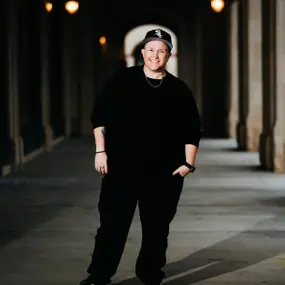
Small Business Owner/Creative/Artist
Nicko Coleman is a nonbinary, neurodivergent creative entrepreneur and the chaos-powered force behind Nicko Creative. After 20+ years in design and a lifetime of masking, shrinking, and playing it safe, Nicko went all in—on their creativity, their identity, and building a business that finally feels like them.
Their journey spans burnout, reinvention, ADHD-fueled brilliance, and choosing authenticity over approval—especially as a queer creative navigating visibility, boundaries, and success on their own terms. Nicko speaks candidly about villain-era growth, creative confidence, and what happens when you stop asking for permission and start taking up space.