

 Apple Podcasts
 Spotify
 YouTube
 iHeartRadio
 Amazon Music
 #074: Nouman Gaafar: The Refugee Artist Who Had to Learn to Belong to Himself First
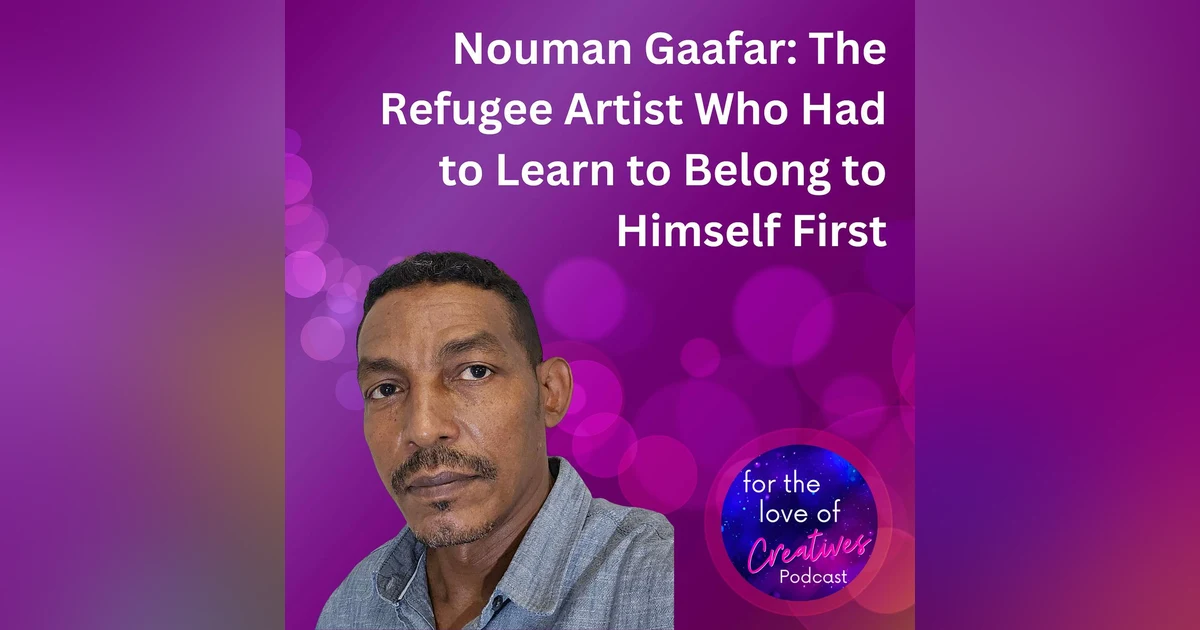
What happens when you’ve spent more than half your life away from the place you were born, and still don’t fully belong where you’ve landed? In this conversation, Sudanese-born abstract painter and truck driver Nouman Gaafar shares what it means to live between cultures, between labels, and eventually, between old ideas of himself and the person he’s becoming.
Nouman talks about seeking political asylum, returning to Sudan after twenty years, being arrested and tortured during protests, and realizing he felt like an outsider both “back home” and in the United States. That fracture shows up in his work—square canvases filled with diamonds and triangles, light and dark, color and memory—his ongoing project “Balanced Love and Peace,” born from letting go of people-pleasing and the need to belong to any one place.
We explore how driving a truck by day and painting in solitude by night became his way to heal, regulate his nervous system, and reclaim his own definition of belonging. For Nouman, the turning point was simple and radical: “I have to belong to myself first,” a shift from being an unseen refugee to living as just a human being, with art as both witness and medicine.
Nouman's Profile
Nouman's Website
This is Maddox & Dwight! More than anything, we want to connect and communicate with you. We don't want to think of you as listeners. We want to think of you as community. So, scroll to the bottom of the show notes and click the SUBSCRIBE link. Thank you!
Thank you for listening to the For the Love of Creatives Podcast. If you are enjoying the podcast, please scroll to the bottom of the show notes and Rate & Review us. We would SO appreciate it.
Book a Discovery Call With Dwight
Become a SUBSCRIBER to Get Notified of New Episodes
Want to be a Featured Guest?
01:17 - Meet Newman Gafar
02:59 - Refugee Journey And Making Art
07:13 - Outcast Feelings And People Pleasing
10:07 - Learning To Be Seen
14:28 - Returning Home And Awakening
23:18 - Truck Driving And Creative Fuel
27:25 - Shapes Symbols And Energy In Paintings
35:03 - Process Over Outcome
37:36 - Childhood Origins And Art School
41:13 - Community Isolation And Selling Art
43:33 - Censorship Protest And Survival
49:43 - Beyond Labels Toward A Shift
55:28 - Art Healing Boundaries And Peace
01:04:58 - What Comes Next
I have to belong to myself at this. You know, not seeking that, you know, from outside.
Meet Newman Gafar
SPEAKER_01You guessed it. It's Maddox and Dwight, the Connections and Community guys here with another episode of For the Love of Creatives Podcast. So today we are welcoming our guest, Newman Gafar. Did I pronounce that right?
SPEAKER_03Yes, it is. I mean, uh this is my uh this is uh pronunciation of the English name, you know. But my actual name is Arabic and it's difficult for people to remember it. That's why, you know, this actual my actual name in Arabic is Norman. The wall, you know, the sounds come from the you know, from down here, which is that letter English language doesn't have it. So the version of it is Newman, which is easier. So we we cannot pronounce it, yes, no longer. Yes.
SPEAKER_01We we only have that when we have a bad sore throat. So Newman, tell tell us a little bit, um uh because we've we've been around you a few times, but we don't know very much about you. We've seen some of your art, and I think we met you just at a art show somewhere.
SPEAKER_00We were at one of one of the I I believe it was when when when you were being featured at pencil and paper.
SPEAKER_03That's true. That's true. I met you there too. I remember that. And I spoke to you specifically the way that I spoke to a length, you know. Yes.
SPEAKER_01My my memories are talking about.
SPEAKER_03And I met you, I met you again at uh DHV also gallery.
SPEAKER_01Yeah, yes, yes, we've been in each other's presence many times. Well, tell us and our audience a little bit about you know, in a couple of minutes, who you are and what you're about.
SPEAKER_03Exactly. Um I'm um I I born in Sudan, you know, and uh uh uh I had my uh undergrad in Sudan, and then you know I left the country, I went to Ethiopia after I graduated from uh Sudan and I seek political asylum there, and I came to United States and uh resettlement program as a refugee through the UNHCR. And uh when I came to the US, uh my art kind of you know shifted to more of representing you know my feeling and sword at that time, you know. And uh, you know uh having a multicultural that was present in my art, like you know, this duality of like being a refugee, feeling of exile and displaced, and you know, that feeling of immigration, and you know, uh being a refugee. So that's also was reflected on my art. But my journey as an artist started, you know, uh from Sudan, and you know, and uh and and I've been out of the country uh more than half of my life, you know. And uh so even that now is like the idea of belonging, where to belong to Sudan or United States, you know, that came to crash down when when when you know when when I realize now, like, you know, uh uh uh that's not viable no more. I mean, at the end of the day, always, you know, I don't want to put myself like on one place because you know, that's life would put me in, you know, like to be on these two different places, you know, living in between these two cultures. So now I operate from that perspective of just as a human being, you know. But uh I did my MA and MFA here and uh United States, and uh and uh uh I I think uh my art now is a reflection of my journey as an artist, you know.
SPEAKER_00This is totally that's intense. I can't imagine how it is to walk through that. Um being a refugee and being able to move forward. And I mean you you've come you've accomplished quite a bit when I I can't I can't imagine just how dark uh it might have been at at points in the past.
Outcast Feelings And People Pleasing
SPEAKER_03It was difficult. I mean, you know, uh uh uh uh it is difficult like coming to a different culture. You don't speak the language and you try to adapt to and even the system even doesn't help you to like to assimilate like easily, you know. And uh and uh uh and uh this you know it's always you feeling you're being outcast. Even even when I was like uh in Sudan, like uh I I wasn't feeling like I belonged, you know, to that, you know, the system. Like you you feel like you don't belong to the culture like fully, you know. It's like that feeling of like always being outcast, you know. And that it gets bigger even when I came to United States, you know. And uh and that's always became you know uh part of me, which is on the past, the way I used to deal with it, like to compromise is like in many ways, which is reflected like you know, in uh uh uh people pleasing, or you know, just to be belonged to community or like you know, to have that, which is like uh now I let go all of those, which is the project that you know you guys saw uh saw part of it at Ben Solomon Baber when I featured there. It's uh project Balance, Love and Peace, which is my current state of being, which is you know, it came as a result of like letting go of a lot of limiting beliefs that uh you know uh uh kind of boxed me and made me like you know compromise many, you know. But now as you know, when I move forward, living as more of a human being, not belonging to any, you know, uh geolocation, you know, that may give me more freedom and you know uh uh more peace itself. Loss, you know, uh uh the project that I'm still going working on, it has that ability to you know uh uh uh to heal those you know issues with being and through the process and uh and and it's ongoing, you know, it's ongoing, you know, journey. I struggle a lot also on the bus for many issues, you know, and uh this project is it helped me a lot actually. The process really.
SPEAKER_00Yeah, I love the way that you described how that compromise kept you kind of imprisoned in a little bit, but you were you were your own jailer, you found your own freedom uh through your art and reaching out to the arts community, it sounds like definitely, yes, definitely.
SPEAKER_03And uh and uh and uh one of the things that you know uh on the past more being more of like you know just focusing on the creativity itself. And uh I I wasn't talking much about the creativity itself and the process and stuff. I always focused on the aspect of mastering the craft of the art itself, then speaking about it and the message of it, you know. And uh and uh and uh and and now, you know, and I'm in a place that you know I wanna be able to talk about it, share it, and you know, exhibit it. Yeah, which is you know it it opens a conversation and it's it's an important thing, you know.
Learning To Be Seen
SPEAKER_01If there's one thing that we have learned through all of our conversations that we've had on this podcast, is it really you can have absolutely fabulous art and it's not enough to just put your art out there, you have to put yourself out there as well.
SPEAKER_03And that part of the thing that I struggled with too, like, you know, and was uh these images, you know, it's like I always uh uh felt if I you know worked on the craft side of it, which master it, it will speak out for itself, you know, not me seen, you know. I I I always shied away from being seen. That part of you know, you know, being, you know, uh uh uh because visual art, the creativity itself, it happened in isolation, you know, and that solitude. You have to, you know, that's what I believe personally too. To create, you have to isolate yourself. You know, I don't I don't create when when there is a noise around me. And and and that also protects me from like you know, this idea of like, I don't I don't like to be like, you know, uh button the front. I work very well, you know, through my life in the background because you know I I can mobilize the whole school, you know, during high school, like you know, uh uh we I I changed the whole uh the union for the student. And when at the art college also I was part of this uh the uh uh board of directors, and you know, I mobilize from the background, but I don't like to be seen on the front, you know. And and that's also applied to my art. Like, you know, I master the craft and I don't want like to be seen with it. And I thought like, you know, uh that what is plus you know, historically, visual art, like you know, many artists like you know, say from from Henry Matisse or Picasso or you know, whatever, you know, those pioneers they didn't speak about their art as the way we speak about art now, you know. I mean, they will expect you to be more of like, you know, to be have this charisma and talk about your art and you know, as well as you know, to create a good art, which is I don't think it goes together balance, but I'm working on that to make it balanced, you know, because uh I believe you know, uh practice, you know, make perfect. If you practice at anything, you can get good at it, you know.
SPEAKER_00Yes, I can get behind that.
SPEAKER_01Sure. So Niman, what you're describing about always kind of wanting to be in the background and not be in the spotlight, is is this a really big deal for you to come on and talk about your story on this podcast?
SPEAKER_03Yes, I mean it it's it's not that because you know I'm I'm I'm working on that now as part of you know this my next chapter of my life to be like on the front of it too, at the same time to create the you know, the art that I to create.
SPEAKER_01So I'm curious, you spoke a little bit earlier about feeling like you didn't fit in. Not belonging. And we we see and hear a lot of this for very different reasons. Yours may be culturally, somebody else may not feel like they fit in because of their age or their body type or the type of art that they do. There's a lot of ways. Um, but I'm curious, as you come out of the shadows and begin to be in front more, talking about your art, sharing, talking to people, how has that impacted that feeling of I don't belong?
Returning Home And Awakening
SPEAKER_03Well feeling of belonging, you know, I it's like it's I believe, you know, now belonging, it has to start with oneself. Like with this project I'm working on, project Balance Love and Peace. It's you know, the way I see it, and I'm gonna go back a little bit on that, you know. On 2015, end of 2015 to 2016, I used to have a studio in Denver, Colorado, and I decided to move back home, like to Sudan for good, you know. I visited Sudan in 2015, beginning of 2015, after 20 years when I left the country, you know, and I went back. I came from a big family also as well. It's where you know, I have eight siblings. I'm number nine. Yes. I have six six six brothers, I were six boys and three sisters, one father, one mother. So I decided, you know, I visited Sudan after 20 years, 2015, and you know, the family and all of those make me feel like, you know, plus my mother especially wants me to come back home, which is you know, and you know, after being around for a while. So I decided 2015, end of 2015, beginning of 2016, to move my studio back home and settle there. And uh that part of also like later affected my divorce, you know, so because the idea of like going back home for good, because I have two kids and I want them to grow in that culture, you know, adapt to that culture, learning it because they are born here in the United States. And uh so I decided to move the studio there and settle there, and uh, you know, feeling also like going back and belonging there, because you know, we're still facing some issues here in the United States of like these issues of belonging, you know. I mean, so so I moved back, moved the studio back there, and and uh and after a while, I I never felt like, you know, also I belong there. So it's like you know, the friends that I left back there, and even my family that are grown and they're different, all the cultures is just different, you know. So I felt I never blocked there. But however, I decided to stay there, and you know, and and then I came back after like you know, for I came back on the end of 2019 when COVID hits and you know many things that overlapped, and you know, I was like then I had my awakening. My awakening, which is led me to create this project balance, love and peace, which I realize in order to belong, I have to belong to myself at, you know, not seeking that, you know, from outside, like belonging, like you know, physical belonging there, which I realize also this energetic, you know, balance within myself, as long as I balance that and I regulate my nervous system and stuff, because I always, you know, that gap between being seen and uh and and and work on the background, which is life also is wanting to be seen, you know. It's like you know, otherwise somebody will take that away from you and you know, and and you end up compromising and taking advantage of, you know, in real life. So belonging, it had to, I have to belong to myself first.
SPEAKER_00Well, congratulations. That's uh that's a huge leap in maturation. I know a lot of people will spend they'll live out their lives looking for that stamp of approval and trying to measure up and you know trying to find everything out there when they just need to they need to love themselves inside first. And my goodness.
SPEAKER_01Yeah, belonging is a a massive life milestone because some people never reach it. They live out their lives and never feel like they belong. I think it's brilliant that you have come to that realization and and are are leaning in. It's it's it's I I mean this this is could be the the the whole biggest point of of your conversation today, inspiring others to come home to self.
SPEAKER_03Exactly. And and and that's also uh is belonging is is is is self-love. You have to love yourself, like you know, don't don't just give it away to slight, you know, to to others to take uh take it away from you. I mean and that also comes with boundaries and comes with a lot of uh you know uh uh practice you have to add to it, you know. So uh this whole journey of uh a project that I'm creating now, Balance Laban pieces is uh it's more of that balance of this energy yin and yin, uh you know, and uh and uh yeah the balance of this energy, you know, masculine femininity and all of that.
SPEAKER_01So I'm gonna I'm gonna kind of tip back to this again because I think we're still not quite. I I I want to know if coming to that place of self-love played a role in your ability to step out of the shadows and into the light.
SPEAKER_03And if so, what well I I always found uh salos on on on on on on on R you know being like introvert mostly and introvert sometimes. Self-love and and and I have to I have to love myself as who I am as a person.
SPEAKER_02And and as ideal I don't know how to describe it, but it's uh it's like cherish everything you have alive. That's a self-love.
SPEAKER_03Yeah, uh if you can't love yourself, then it's you're you're going to be broadcasting a signal for everyone else, maybe unintentionally, but I I it's it's it's it's all sort of like uh uh self-confidence, you know. You have to have that confidence with you to to to uh to love yourself.
SPEAKER_01I I know for me it that decision to fully love myself changed everything.
SPEAKER_00Yeah, there's I think we get a lot of messages about how uh we are inadequate. I mean, that's how everything is sold. Right? Every commercial you see is about fulfilling some need, even if they have to manufacture it. And it's real easy to have those messages take root and feel like you're not enough or everything will be better if you just go and buy some trinket you see on your your social media feed.
SPEAKER_03Yeah, it's it's it it is. Uh yeah, self-love is is it is it's it's it's it is varied from from uh person to person, but overall it's it's sad belonging, you know. If you if you belong to yourself, you love yourself. And and and And that comes also as a cost of like yeah uh like putting boundaries here and there for you to you know to be who you are as a person to live as a human being, not identified as like uh being part of this culture or being part of that culture or just as a human being.
SPEAKER_01Yes, absolutely. Yes. Or is there a uh no?
Truck Driving And Creative Fuel
SPEAKER_03I'm I'm a truck driver. I have to pay the bills because you know uh uh uh what I create, I mean, you know, when I came back at the end of 2019 to United States, I came uh with a different uh eyes, uh fresh eyes, you know, it's like and uh and and uh I started uh truck driving and and and I love it, you know. You know, growing up with uh uh growing up, my father was a train conductor, and I traveled a lot around the world and around the United States in it all, which is that my main thing. And I love it. I love truck driving because you know uh it's it's it's you know fulfill me for you know financially it's it's good, and uh uh and uh being able to see different places and you know so on those. Which is inspired me traveling.
SPEAKER_01Those long stretches of road when you're driving, are you painting in your mind?
SPEAKER_03No, I I think about art most of the time. I think about uh you know, and I enjoy the land escape, which is also reflected on my art in terms of colors and you know, design of the artwork.
SPEAKER_01That piece behind you is lovely. Thank you. It is beautiful, the the colors are amazing.
SPEAKER_03Yeah, the the the colors are uh you know this uh the images I used for this project Poland's Lavand is this diamond and triangle shapes are you know, it has this reference on in religion and you know mathematics and you know all of those. And and to me it's more of a uh uh uh uh these images, you know, I always find myself I had to defend what it is, you know, uh, because you know, uh uh being an immigrant always like you know, this being seen as less, you know, in many ways and uh discriminated against and stuff like that. And that part of it also, like always we try to belong, like to try to prove ourselves like you know, we are not this, we are that, and stuff. So the image that created this, it has that reference on religion and spirituality, which is everything is energy, I believe. So, you know, it's color even has their energies and the whole weight of you know memories as well, and uh, you know, so and and and that also influenced by landscape and many factors. Abstraction is not representational art. That's why, you know, it's it's uh you know, it's charged with many factors to it, you know. And uh so uh uh uh these images it allows me to execute this project in uh visually and conceptually, and and that's very important to you too much. Too much, you know, the visual have to marry the concept. Otherwise, for me, I believe it will be weaker, it has to be visually very interesting to capture the viewer. And that's what I used to do on the past, like, you know, not speaking about it, but focus more of the what the visuals can do and what visuals can make you feel. But yeah, truck driving is my other gig. So it pays the bills because you know uh I I you know I spend, you know, there's uh I I spend a lot of money to create this, especially these big PCs and stuff. And more of all, also the the size I like to work in as an artist on this project, square mostly, and the significance of the square as well, besides the image itself on that, you know. Every mark I put it has, you know, reference to it.
Shapes Symbols And Energy In Paintings
SPEAKER_01So, what's the significance of the square?
SPEAKER_03The significance of square is square, it signifies that, you know, and the meaning of it is like justice and equality and square. So all the sides are equal. And that's what yes, and that's part of my, you know, that's principle which I start with life or like you know justice and equality.
SPEAKER_01There's a lot of interpretations that could be from your piece there. I mean, first of all, you talked about energy, it exudes very happy energy. That's what that's what I experience when I look at it. But I also, based on everything you're telling me, I see I see diversity in that painting. It represents all the different colors of people on the wor on the earth, perhaps.
SPEAKER_03It is, you know. I I I I look at it, you know, that's the thing, you know. That's with Project Palan's Love and Peace is it's it's not linked to uh uh a certain issue. It's like, I mean, I always look at the whole picture, the whole world, you know, and and that's part of who I am, you know. It's like that's I think part of it, not like feeling not belonging to any, you know, like because always people were like, you know, many, which is I encounter, like, you know, used to be friends with. They have their own. Like if I was in in I can be extrovert also, but I like my alone time. I like my alone time because it's it's just you know, that's where I connect to myself more, you know. But I I like to look at the whole picture, the whole world, you know, and you know, harmony and peace, and you know, it's it's it's just you know, that's what you know how I feel about things. And and balance, balance, you cannot balance, you cannot be at peace unless you are balanced in your energy, and uh, you know, that masculinity and femininity in and yeah, you know, uh you cannot you cannot be at peace unless you are balanced in your mind and heart as well.
SPEAKER_01You know, believe what you're saying about masculine and feminity, because I I went through a period where I was out of balance with that, and peace was not present. And when I finally figured it out and and kind of did that integration of masculine and feminine, a piece came over me that I had never known.
SPEAKER_03Yes, yes. I mean, I mean, this is one of the things that uh being manipulated uh to us through like uh religion and you know and and society mostly. It's like you know, it's uh like uh uh you a man, you have to be like, you know, you know, you know, a man like has that masculinity in it, you know. It's has you have to present that as always, you know.
SPEAKER_01I kind of think the big mistake we made was naming it masculine and feminine energy, because masculine and feminine energy don't have anything to do with gender. Not really.
SPEAKER_03Exactly, exactly.
SPEAKER_01If we had named it something else that didn't didn't correlate with gender, we'd be better off.
SPEAKER_03Exactly. And that's yeah, that's the that's the whole uh that's the whole that you know and and and part of the control of, you know, as I said, uh religion and you know, which is like it falls down always. They make it like uh as you know, something you have to, you know, to abide by. Which is in fact, it benefits you know somebody at the end of the line. That's why it's been created that way. But uh it it in in many ways, you know, it's just an energy. Everything has an energy creative.
SPEAKER_00Yes, everything has energy. And um, we we can only see the the corner of the piece, but uh I I can pick up on uh beyond the square as we're looking at the the the various uh triangles, the it's like some of them look like they might actually be emitting light.
SPEAKER_01Yeah, yes, yes, governments. Exactly.
Process Over Outcome
SPEAKER_03Yes, yes, yes. It has that duality, you know, darker light here and there, you know, you know, and and all of that, like being here in the United States and always thinking about back home. That thing, you know, is still also present between here and there, that question, you know. And and uh, you know, when I create, I think about everything on the piece, you know, and every mark and and and more of a hyper vigilant to whatever detail, not even on the art, even on in life, you know. If I'm in any situation, I beak up on energy of all the environment around me. I'm very sensitive to that, you know, very sensitive to energy, you know, and and and I can read it very well now, you know, point that I can read it and break it down and connect it. If I encounter you and I live with you for a while, we have a friendship. I can pick up anything from like things from the past and connect it to now, you know what I mean? And I can know what why you did what you did on that time, you know. That, you know, so I'm very, you know, nothing escaped my eyes, you know, and and and and I I boot the details, you know, and in crafty ways that you know it has that the paintings. I see all the details. Like, and uh and and and and and and this triangle and these images, you know, many people used it, you know. As I said, it's free vocabulary, because when you hold the brush like this on your hand, that's only can do certain things because the limitation of the hand itself, you know, it doesn't do more like you know, this circular or this line of that, you know, it's like you know, and this has become more of whatever we create is is it's it's it's it's a language, visual language, if you will. And uh and everybody has a freedom to to use it, but it depends on how you're gonna use it in what context, plus the your energy, the way you apply it to it, and your intention through that energy, it appears, you know. Authenticity is very important when you create, which is you know, it shows, you know, and uh and uh and and so I I see everything on the piece, and I you know, and I also don't logicalize it. I don't uh I don't uh I don't use logic. Every time I try to use logic in it, it it's just you know stuck. Yeah. I stuck to some level. I have a painting there now. Uh uh uh I I started last September. And I showed the process of it in on one of my videos I created. But uh and and and I felt it doesn't want to finish. It doesn't want I couldn't complete it. So uh and I I felt like I stuck with it, and I wanted to you know change it, you know. So last week I hear this voice on my head, like telling me to wash it, wash it, you know, literally wash it, wash it. I ignored it, and then I couldn't do anything to it, you know. But you know, two days later, I hear it also wash it, wash it. So I washed it. The washes too, but washed it all. Erased its oil color, you cannot erase it all, but I washed it, you know, very good. And I let it dry, and I looked down there, and uh and I start working on it again, which is you know, it became out very interesting and and I love it, and which is also the title of it. This whole project, the title of the pieces uh come after I finish the piece. But this piece specifically, the title came while I'm working on it, which is also open, you know, this channel on my mind to create another two pieces, like become three pieces within the same series, you know, which I love, you know, I enjoy. So, but I'm I'm I'm you know, uh I look at every detail on my my work. And and I think this ability also developed through direct drawing, because drawing is very important for us as an artist. You have to be able to draw uh uh uh uh direct and in you know not through a projector or like you know from a photo, direct drawing, which is make you pay attention to details, right? You know, very much, which is as I believe it's very important for growth of artists, you know. That's what I used to do in the past.
SPEAKER_00Well, and that's uh direct drawing is also another way that you have to lean into authenticity because you have to overcome all the ways that the the the mind has shortcuts for the things that you're seeing. You have to really see it to do direct drawing. Exactly.
SPEAKER_03Yes, and you have to be, you know, you know, to to to master it, it it requires a lot of practice. And you have to be talented at it also from the beginning when you are a kid, you know, and take it up with you all the way.
Childhood Origins And Art School
SPEAKER_01Yeah, that that's what I want to hear next. I want to hear your origin story. How how did you discover art? How old were you and how did it come about?
SPEAKER_03Well, I was, you know, uh my older brother used to draw. And uh when I was five, six years old, uh, I also started drawing, and you know, we play with clay when we were kids and and make uh cows mostly, you know, like Picasso cows, you know, those things like yeah more of abstraction cows with clean and stuff. And when you know, growing up and in middle school, and you know, my father was a train conductor all the time when he came, I show him my drawing and stuff like that, and he cheered me up, you know. So in middle school, he told me there is an art school. I don't know there was an art school, you know. You know, I saw it just like you know, and I chose to draw a lot of portrait, and and uh, you know, when I was in middle school, I have this uh red Indian, Native American, and I like the feather and the the custom they wear. I draw and I painted that on the door of our house. And uh and all the doors and the windows on the house I lived in, because I'm very good at drawing. They always, when they come to renovate uh, you know, every year or stuff like I am the one who do the paint for those windows and you know, the doors on the rooms. So and and it has this light blue color, which I don't forget. I mean, every time also I boost that, you know, that's what I said. Abstraction, it has like many references to it, it's not like it's charges one thing, you know. And uh, and uh and and I can't talk about it many, many, many times because it's not you know direct, it's not representational art. So I I always pin those doors and the windows, that's the same colors, the blue color, you know. So when when came middle school, he told me there is an art school you should go to. And I focus on that. When I came to high school, I I know where I'm going, you know. So even on, you know, to get accepted as an art school in Sudan, you have to buzz this test, you know, CD exams, call them like ability exams, you know. You have to pass them to get accepted as an art school. And uh there is some students that, you know, with us, they attend this exam like four times, three times, six times, and the age of the art school is like four years. So when by the time they get accepted, the art school and they repeated the exam for four times, six times, that makes it eight years, you know. So it shows your interest also to be to become an artist. It's very tough, you know. And and the art school was very strong at that time. It was second, ranked second in Africa, and it was uh always supported and funded by the uh British colonizers, you know. It's one of the good things they did in Sudan. You know? Wow. Okay, yeah, but art art always like you know, I was interested to be an artist since I was a kid.
SPEAKER_00Yeah, amazing.
SPEAKER_01You've talked about working mostly in isolation. Does community play a role in your art and your creative life?
SPEAKER_03It it it was. I mean, you know, till recently, I mean, even when I came back, when I questioned even me coming back to Texas, you know, because I used to live here 20 some years ago. Then I moved to Colorado and then went back home and went to Egypt and I lived in Qatar and all of that. But you know, when I came back, I was about to be part of this community again, you know, which is you know, worst of like to be part of the community and share your art with them and stuff. And uh what I have, like my recent experience was like, you know, I I don't want to record it, I don't want to go involved on that, but you know, it made me feel like uh uh uh it's better off for me to you know to create my own gallery, number one, and uh uh and to keep going and working on my my my project. Yeah, community is important, you know. I I enjoyed last what is it, 10 days ago, last week, two weeks, uh the Dallas Art Fair, and uh and and I I I I do. I you know community is important, but in my career, I I create in in in you know in isolation because you know that's what's happened, you know. Exactly. I don't create while there is voices, yeah. I don't create for like you know uh uh I mean to hassle and you know sell it in that meaning. You know. Because I I believe, I believe it's you know, it's my calling, you know. It's my calling and I created and whenever sold, sold, you know, it will be a plus, you know. I don't confine to you know to make art that you know be will buy it, you know. I don't my intention wasn't to just sell it.
SPEAKER_00Right. Yeah, you don't you don't make the art to eat, you make it because that's what your your heart really desires. Exactly, exactly.
Censorship Protest And Survival
SPEAKER_01So so Newman, we talk a lot on this podcast about becoming and I'm you know sometimes it's hard to enter in that conversation for the future, but it's easier in the past. You tell a story of seeking asylum, and I'm assuming because it was not safe at that time.
SPEAKER_03Yeah, so I'm I'm uh I when I graduate from Sudan, I'm um a sculpture, you know, sculpture, you know, sculpture itself in in regard to Islamic religion is seen as like you know, something that uh forbidden or look at it as like anti-Islamic learnings. And uh when we are students at the artist school over there, you know, this the Islamist is the previous government took over in '89. I I graduated at the end of '94, 1994 to 1995. So when this Islamist took over, many times, you know, you were working on this figure, the sculptured environment, and you go to lunch and you come back, and somebody breaks it down, you know. And uh I know that it used to be a lot of statues. Around, you know, around the art school, because the art school was part of the Sudan University. It's like many, many colleges there, too, engineering and you know, accounting. So every time you go out for lunch or you know, stuff, come back to the studio and you find somebody broke what you you were doing, you know. Because those statues are around the art of the art school, somebody came early morning and destroyed all of them. Life size, sometimes bigger than life size, you know. So they wanted to erase that generally. Not that time, even. I was when I went back home in uh 2016, 2018, a revolution came to ouse them out. And I've also been arrested there in one of the protests and been tortured for like two days on you know, detention.
SPEAKER_01Oh my god.
SPEAKER_03An American passport taken from me, my wallet, and you know, all of that. I've been you know, tortured, been sitting on the on the ground, the stone for like hours, you know. My back, and you know, they beat us like you know, it's just you know you've been through a a lot, you know. This is this is 2018, you know, it's not less that's long.
SPEAKER_01Yeah, the the the migrations and and you've got three degrees, you've lived a lot of life. I'm curious to know. I mean, that's some tough stuff you had to go through. Who did you have to become? And and I'm talking about the stuff inside, you know, who did you have to become to to get from point A before the before that all happened through all that?
SPEAKER_03Well, it's it's it's uh I become now more of a human being than you know. I look at everything I can, I have that feeling within me. It's always come to belonging to myself, you know, and the decision I made as a human being. Yeah. I I I mean, now I yes, I was born in Sudan and I'm living here, but I refuse to be categorized as you know, you are part of that or part of this, you know. I'm just a human being on this, you know. And this also gave me that shield or make me feel like I don't need any noise outside of that. As just a human, I'm just a human being, you know. And when uh when I realize that I'm a human being, you know, I have to live from this perspective only as a human being, you know, that's uh relieved a lot from me because I know everything and I can connect everything to everything, you know. So I don't want to bother myself of like, you know, uh uh this negativity going here or thinking about this because the whole system of this whole world, you know, I believe Earth is very abundant, you know. It's it's fully abundant, you know. But you know, this chaos is always systematic and arranged by greedy and stuff, you know. People like you know uh uh greedy that don't want things to be fair in life because they benefited from it. But when you when you think of like you as humans, they don't want even you to think like you know, individually as human beings. They always want to condition you and control you, manipulate you to to think in a certain way, which is benefited, you know, whoever.
SPEAKER_00Yeah. And I can see it coming full circle. Uh if I'm hearing you correctly, when you talk about who you had to become, it's that same story that you told about how and not belonging to one place or the other, it comes back to what you're working on now, the balance, love, and peace, and it starts from within.
SPEAKER_01I mean, you're you're sparking a curious thought with me, wondering what our world would be like if everybody stopped identifying with being white or being black or being from Sudan or being from wherever. And if we all started to just view ourselves as human beings, how that might change our world.
Beyond Labels Toward A Shift
SPEAKER_03It will it will it will I I think we'll be peacefully, you know. We'll uh I think the world will be more of at peace. And uh and and and it it it is it's part of the growth, but yeah, I I I believe from from now going forward with the technology and everything, I think, I think will shift. Do we do we although although the although the whole system of this earth and planet, you know, the whole system, like you know, I I'll say like, you know, if you are looking at uh United States as a superpower, this became after the World War II, 1945, up to now, which is many United States was managing the whole world. But this now is shifting too, because the AI, the technology is coming in. I think we are moving towards you know a better future. I believe so. And and I think I think we'll will change. If we want it, or we you know, we don't want it, things are moving towards a big shift, different totalism, you know. But it's starting, I believe, from 2026 this year.
SPEAKER_01I hope so. I I can see where clinging to our labels is holding us back, holding humanity back by clinging to our labels. Do we do that out of safety, do you think? Is it safe to say that you know I'm white or I'm black or I'm Sudanese or whatever?
SPEAKER_03How do how do you I I I I think I think uh uh sometimes uh knowingly and sometimes uh uh unknowingly we we we do that. The people know that, you know, uh they're benefiting from it to keep it there and the believing people that uh unknowing, you know, they're gonna come to a point and their growth in life. If you question you will, you know, I I somebody recently said this, you know, when the pain of staying the same outweighs the pain of change, then you will change, you know. So if you are not uh if you are not, you know, if you if you if you are comfortable where you are, then you will be always, you know. You are not gonna answer in the question of life. But I think I hope so. We will, you know. But this technology is is creating, you know, a lot of that enlighten.
SPEAKER_01Yeah, deep subject.
SPEAKER_00Yeah, well, and I I know that we're all empowered to make the future that we want to see. I think where we run off the rails is a lot of the a lot of the the people and the entities that have money and power benefit from keeping people confused, busy, distracted, and uh ruminating in a sense of despair, uh thinking that there's nothing they can do about their circumstances. But I agree you with with AI and and other tools, there's the possibility for people to do things that would have been would have required a lot more resources, a lot more in times past than if they just apply some their will and uh think creatively about what it is that they want to create.
SPEAKER_03Well, uh as as I as I said, I mean, if you are if you comfortable where you are and you are not questioning, you know, and uh you clinging to this all this thing, which is shifting now, this whole thing is shifting, uh you will you will you you will be still back there thinking on this grinding you know machine and you you will stuck there for a while. And uh but but you know, I mean the whole indication, you know, pointing at things are changing, you know, no doubt. You know, because you know, economy, you know, is is is a core factor on this economy when economy change, you know, that will shake this comfortability you're living in, you know. And then you know, then you will start adding, you know, thinking.
unknownInteresting.
SPEAKER_03Yeah, but we will you will be awakened one way or another, you know, to some level. Yeah, awakening, awakening is is it's different by it from person to person, you know. It's like life is not there is not one way you should live life, and there is not one way also you should heal, you know. There's no one way to you're right.
SPEAKER_01Everybody does it in their own way on their own terms.
Art Healing Boundaries And Peace
SPEAKER_03Exactly, exactly. And uh, and uh and going back to like you know, that isolation, isolation, you know, uh helped me a lot to to hear to go in with myself and to hear my voice, and you know, listening to to myself more. Yes, and what I wanted to do. And I mean this juncture on my life of this state of being is it's like I just want to create more art, you know, create more art. And I think it's art is uh like my this visual art I'm creating. It's uh you language is it's it's it's limited to it, you know, because it's human experience, my experience in life, which is as I said, it's many factors. So and uh and and I just want it to be, you know, to be seen and out there, you know, and that's what I wanted to do.
SPEAKER_00Yeah. And what you share with your art uh allows you to touch people in ways that uh allow you to hold the floor even when you're not in the room.
SPEAKER_03Yes, it's uh it's it's uh it's uh it's uh I wanted the audience from this, you know, uh uh it gives them that, you know, questioning and uh the the the the the what they see and it makes them feel like gives them that positive vibe energy, you know, like of it.
SPEAKER_01Yes.
SPEAKER_03Yeah, because even if I spoke about it, you know, and try to communicate it, why create all these details in here and there to them, they will never, you know, they can just get an access to the piece, but they will never fully uh uh see and and and experience the process of it. Because for me, the process is more important, you know, than you know, than the outcome of it, like the finishing. Although it's fit, it's it's good for the audience, but for me, as I finish the painting, you know, my my mission here is like it's done, you know what I mean? But what's important for me is the process itself, because it it helped me heal, it helped me, you know, uh questioning here and there, and you know, all those things, you know, in the process from you know adding and subtracting, and you know.
SPEAKER_01Niman, thank you for sharing that. I think that's something all creatives and artists need to hear. The important part's not the finished piece, the important part's the process.
SPEAKER_00Yeah, you gotta fall in love with the process.
SPEAKER_01And and what it teaches us along the way. So, as a final question, what's next for you?
SPEAKER_03Well, uh, as far as this project, Palas Love and Peace, is still a series I'm working on. And uh I it will come a moment to uh I'm sure, but it's evolving, I'm ever evolving, always, I believe so, going forward. And uh uh uh uh uh it might shift, but it will shift in this direction. Because you know, I was sitting on representing, you know, dealing with those issues, confronting them on my art, you know, through my art, you know, uh uh those issues of belonging, of being refugee or displaced, or like, you know, being not accepted in places. Even when I was uh doing my M AN MFA, I wasn't speaking that language, which is led me also to have the language at that time because uh some of it was part of it, like you know, socially you feel like you don't belong, and some, you know, uh uh you get bullied for it sometimes and made fun of because you don't speak the language of it, you know. And those things I used to confront it with my art. But now I was like uh at peace with it, you know, it's like as long as I see the ways that's coming towards me, I don't have any, you know, other expectation except I will give it, you know, a smile, you know what I mean? And you know, uh maneuver. But on the past I was like, you know, more of uh confronting those issues, and it was, you know, it it's obvious, you know, on my on my art. And I would love to do is like to speak about those also and like you know, more on places, you know, find more proper, you know. It's like I can do a representation about that that, you know, what I used to do in the past, and how it's linked all the way to where I am now. And uh moving forward, it was very much anxious, and it's it will be more interesting, I believe so. And uh and uh uh when this comes to an end, it will it will switch. You know, because I'm I'm I'm a creative person and and I always think about creativity. And I think it has uh messages more than you know it's art, visual art, it has more to to offer than other form of art in its own way, because it's linked to feelings and seeing.
SPEAKER_01Yes. Yes, I love that.
unknownYeah.
SPEAKER_00Well, and I think it speaks volumes about how far you've come to no longer be so tender, so triggered as to give anything a response, but uh rise above it and to lean into just creating.
SPEAKER_01And and everything you've said l leads me to believe that art has been a big part of your healing and growth.
SPEAKER_03Yes, yes. I believe art heals, yes, yes. That's that's a process itself. And and and it's been also been using uh uh uh uh healing centers and you know through psychology and stuff. You know, because colors colors has the ability to change and shift your mood too, you know.
SPEAKER_01Absolutely.
SPEAKER_03And and this is part of this project balance love and peace, also a life that transparency that oil color allow me to to add to the piece, you know, the transparency, the overlap, you can see the color under colour and stuff. And this magnificent thing. It's like you know, when you look at things, you know, that when I said the uh uh uh land escape, it's it has influence also on the color of the landscape, you know, from ocean to trees to snow, that, you know, I mean present to my heart. It's uh it's that feeling, like you know, it's not of that, uh it's not it's not a land escape, but that feeling that the land escape will give you, you know, because you know when life stresses you, you go, you go vacation, you go anywhere, you go back to nature to feel good. That feeling itself, that's what I wanted to accomplish also on this art, you know, this project balance, love, and peace, and all synchronize on that balancing of your energy. Yeah, and and and and that self, you know, it allows to heal, it allows me to heal from many issues, you know. Not that belonging, but many other issues like you know, overlap. Because I was a help at many times, you know, like uh uh uh I'm the only one outside of Sudan, and the economy of Sudan died, and everybody expecting you to help him somehow. And I helped, you know. I used to help. I mean, on the past I used to, I used to have this anxiety because I have to work my day job and to do my art at the same time. I need to help there with the bills coming over on top of each bill here, and such requirements because if you don't help your family back home, it will be seen as like you know, you are you are you are a bad person. So, yeah, so you have to you have to, you know. So those things I I I let them go because now I help because you know I I that was on top of coming on top of me. It's like add more to my stress, add more to my anxiety life.
SPEAKER_00Yeah, then you might have yeah, you burn out. They had you pouring from an empty cup.
SPEAKER_03Exactly, exactly. But now I can pour on from a full cup, like you know, whenever I feel too. And that's the scene's boundaries, you know. I used to have a larger social circle also when I moved to the studio here. And uh we used to have parties and stuff like that. But when, you know, I'll say from 2022, because this healing journey is still ongoing, you know. And I I I believe I'm doing very good now with it. You know, it's like an ongoing journey. It's it's not one line, it's not gonna end, it's always growing.
SPEAKER_01Yes, yes, yes.
What Comes Next
SPEAKER_03So, yeah, so I minimize my social circular. And and even I even if I didn't do that, I wouldn't be creating this project. Now I have a lot of pieces and I enjoy it and more you know in sync with it.
SPEAKER_01Thank you very much. This has been an amazing conversation.
SPEAKER_00Thank you.
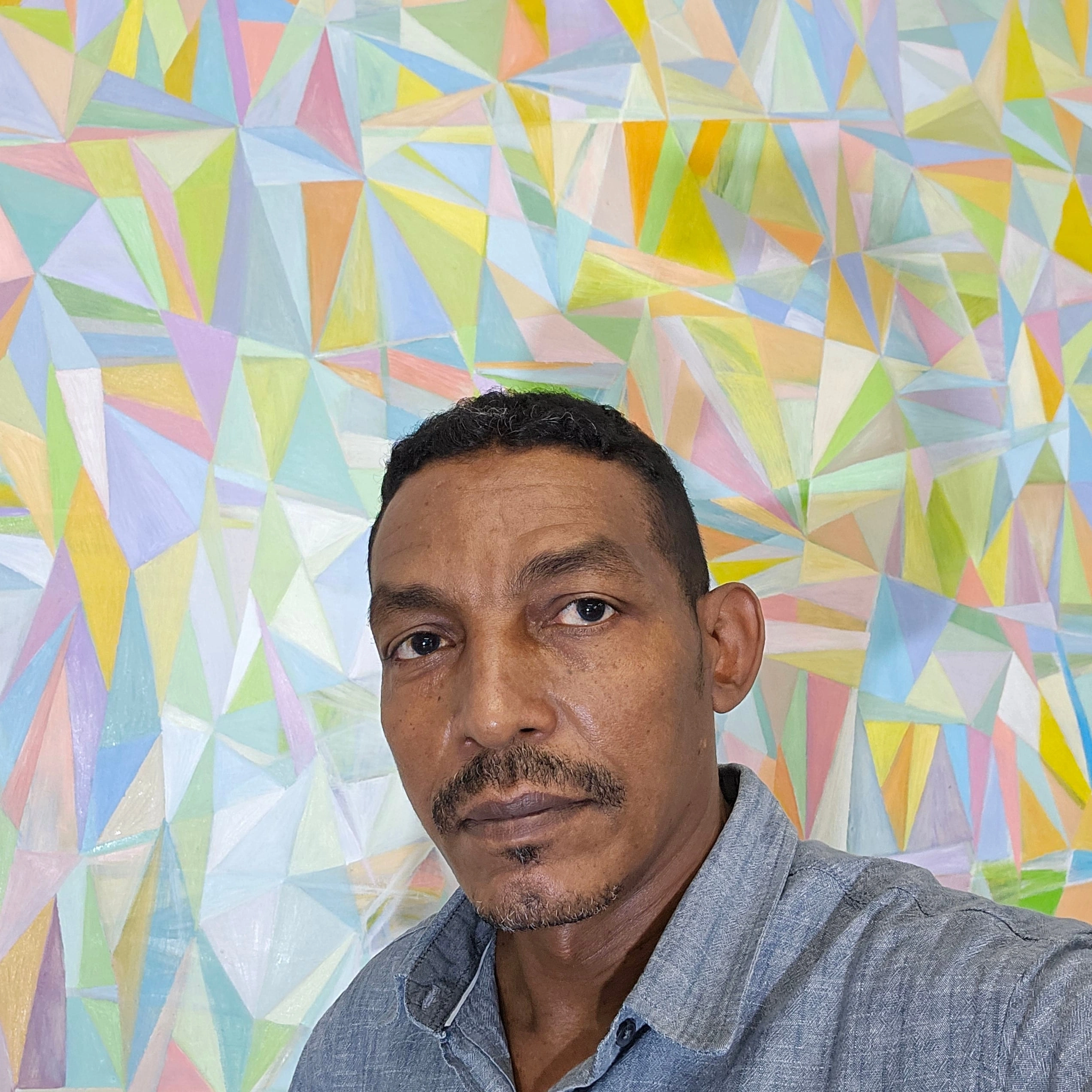
Interdisciplinary artist
Nouman Gaafar's journey as an artist began at the University of Sudan for Science and Technology, College of Fine and Applied Arts where he received his Bachelor of Fine Arts (BFA) in 1994, specializing in Sculpture and Drawing. His early work, notably wood carving reliefs, life size figurative sculpture, terracotta portraits beautifully reflects the diversity and richness of Sudanese culture and tribes, earning him recognition in his field. In pursuit of further artistic development, Gaafar migrated to the United States in 1996, where he achieved a Master of Arts (MA) and a Master of Fine Arts (MFA) from the University of Dallas in Texas by 2002, focusing his talents once again on Sculpture and Fine Arts.
Gaafar's artistic footprint spans across Dallas, Texas, and Denver, Colorado, primarily showcasing his work in his studio and at Space Gallery located in Denver Colorado. In 2016, driven by a dream to contribute to the cultural fabric of his birthplace, Gaafar returned to Khartoum, Sudan. There, he established the Khartoum Arts Training Centre, a beacon for young artists where he imparts his knowledge and skills in drawing, painting, and sculpture, marking a significant contribution to Sudan's cultural development.